7 Business Tools We Can't Live Without at Flourish Flower Farm
/When people think about starting a flower farm, they usually think about seeds, soil, greenhouses, and beautiful buckets of freshly harvested flowers. But there's another side to running a successful flower farming business that happens almost entirely behind a computer screen.
Behind every wedding, workshop, and Farmstand sale is a surprising amount of administrative work. There are invoices to send, employees to pay, emails to write, orders to fulfill, and records to keep us organized.

At Flourish, I've learned that having the right systems in place makes an enormous difference in how smoothly our small business operates. Over the years, we've tried different programs, refined our processes, and settled on a collection of tools that help us manage the business side of the farm.
For new flower farmers, figuring out which business software is actually worth paying for can be overwhelming. Remember that you don't necessarily need every program when you're just starting out, and what works for one farm may not be the right fit for another.
These are seven of the small business tools we use at Flourish Flower Farm, along with how they fit into our day-to-day operations.
1. Flodesk: Email Marketing & Newsletters
One of the most valuable things we've built over the years is our email list.
Social media is wonderful for sharing what's happening on the farm, but email allows us to communicate directly with customers who have chosen to hear from us. We use Flodesk to send our newsletters, share seasonal updates, announce workshops, and let the Flourish community know about new offerings.
What I especially appreciate about Flodesk is how easy it is to create beautiful emails. The templates are clean and customizable, which lets us maintain the look and feel of Flourish across our communications.
Email marketing is particularly useful for flower farmers because our businesses are so seasonal. We can reconnect with customers when the Farmstand opens, announce spring workshops, or share what's coming into bloom without relying entirely on social media algorithms.
For farmers just getting started, I'd encourage you to begin collecting email addresses early, even if your list is small. Having a direct way to communicate with customers becomes increasingly valuable as your business grows.
2. Gusto: Payroll & Employee Management
As a small flower farm grows, managing employees introduces an entirely new set of administrative tasks and responsibilities.
We use Gusto to handle payroll and help manage the paperwork associated with having employees. Rather than calculating paychecks and payroll taxes manually, we can keep these processes organized in one place.
Gusto handles payroll calculations, tax withholding, payroll tax filings, employee documents, and other administrative tasks.
For flower farmers who hire seasonal employees or maintain a small year-round team, a reliable payroll system can save considerable time and help reduce the likelihood of costly mistakes.
If you're operating your farm entirely on your own, you may not need payroll software yet. But once you begin hiring employees, it's worth putting a dependable system in place.
3. QuickBooks: Bookkeeping & Financial Management
Growing beautiful flowers is only one part of running a profitable flower farm. Understanding where your money is going is just as important.
I use QuickBooks to keep our business finances organized, track expenses, and maintain the records we need throughout the year.
Flower farming comes with a wide variety of expenses, from seeds, bulbs, and compost to floral supplies, equipment, packaging, and labor. Keeping accurate records helps us understand the true costs of operating the farm and make better decisions about future investments.
(Good bookkeeping also makes tax season much less stressful.)
For new flower farmers, one of our biggest recommendations is to separate your business finances from your personal finances from the beginning. Even if your farm is still small, establishing good financial habits early will make it much easier to understand whether your business is growing sustainably.
QuickBooks is one option for managing those records, and it's the system we've chosen for Flourish.
4. ShipStation: Shipping & Order Fulfillment
While most of our fresh flowers are sold locally, we also sell products that need to be shipped.
We use ShipStation to help manage shipping labels and order fulfillment.
Having a dedicated shipping platform makes it easier to compare shipping services, create labels, and keep track of outgoing packages without managing each shipment individually through a carrier's website.
For farms selling seeds, bulbs, merchandise, or other shippable products, this can become especially helpful as order volume increases.
Of course, not every flower farm needs shipping software. If your business focuses entirely on local flower sales, weddings, or on-farm pickup, this may be a tool you can skip until your offerings expand.
5. Google Drive: Keeping Everything Organized
Sometimes the most useful business tools are also the simplest.
We rely on Google Drive to organize and share the documents, spreadsheets, and other files that keep Flourish running.
Having everything stored in one central location makes it easier for our team to collaborate, whether we're working on the farm, in the studio, or from home.
Google Drive is particularly helpful for maintaining shared documents and spreadsheets that multiple people need to access or update.
For a small flower farming business, even a basic organizational system can make an enormous difference. We recommend establishing a consistent way to organize your files early, rather than waiting until you're searching through years of documents to find something important.
6. Squarespace: Our Website & Online Shop
Our website is one of the most important parts of our business.
We use Squarespace to maintain the Flourish website, share information about our flowers and services, publish educational blog posts like this one, and manage our online shop.
For flower farmers, a website provides something social media cannot: a central place where customers can learn about your business, explore your offerings, and make purchases.
I especially appreciate keeping our website and online store together rather than managing separate platforms.
If you're starting a flower farm, your first website doesn't need to be elaborate. A clear description of what you grow, where you're located, how customers can purchase your flowers, and how to contact you is an excellent place to begin.
As your business grows, your website can grow with it.
7. TrustedHousesitters: Making Time Away from the Farm Possible
This one might seem a little unexpected on a list of business tools, but anyone who runs a farm knows that taking time away requires some planning.
Between the growing season, our wedding schedule, and responsibilities at home, finding time to travel can be challenging.
We use TrustedHousesitters, a service that connects homeowners with sitters who care for their homes and pets while they're away.
While it isn't traditional business software, it's one of the tools that helps make life outside the farm a little easier. Knowing someone is caring for the farm (and farm pets!) around the clock gives us real peace of mind when we’re traveling.
Running a small business can be all-consuming, especially during the busiest months of the year. Finding systems that allow you to step away occasionally is just as important as finding tools that help you work more efficiently.
Explore TrustedHousesitters and receive 25% off a subscription
Choosing the Right Tools for Your Flower Farming Business
One thing I've learned over the years is that there's no single tool or system that every flower farmer needs. A small backyard flower farm selling bouquets at a weekly market will have very different administrative needs than a farm offering full-service wedding flowers, workshops, online sales, and seasonal employment.
My advice is to start with the basics and add systems as your business grows. But the three things that EVERY business needs are 1. to keep your finances organized from the beginning. 2. Build an email list so you can stay connected with customers. 3. Establish a website where people can easily find information about your farm. And as you grow and take on employees, shipping, or more complicated operations, look for tools that can simplify those responsibilities.
It's also worth remembering that software is an investment. Before adding another monthly subscription, consider whether it will genuinely save you time, reduce mistakes, or help your business operate more efficiently.
At Flourish, these programs have become part of the behind-the-scenes work that allows us to spend more time doing what we love: growing flowers, creating beautiful floral designs, and welcoming workshop guests to the farm.
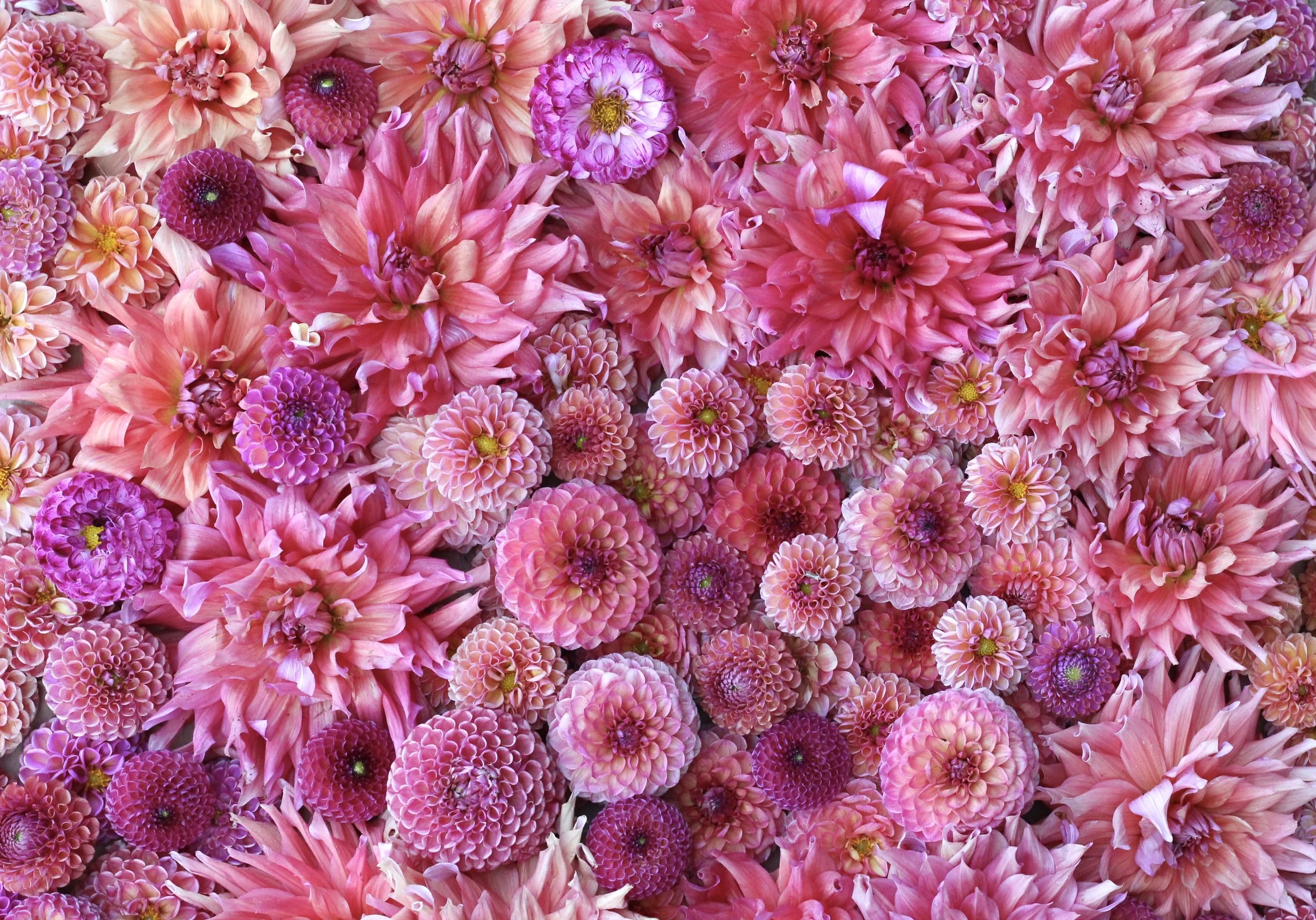
And while the administrative side of flower farming may not be quite as photogenic as a field of dahlias, it's an essential part of building a business that can thrive for years to come.
Affiliate disclosure: Some links in this post are referral or affiliate links. We may receive a commission or referral reward if you sign up through them, at no additional cost to you. We only share programs we use at Flourish Flower Farm.
