
Our Top 5 Flowering Shrubs to Grow for Flower Farmers & Farmer Florists
/When we plant perennial flowering shrubs at Flourish, we aren’t planting for the next season — we’re planting for the next decade…
Flowering shrubs are some of the longest-term investments we make on the flower farm. Unlike annual flowers or even some perennial flowering plants, shrubs often take several years to reach their full potential. But once established, they become incredibly productive plants that return year after year with generous harvests of blooms, branches, and foliage.
On the farm, flowering shrubs do more than just produce flowers. They shape the landscape, create windbreaks and borders, support pollinators, and provide an early-season source of branches that are invaluable in floral design.
For flower farmers and farmer-florists, shrubs are especially useful because they offer something many annual crops cannot: large-scale blooms and branching material that add volume, movement, and architecture to arrangements.
Over the years, we’ve slowly added a variety of flowering shrubs to the farm, planting them along field edges, borders, and dedicated perennial beds. Some were chosen for their spring blossoms, others for their foliage or berries later in the season. All of them have become important pieces of the farm’s floral palette.
Flourish’s Favorite Flowering Shrubs
These are five of our favorite flowering shrubs to grow for flower farms and floral design.
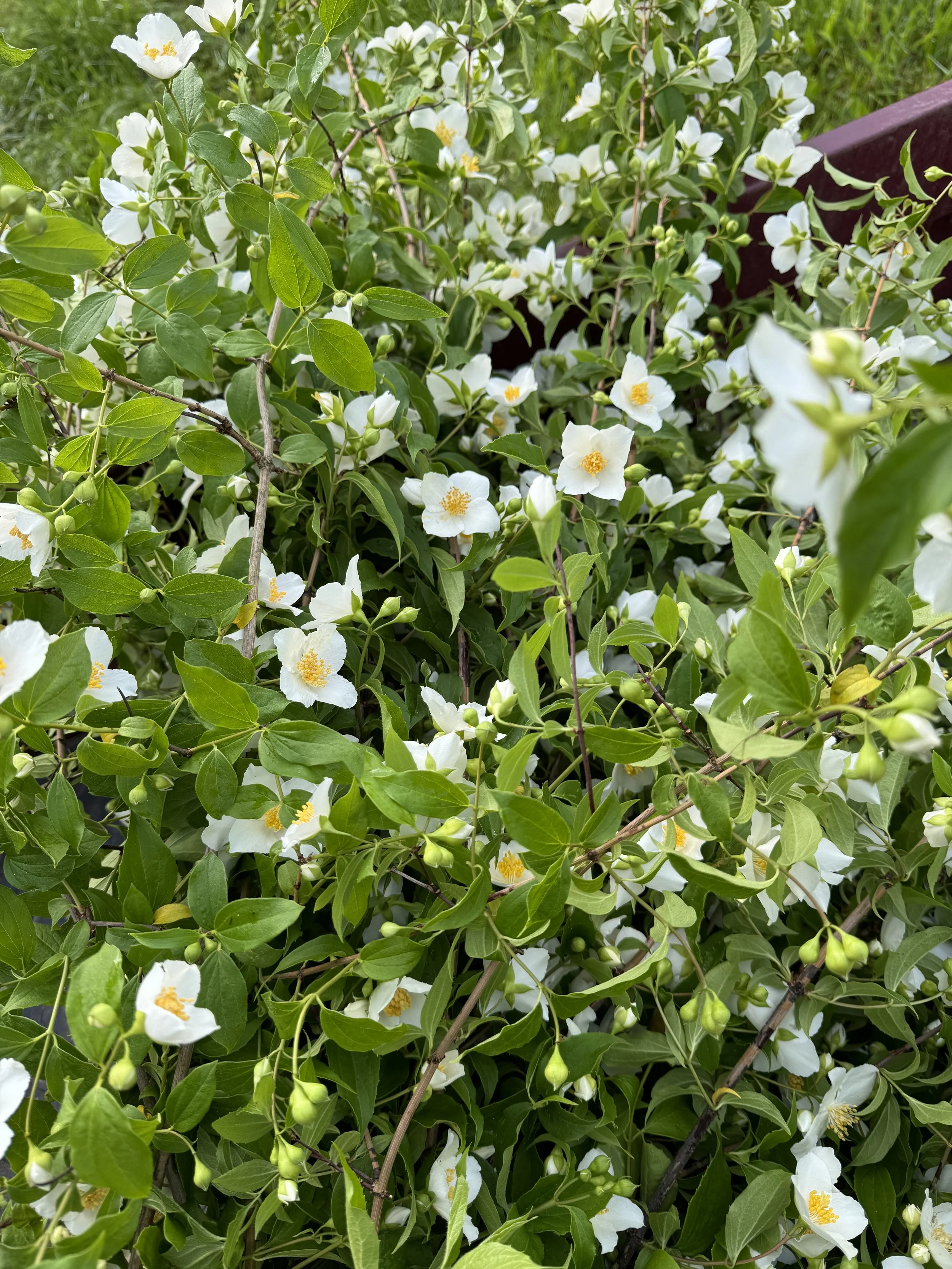
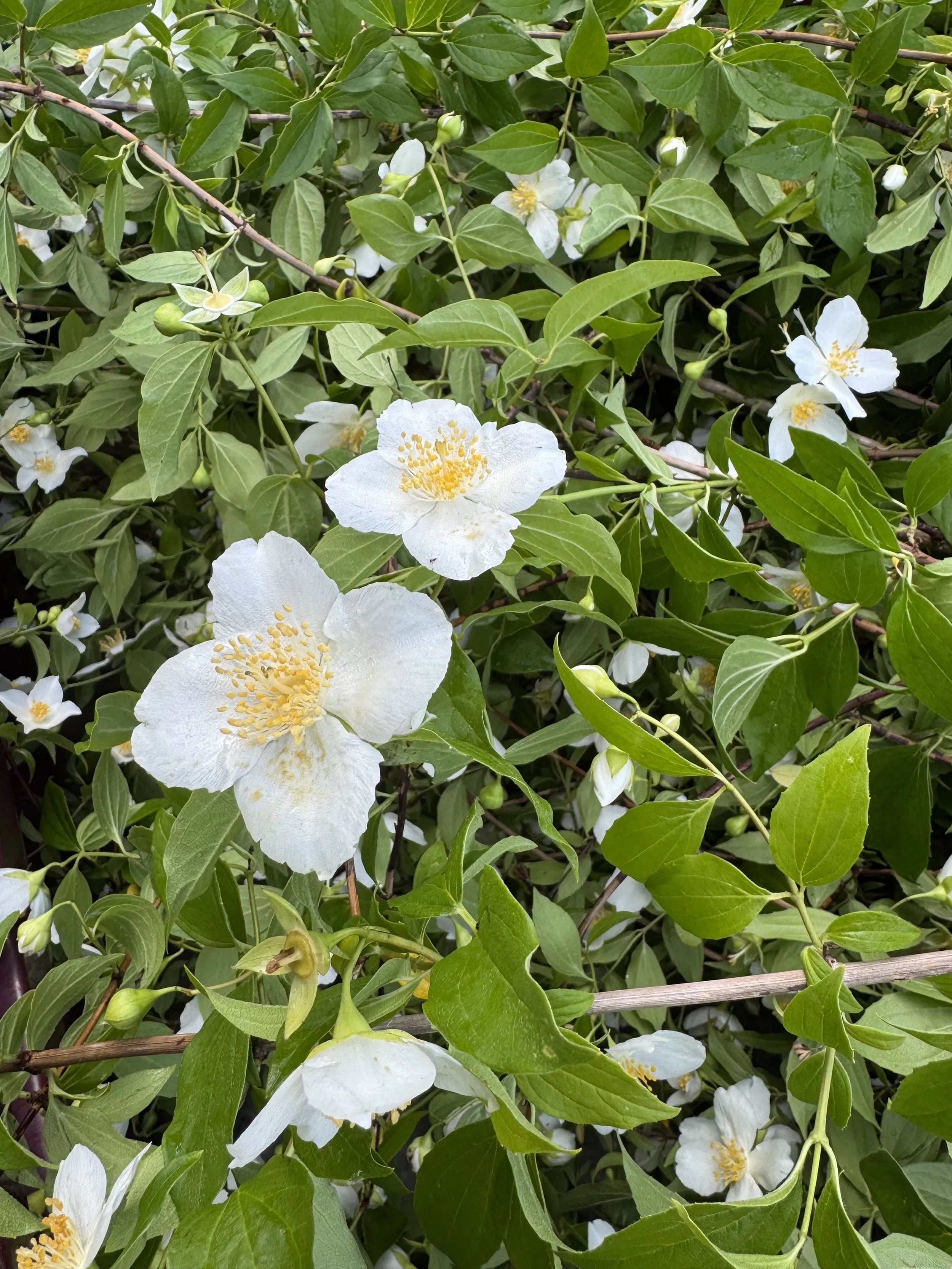
Mockorange
Latin: Philadelphus
In bloom: Spring
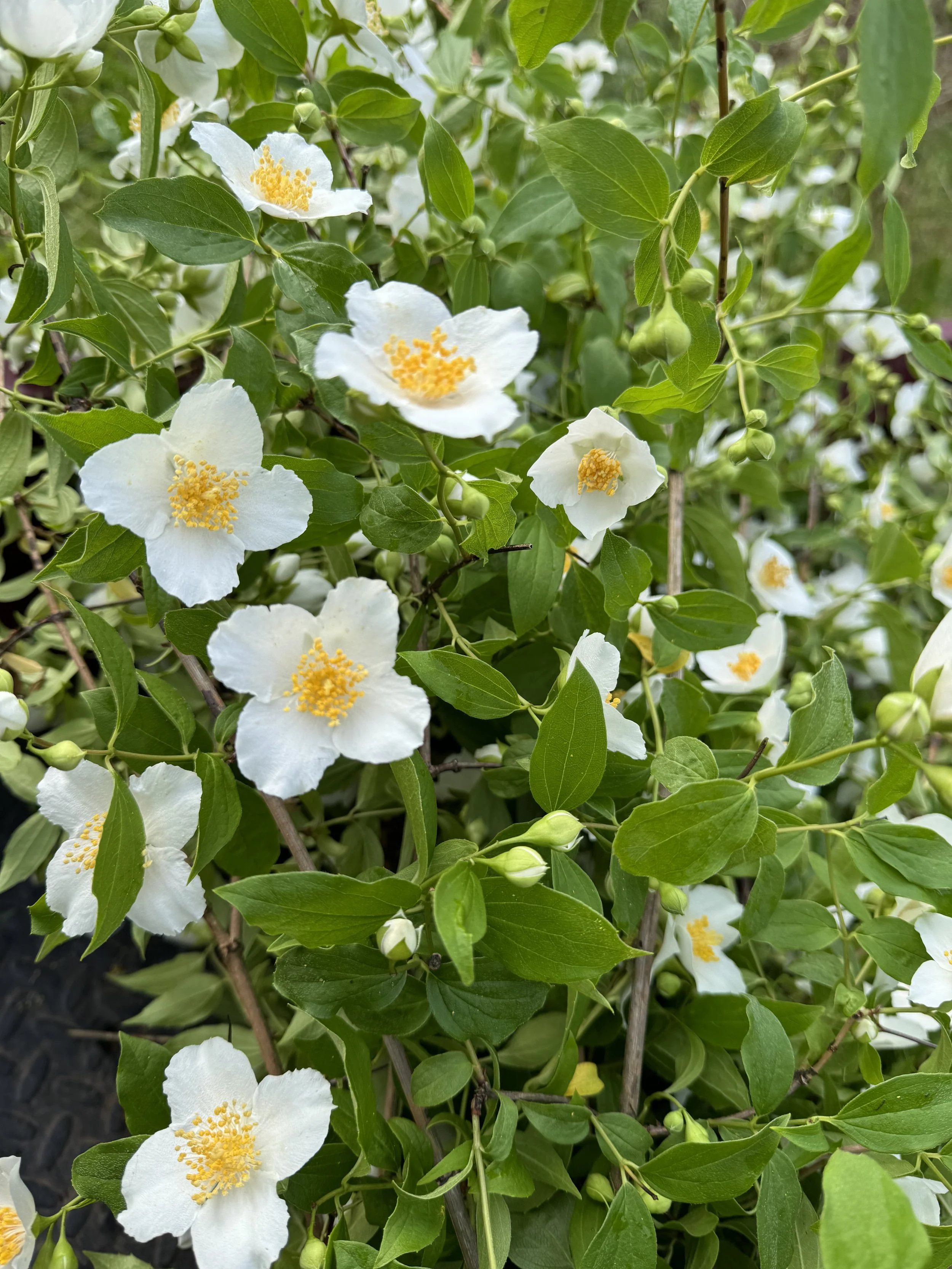
Mockorange is one of those shrubs that stops you in your tracks when it blooms.
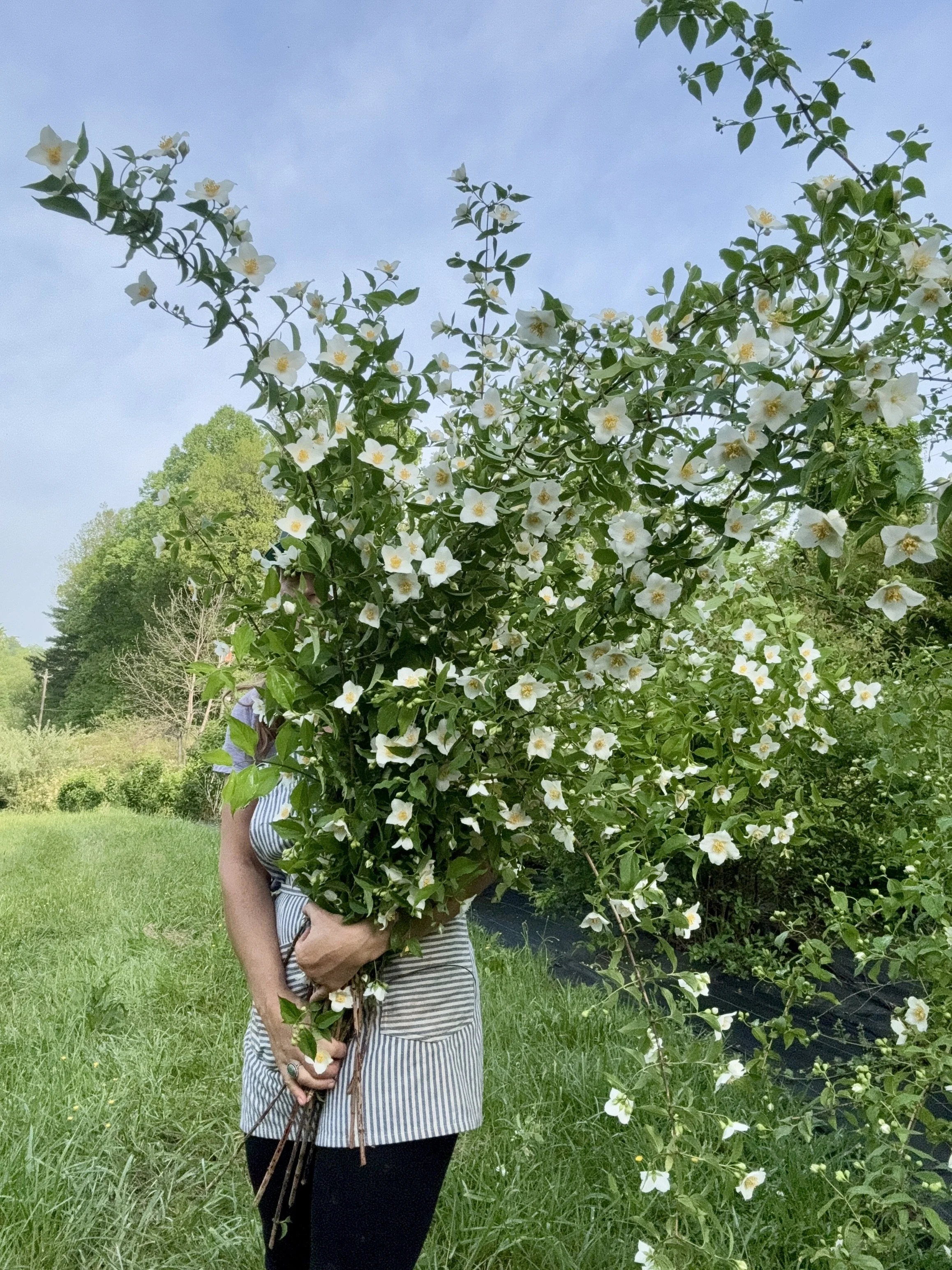
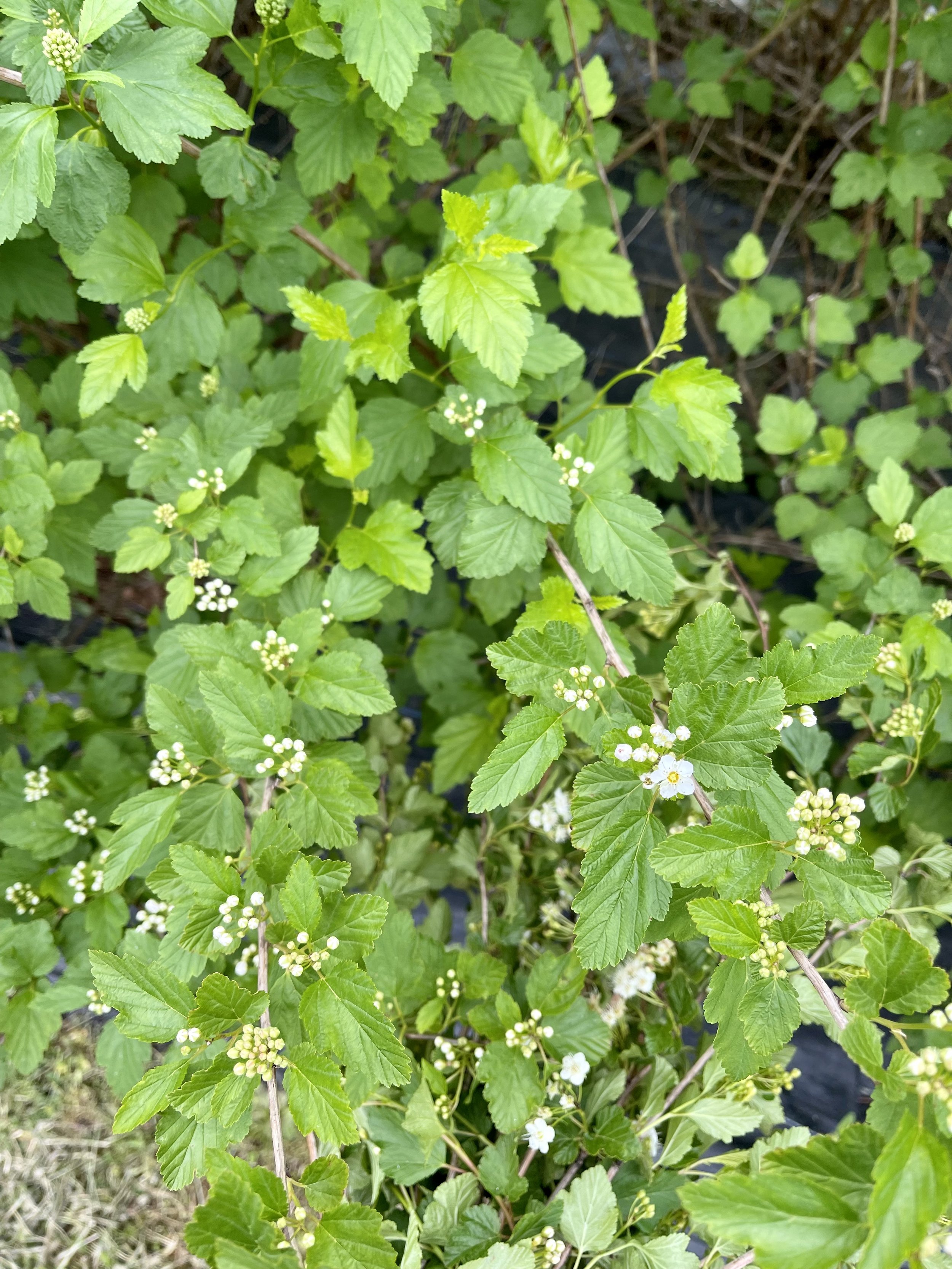
In late spring, the branches fill with clusters of white flowers that release a sweet citrus fragrance (the scent is often compared to orange blossoms, which is where the plant gets its name). When the shrub is in full bloom, the entire plant seems to glow against the fresh green backdrop of the season.
For floral design, mockorange offers soft, arching branches covered in delicate blooms. It works beautifully in large arrangements and ceremony installations, especially in garden-inspired wedding flowers where a natural, airy shape is desired.
Once established, mockorange is a relatively low-maintenance shrub and can be pruned each year after flowering to encourage healthy new growth.
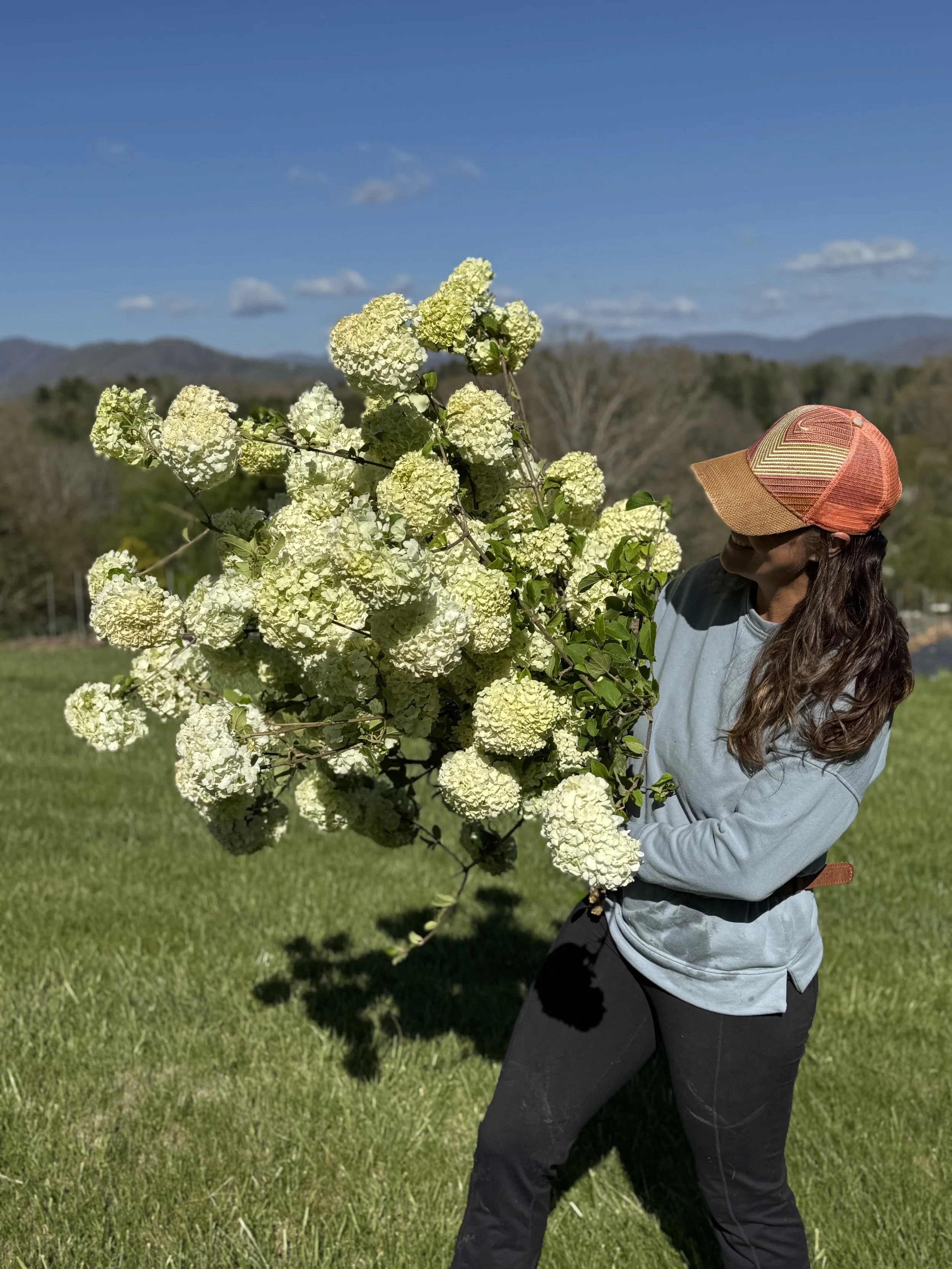
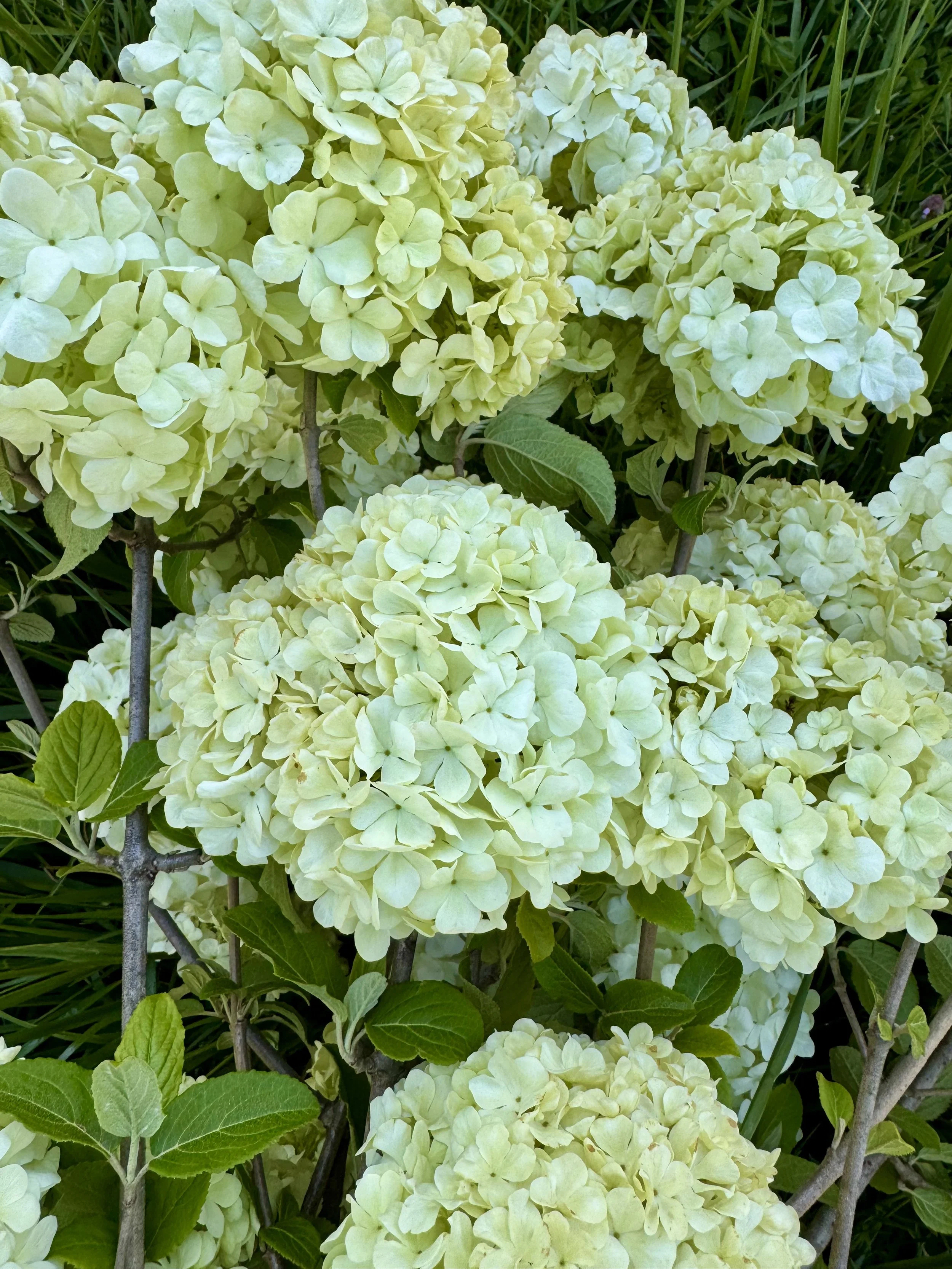
Snowball Viburnum
Latin: Viburnum opulus ‘Roseum’ or Viburnum macrocephalum
In bloom: Spring
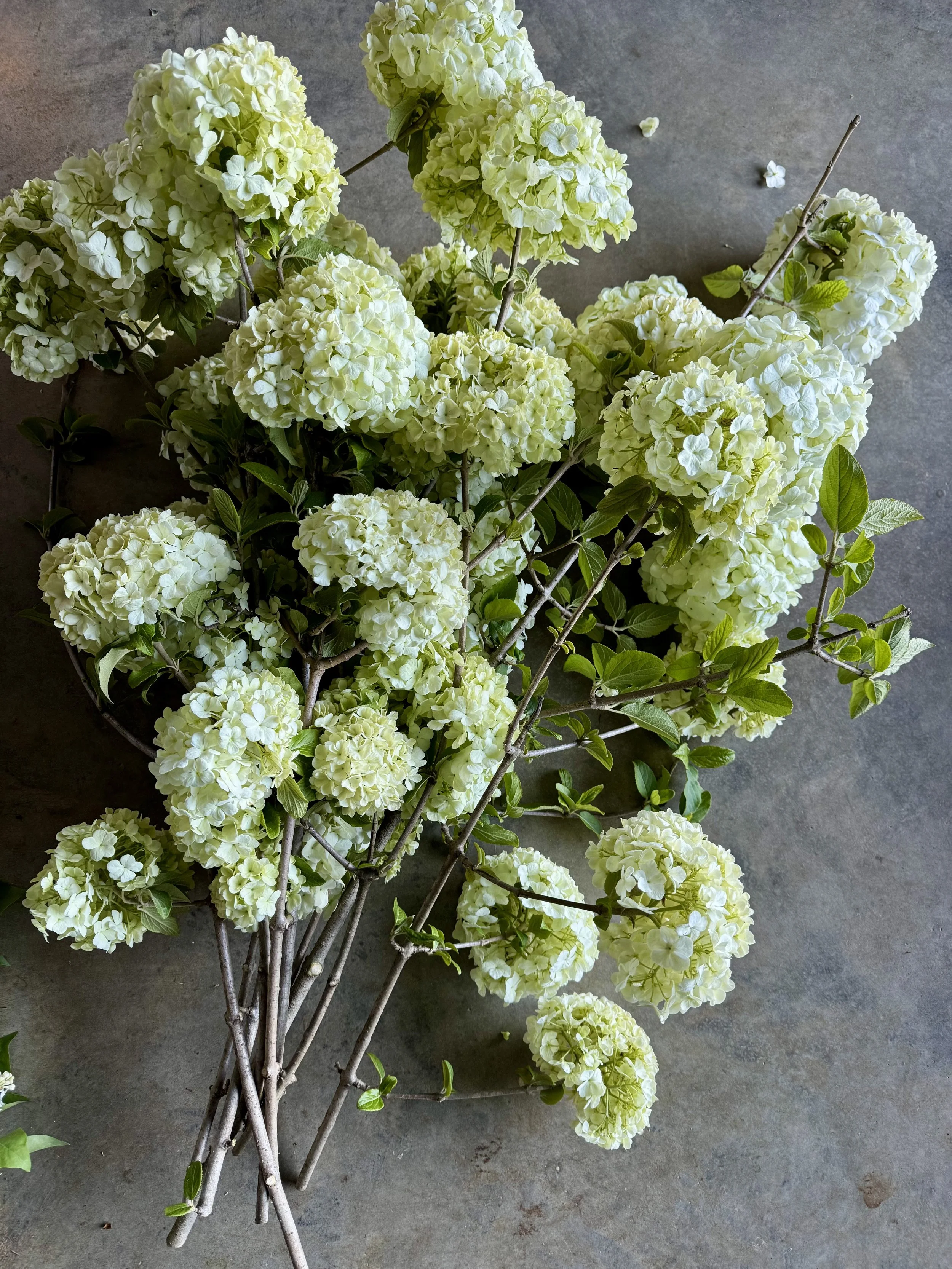
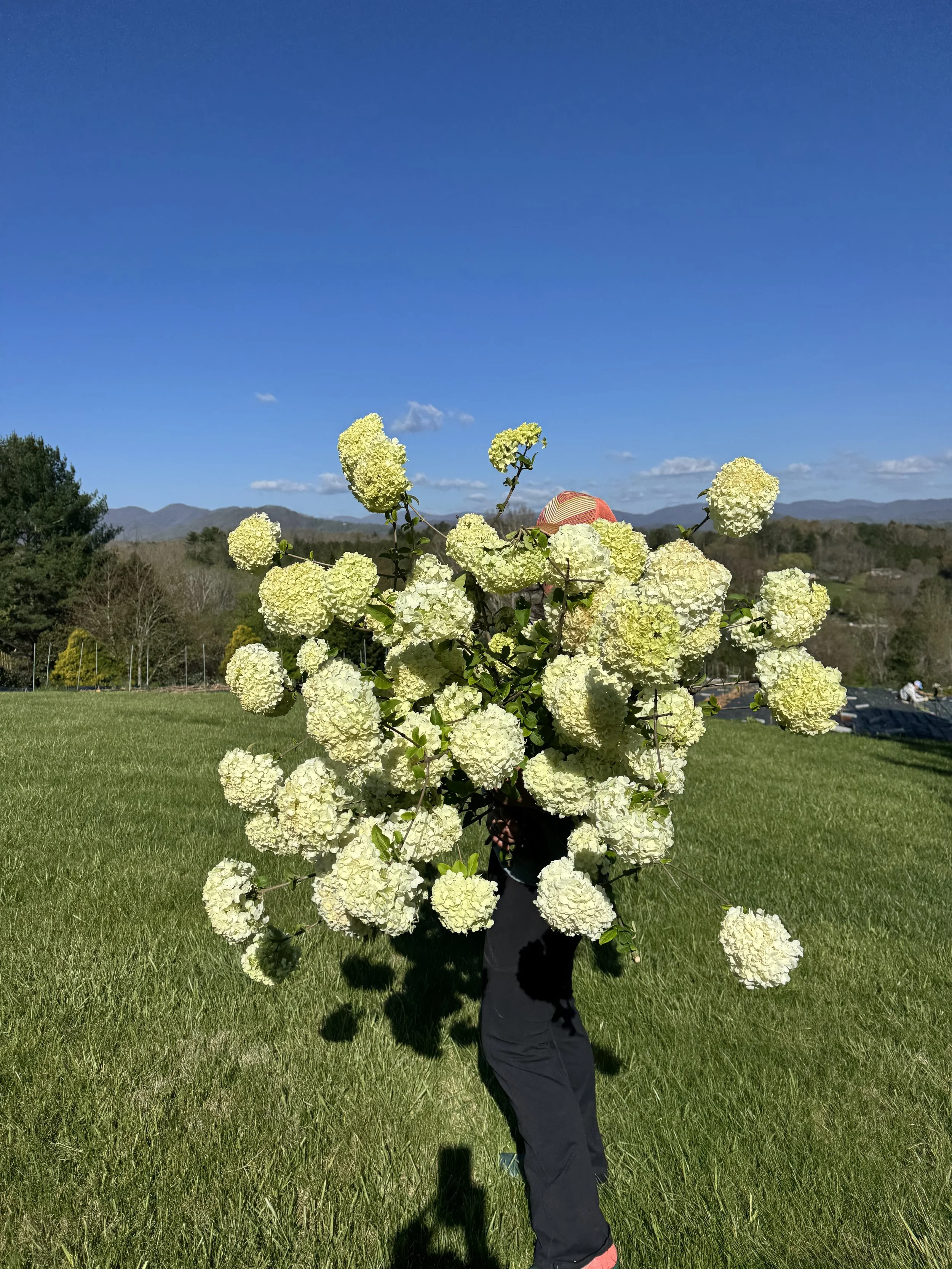
As the name suggests, this shrub produces large, round clusters of blooms that begin as fresh green buds before opening into creamy white “snowballs.” These oversized blossoms are incredibly striking in arrangements and have become a staple for spring weddings and large-scale floral work. Think hydrangeas, but for spring.
Snowball viburnum branches add instant volume to bouquets and centerpieces, making them especially valuable for farmer-florists who rely on materials grown right on the farm.
These shrubs grow into large, vigorous plants over time and reward patience with increasingly abundant harvests each year.
Spirea
Latin: Spiraea
Flourish varieties: Bridal Veil, Bridalwreath
In Bloom: Spring
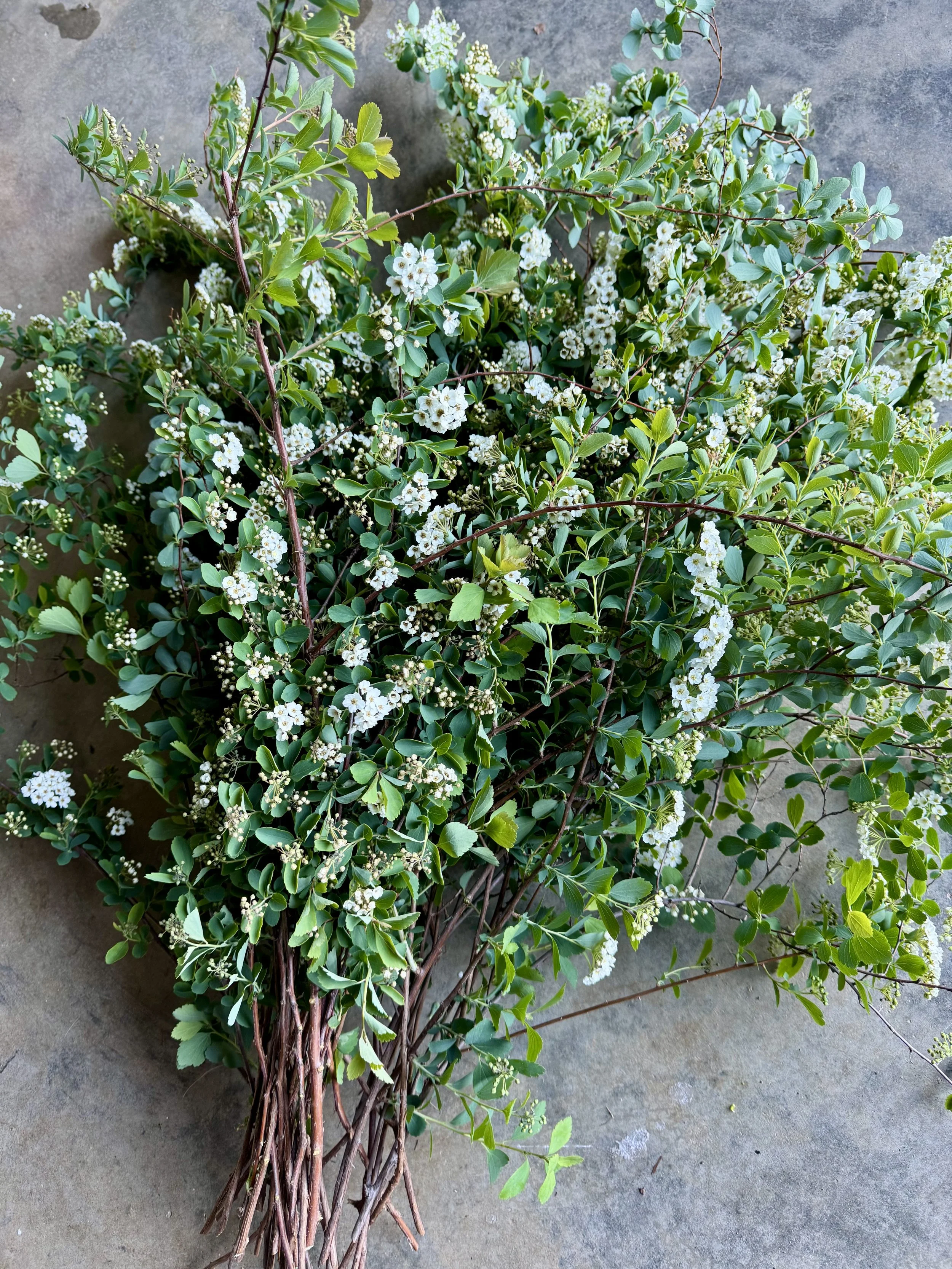
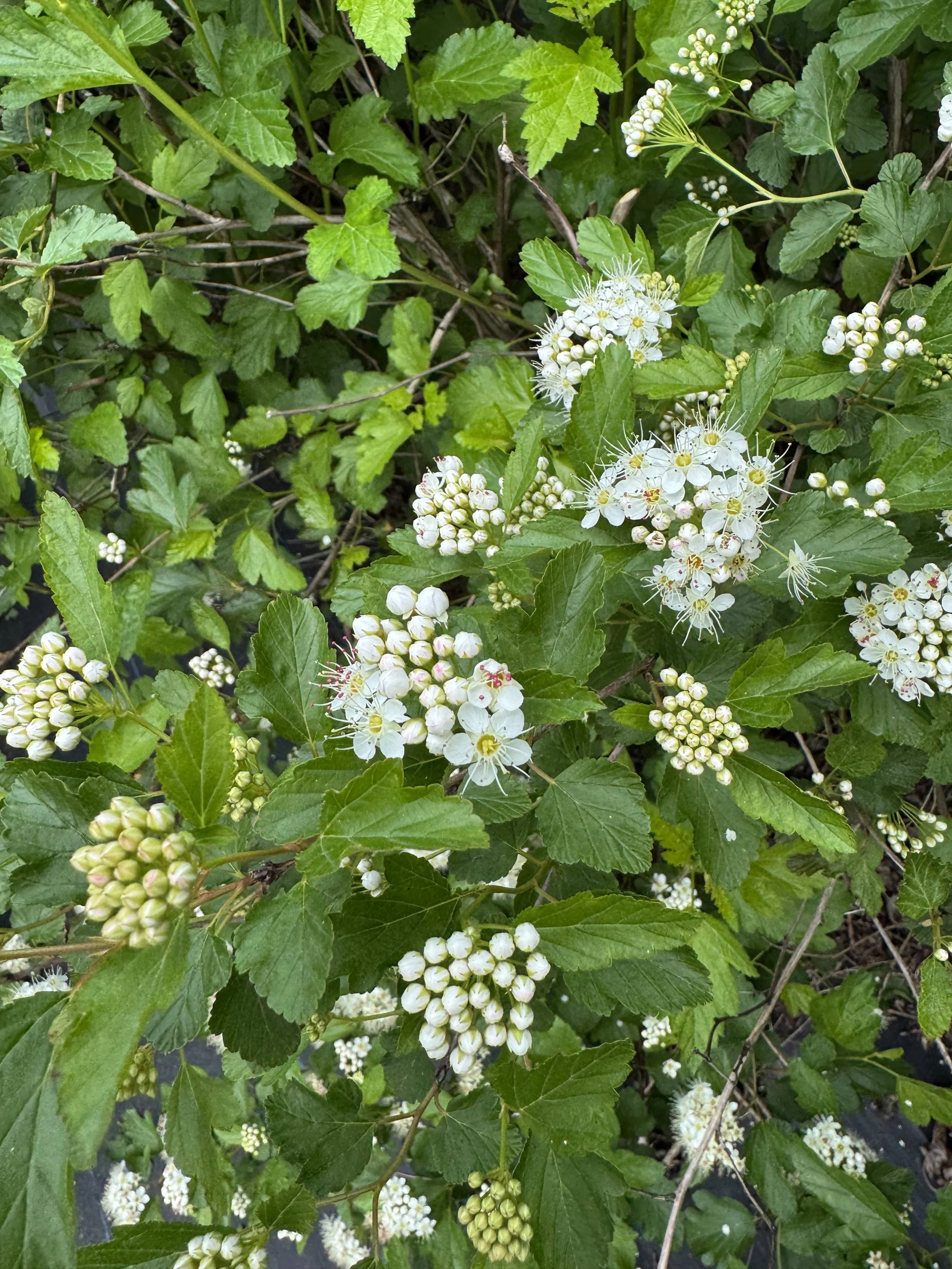
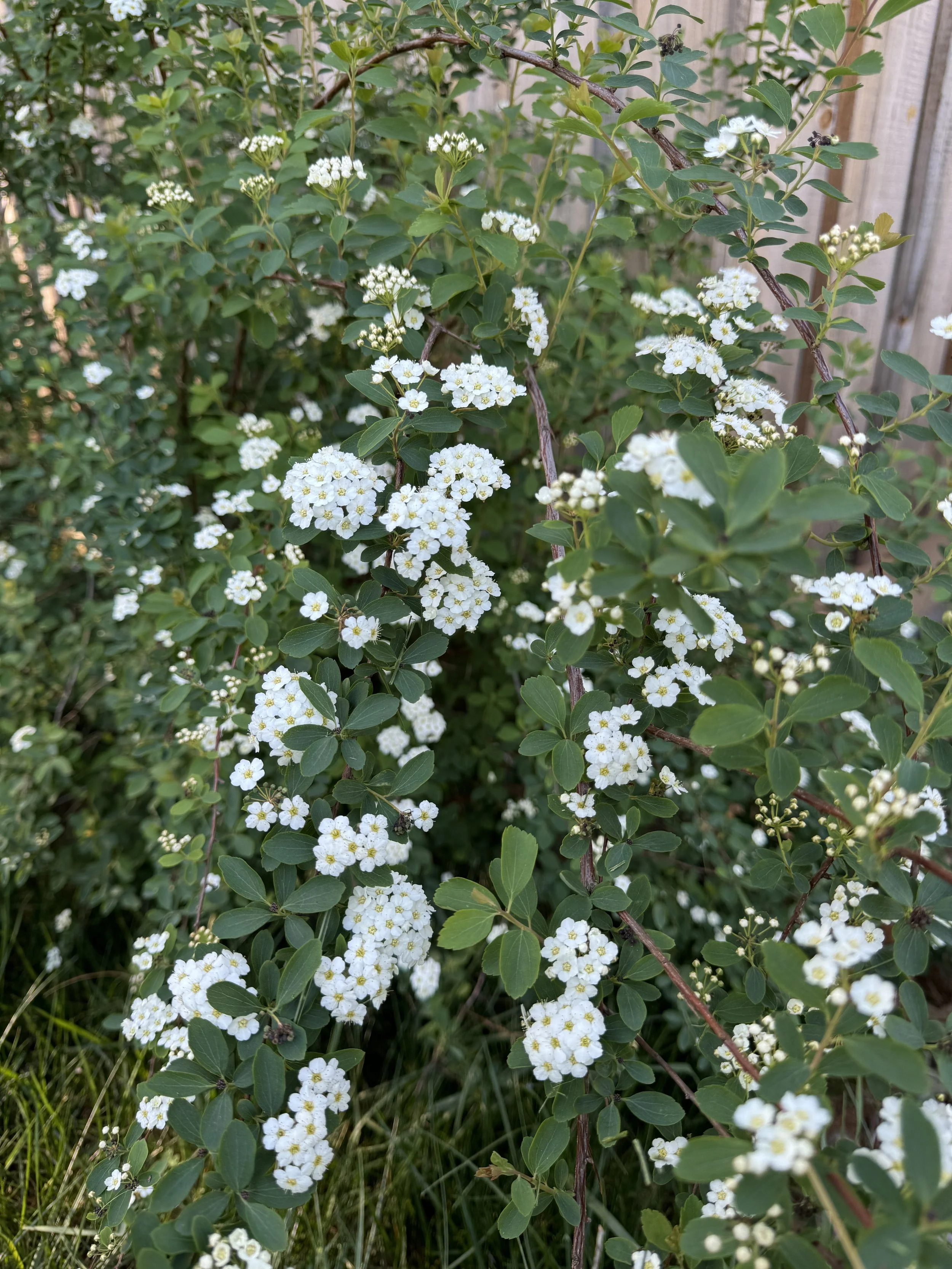
In late spring, spirea’s long, arching branches become covered in tiny white blossoms, creating a soft, cascading effect. These flowering branches are incredibly romantic in floral design and have long been one of our favorites for garden-style arrangements.
The varieties we grow at Flourish are especially beloved by wedding florists for their draping growth habit and delicate, abundant blooms.
Spirea shrubs grow steadily over time and respond well to pruning after flowering, which encourages fresh new stems for future harvests.
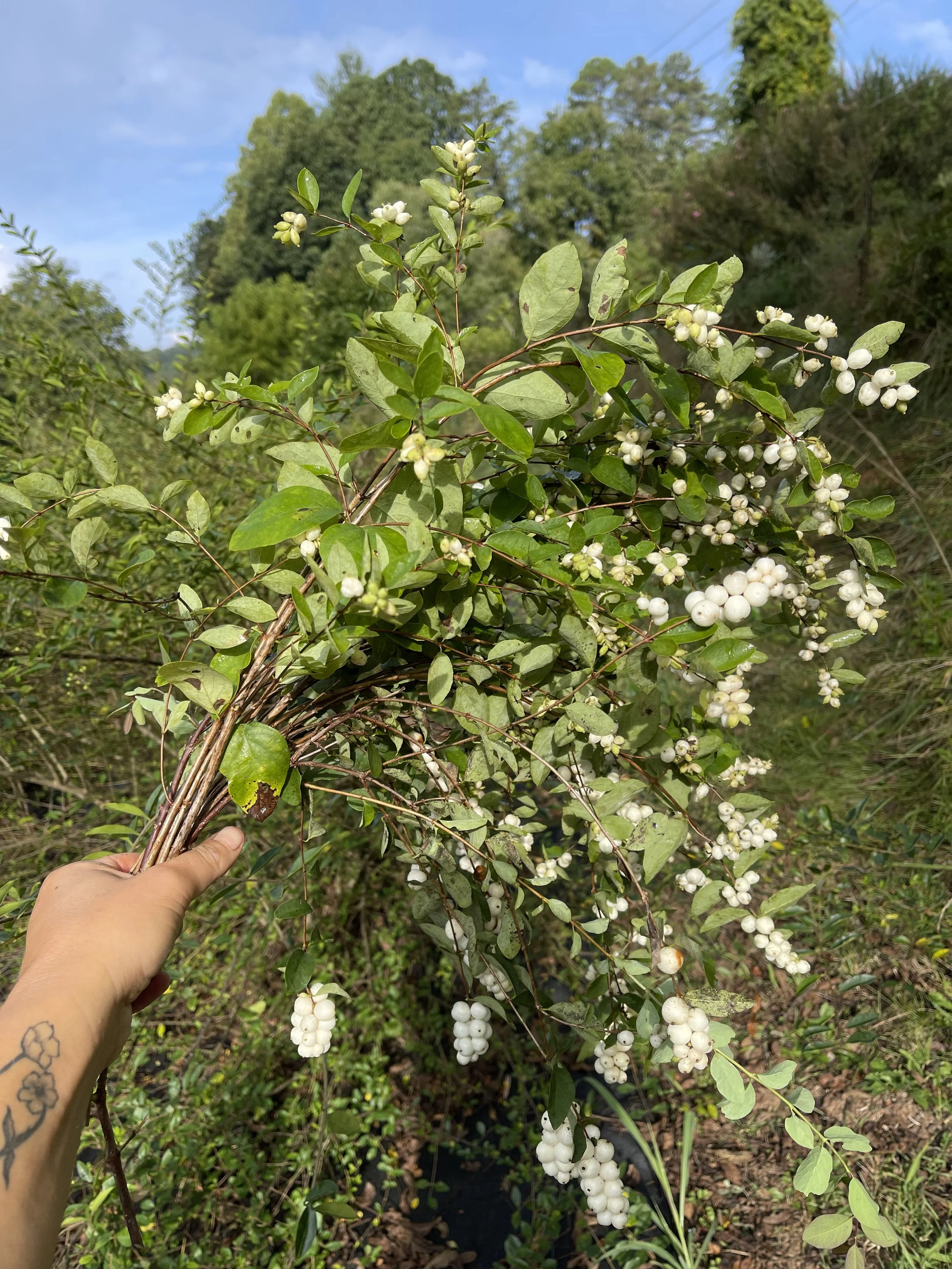
Snowberry
Latin: Symphoricarpos
Flourish varieties: White Symphony, Magical Pink Falls
In bloom: Late Summer to Early Fall
Snowberry may not be the first plant that comes to mind when thinking of flowering shrubs, but it earns its place on the farm for what comes after the bloom.
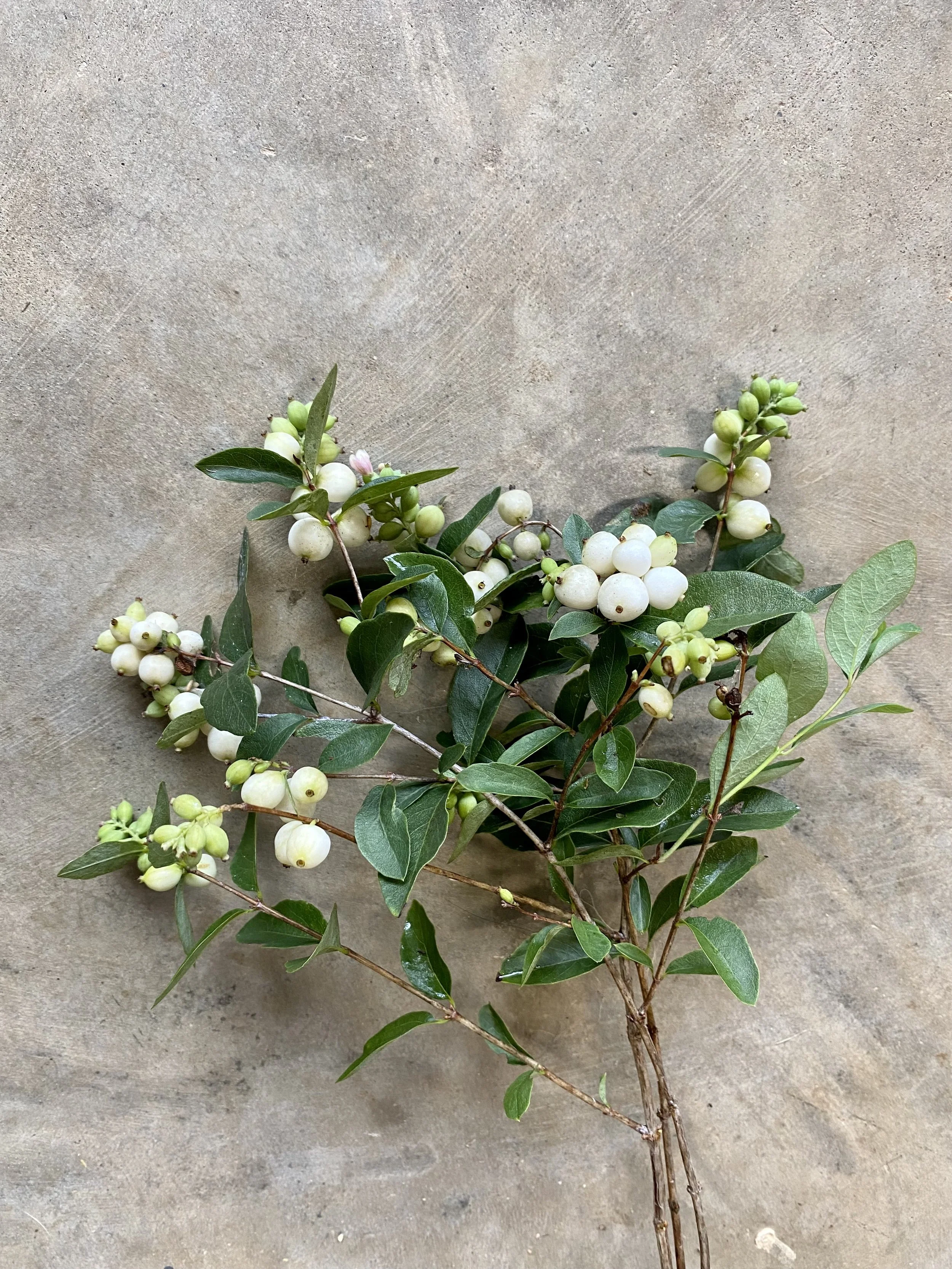
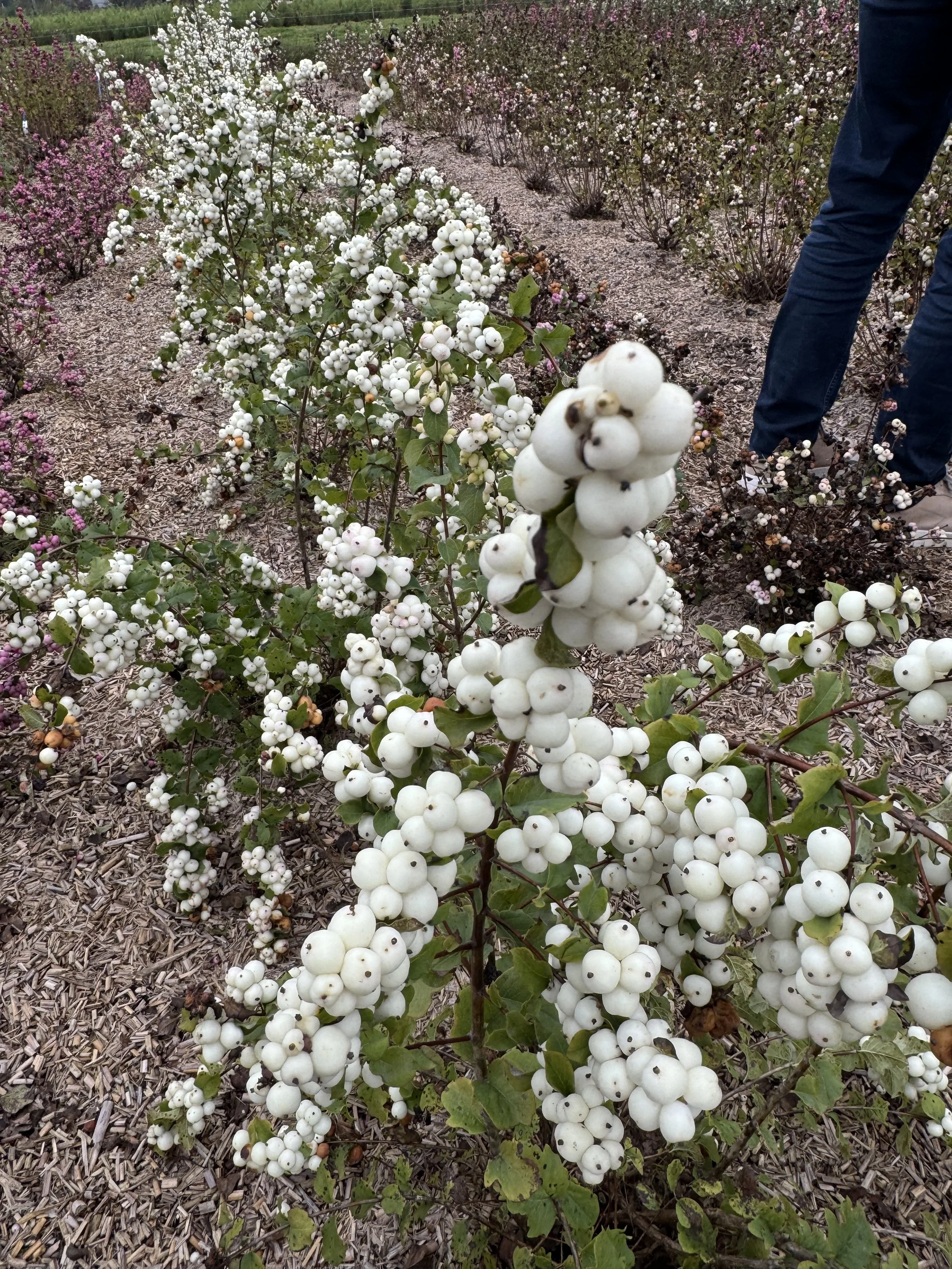
In early summer, the shrubs produce small, delicate flowers that later develop into clusters of soft white or blush-pink berries. These berries appear in late summer and autumn and are incredibly valuable in floral design.
Snowberry branches add a whimsical texture that works beautifully in seasonal bouquets and wedding work.
Once established, snowberry spreads readily and forms dense colonies, making it a generous producer for the cutting garden.
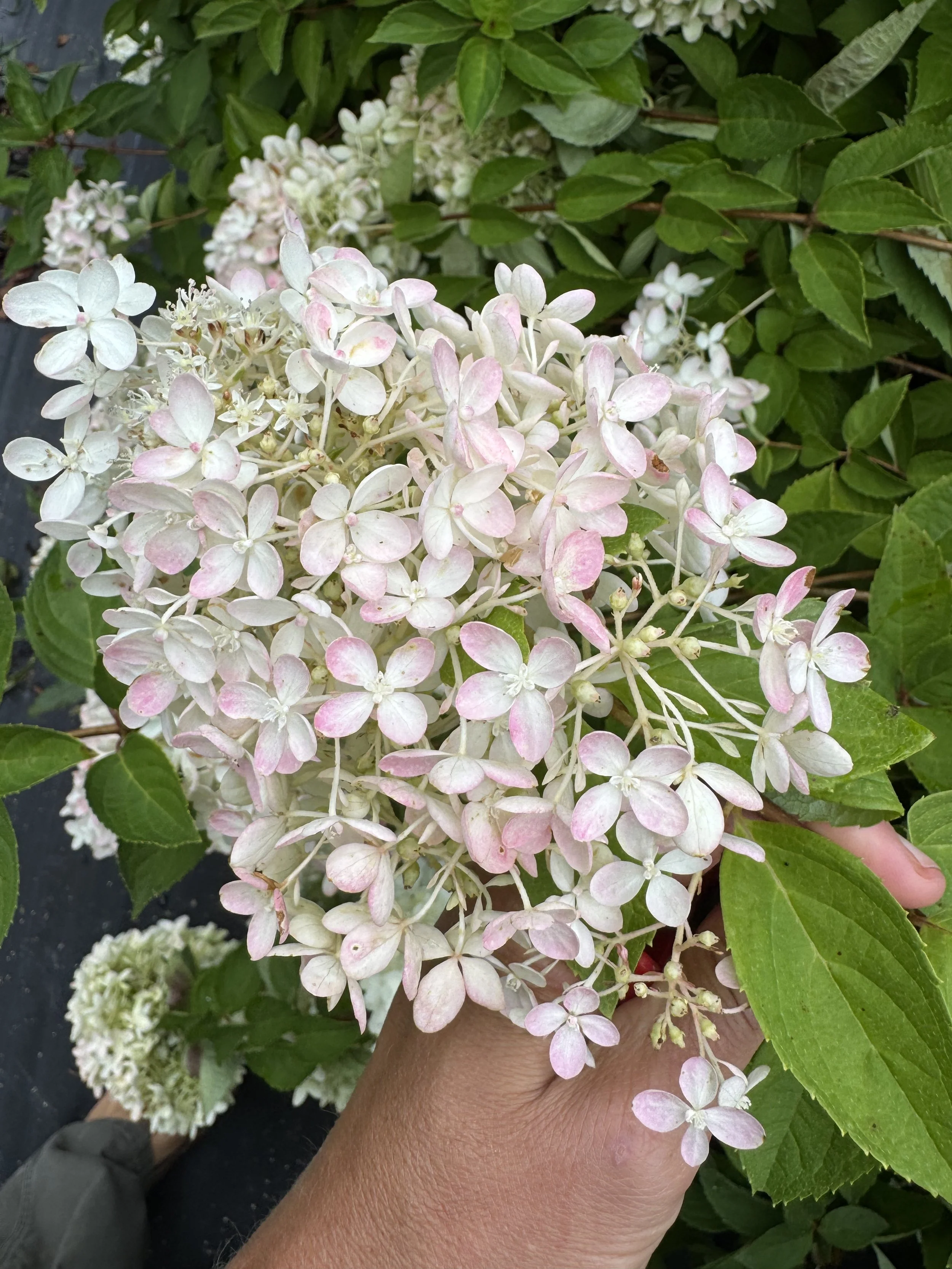
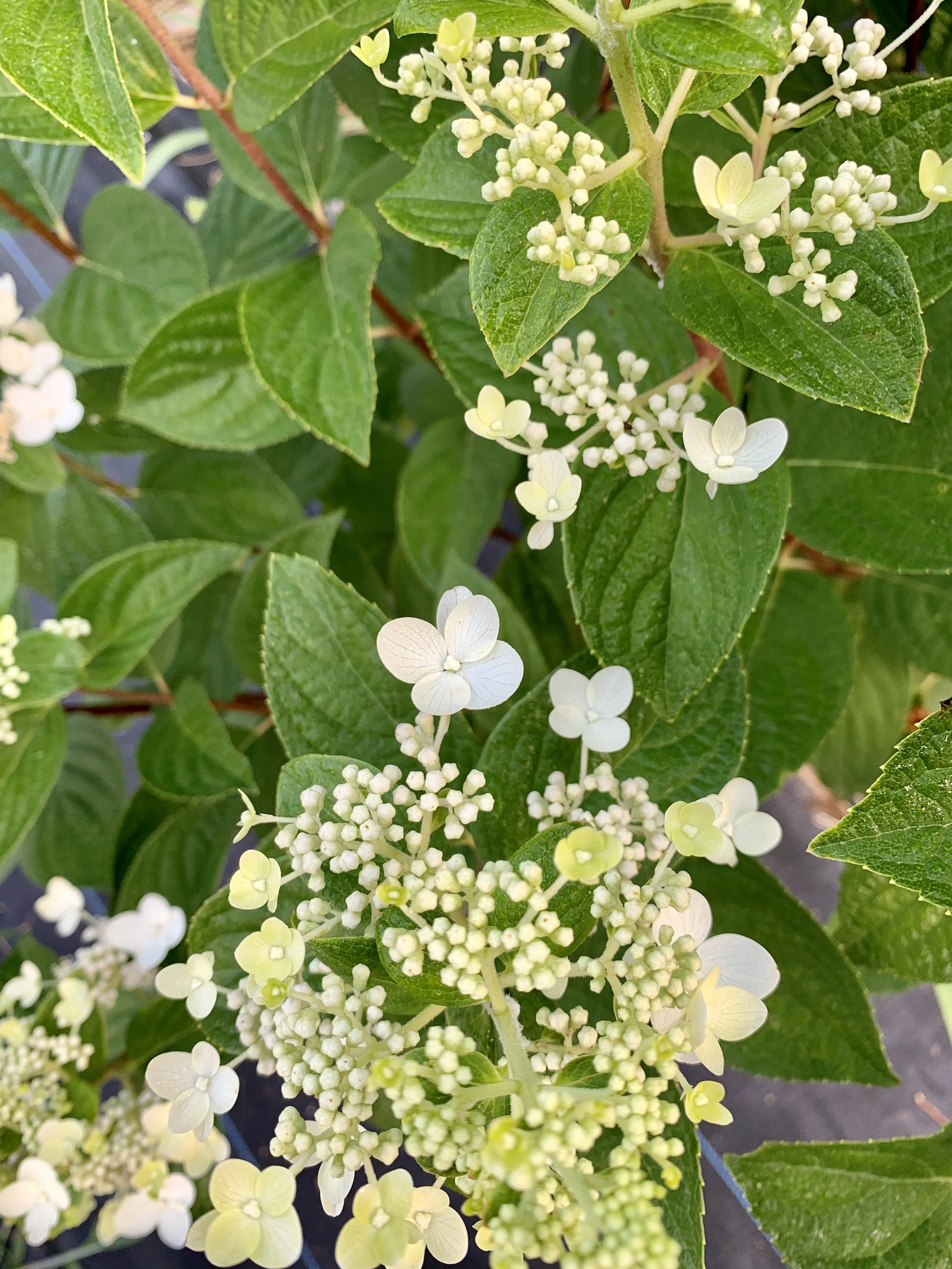
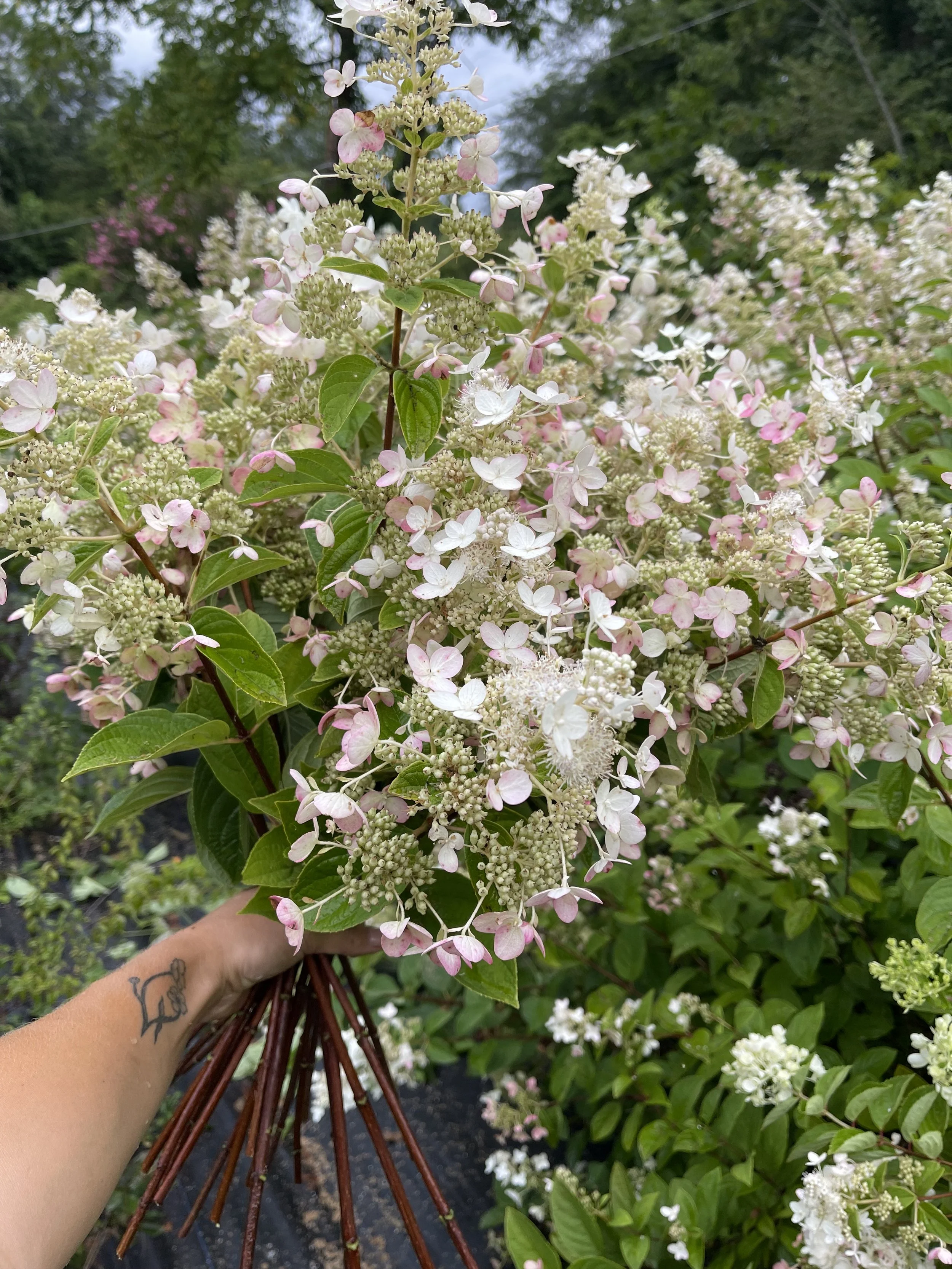
Hydrangea
Latin: Hydrangea paniculata
Flourish variety: Grandiflora (PeeGee)
In bloom: Late Summer to Early Fall
Hydrangeas are some of the most recognizable flowering shrubs in the garden, and for good reason.
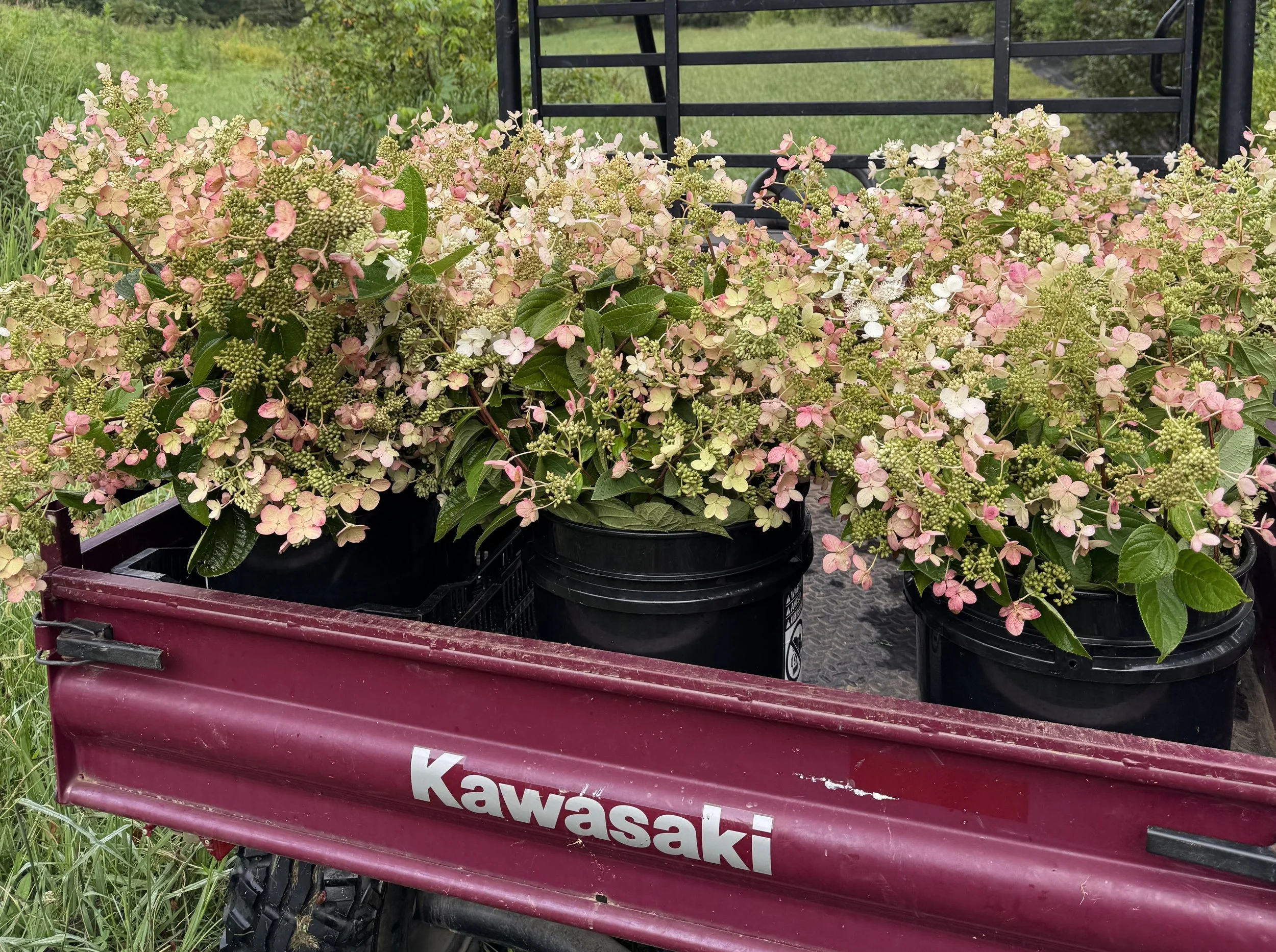
The PeeGee hydrangea is a panicle-type hydrangea (we call them the “lacy hydrangea”) that produces large conical blooms that shift in color as they mature. Beginning creamy white, they gradually develop soft blush or antique green tones later in the season. Their size and structure make them incredibly useful in floral design, especially in arrangements that call for fullness and texture.
For flower farmers, hydrangeas are a valuable shrub because they produce an abundance of blooms once mature. They are also remarkably versatile in design work, pairing well with both delicate flowers and bolder blooms.
Hydrangeas thrive in sunny locations with consistent moisture and benefit from annual pruning to encourage strong stems and large flowers.
Growing a Farm That Matures With Time
One of the quiet joys of farming is watching the landscape grow into itself. Shrubs are not instant crops. They take time to establish, to stretch their roots deep into the soil, and to become productive parts of the farm. But once they reach that point, they offer something incredibly valuable: reliability.
Each spring, these plants return with blossoms that feel both familiar and new. The shrubs grow larger, the harvest becomes more generous, and the farm slowly takes on the layered beauty that only time can create.
For flower farmers and farmer-florists, planting flowering shrubs is one of the most meaningful ways to build a farm that will continue to produce beauty for years to come.
