
Seeds to Start Now for Spring Flowers
/What we’re sowing in February on the flower farm…
February always feels like a turning point on the farm. The light shifts. The days stretch just a little longer. And even though frost still lingers in the mornings (and it's snowing as I type this blog post!), we begin sowing seeds for spring flowers.
If you’re wondering what flower seeds to start in February, you’re not alone. This is prime time for cold-hardy annuals that thrive in cool temperatures and reward you with some of the first blooms of the season.
Flourish is located in Zone 6B/7A in the Blue Ridge Mountains, where our last frost date occurs in late-April and frosty spring mornings are common. Because of our climate, we rely heavily on cold-hardy annuals to carry our early flower season.
We stagger our plantings (also known as succession planting) to give our plants the best chance of success. Many of our cool-season flowers are transplanted as seedlings in the fall so they can overwinter and receive the natural cold exposure they need. That chill period, or vernalization, helps produce taller stems and stronger plants in spring.
In late winter, we also start a second succession of these same varieties in the greenhouse. (Learn how we plan our succession planting here!) These winter-sown trays are eventually hardened off and transplanted out in the early spring, after the coldest months of winter but before the last frost date. This approach extends our spring flower season and ensures we have abundant blooms for early bouquets and spring weddings.
If you’re wondering what seeds to start in February for spring flowers, these are the varieties we’re sowing now.
Cold-Hardy Flower Seeds to Start in February
These are all excellent choices for early spring cut flowers in cooler climates (Zone 6 and below, and early Zone 7 depending on conditions):
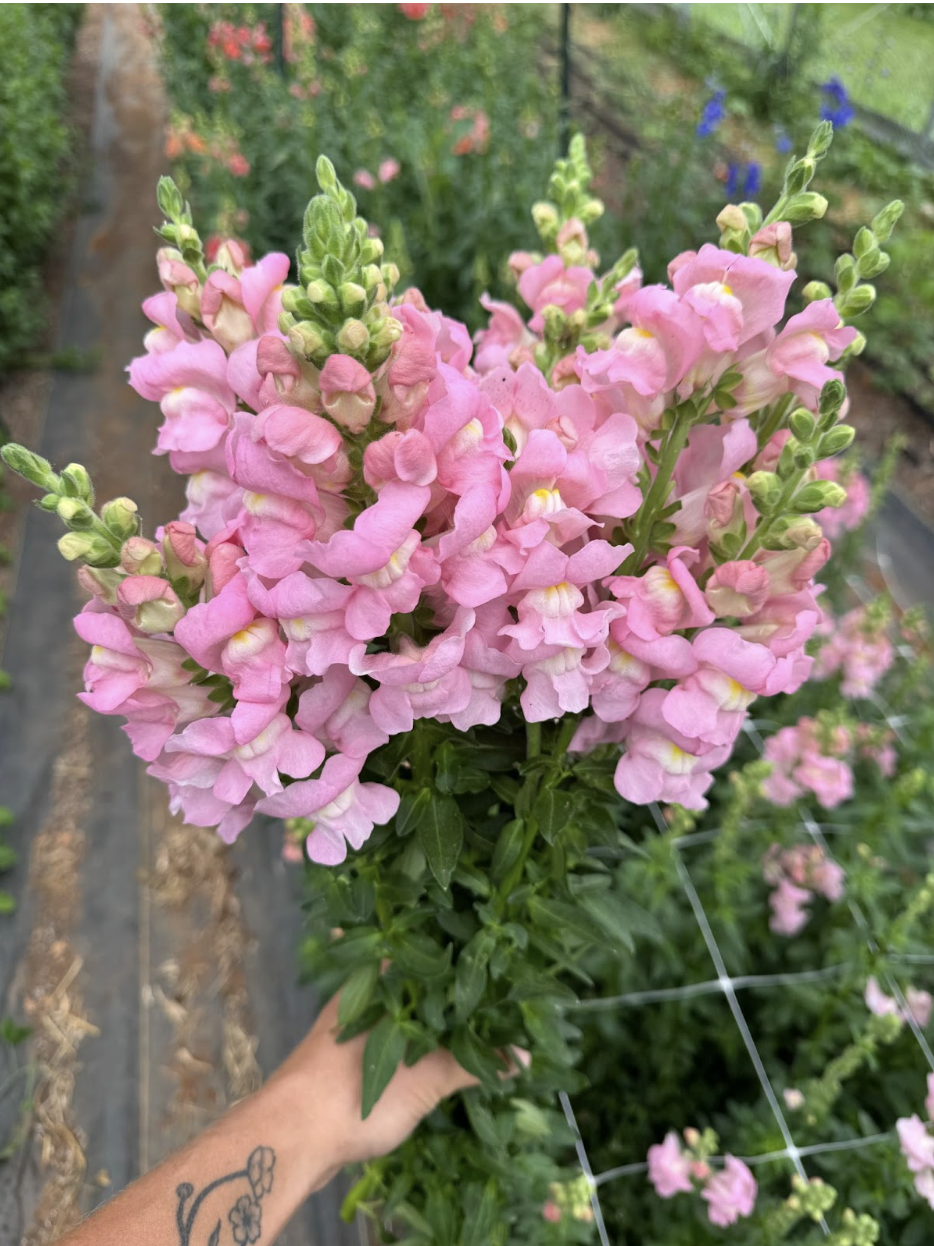
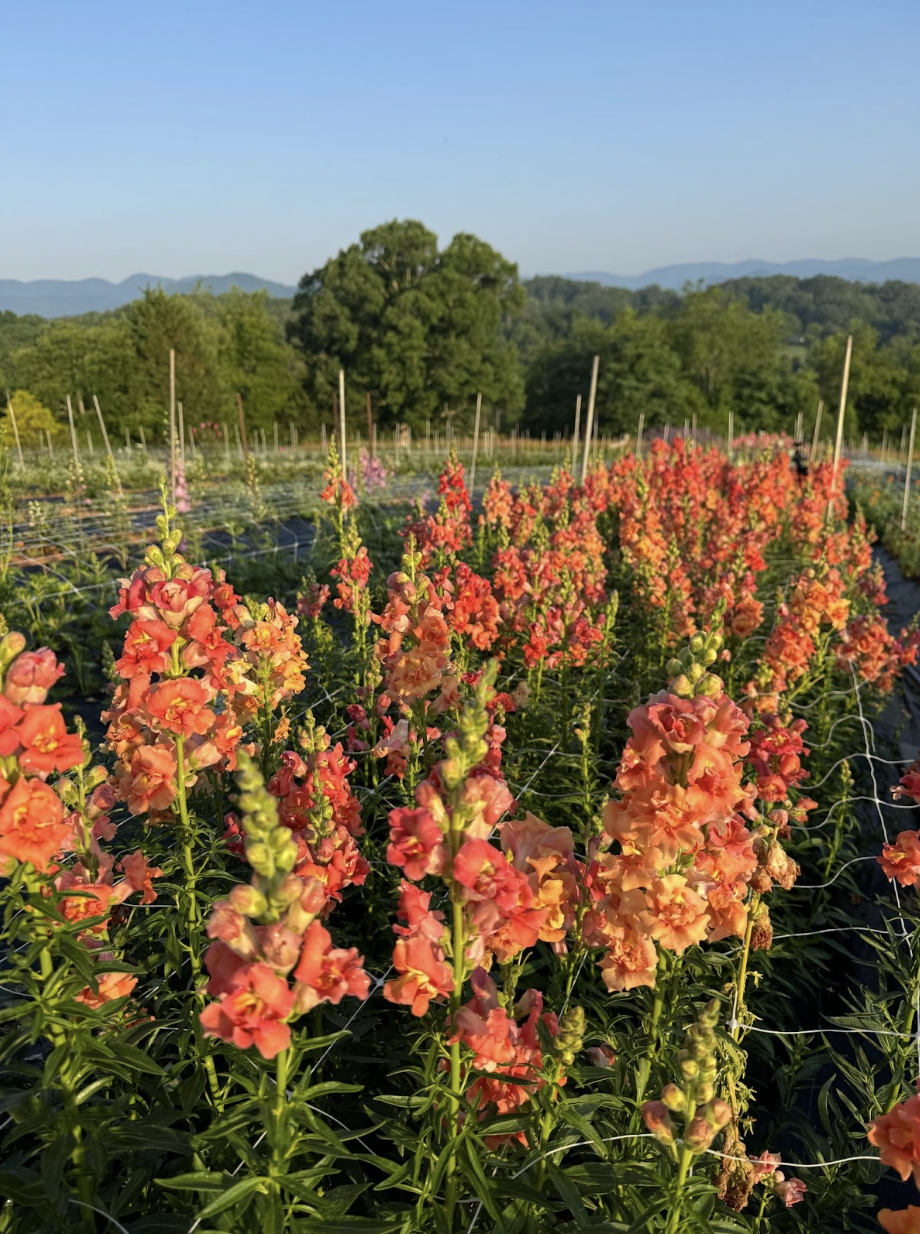
Snapdragons
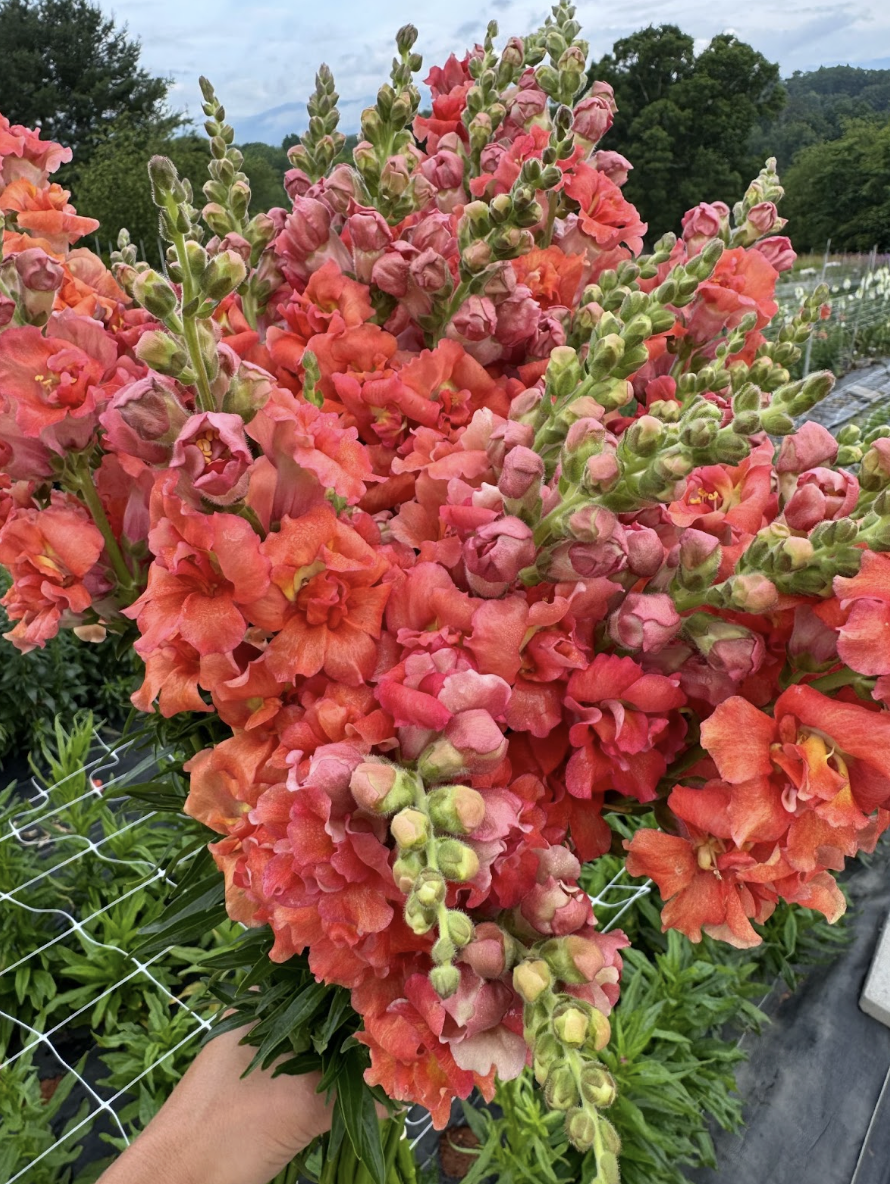
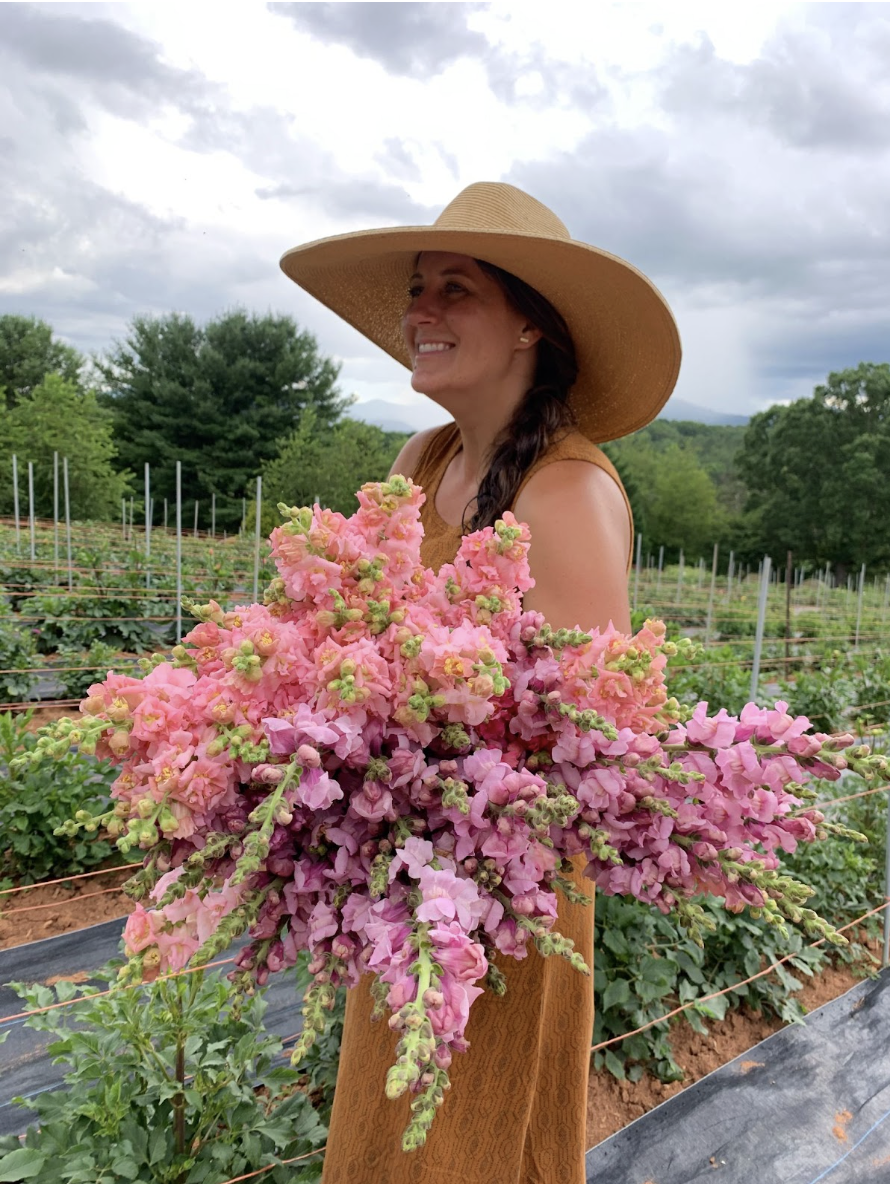
We grow our snapdragons in the high tunnel for an extra-early crop and in the field for later blooms. The tunnel-grown snapdragons give us tall, strong stems for spring wedding work when other flowers are just beginning.
We grow a wide range of colors, especially from the Madame Butterfly, Chantilly, and Potomac series. The Potomac series does especially well in warmer, more humid climates.
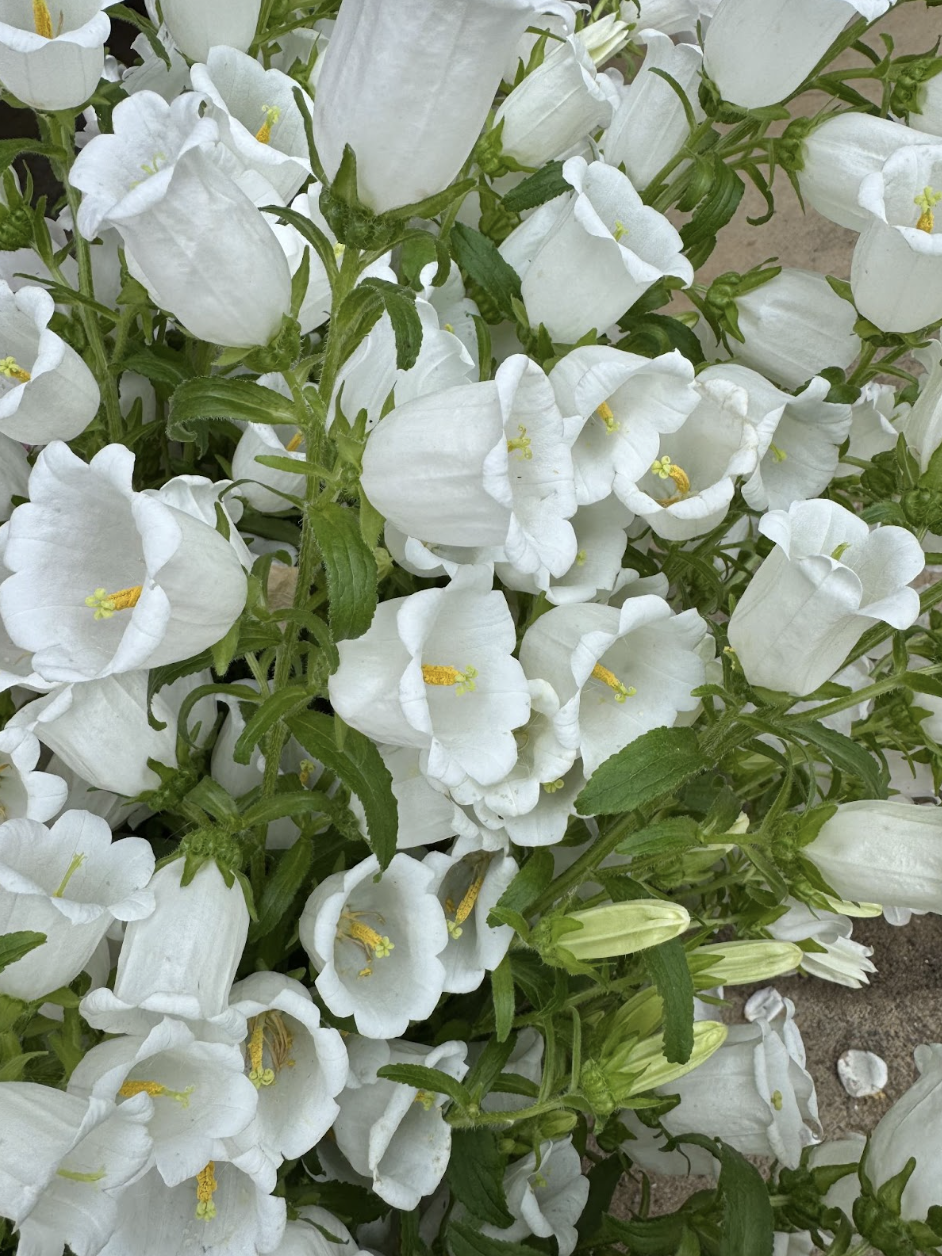
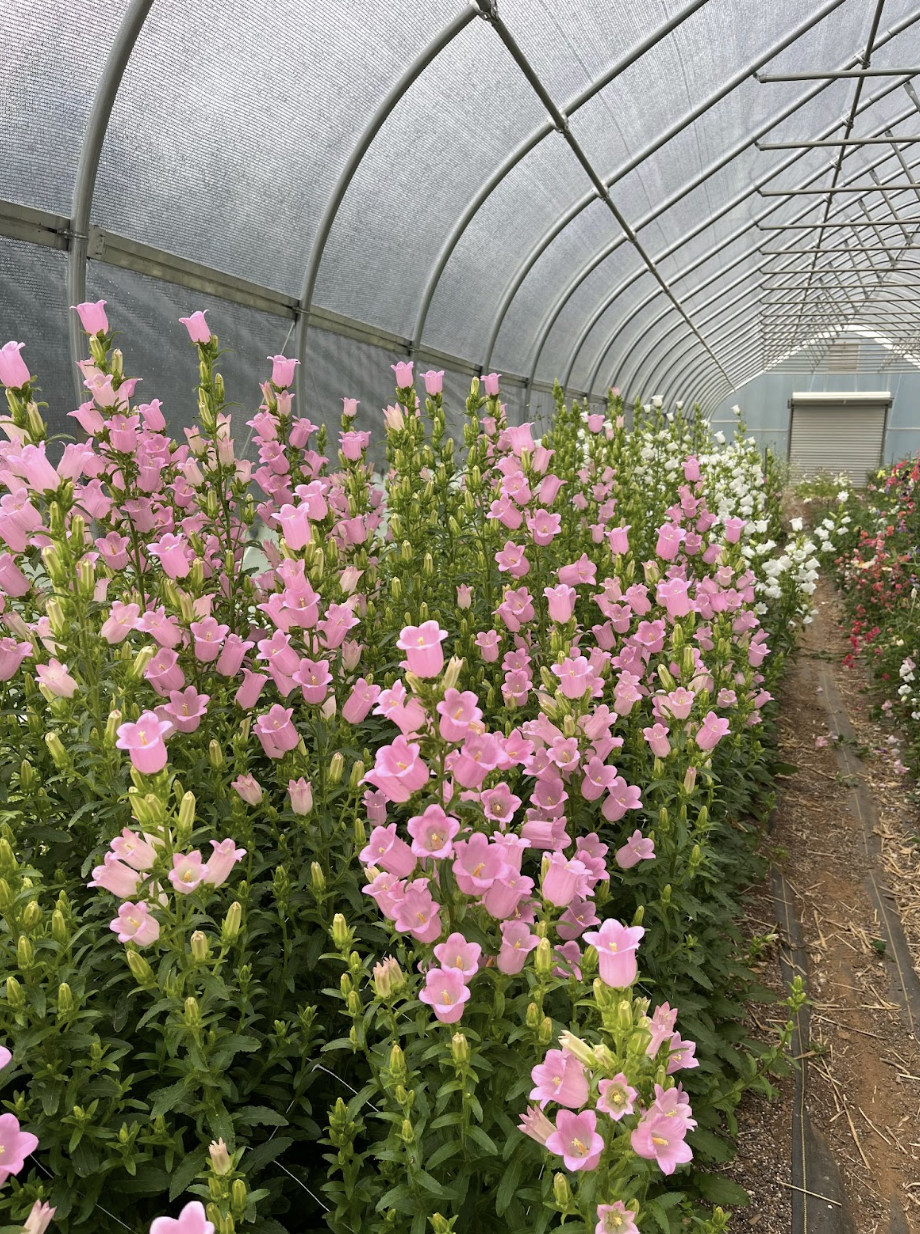
Campanula
We grew campanula in the high tunnels for the first time last year and had great results. We were blown away by their tall stems, perfect for cut flower arrangements.
We grow the Champion Pro pink and white varieties, and wish that we had room to grow all the colors. Their bell-shaped blooms remind us of tiny teacups, and the bees absolutely adore them.
Chocolate Lace Flower
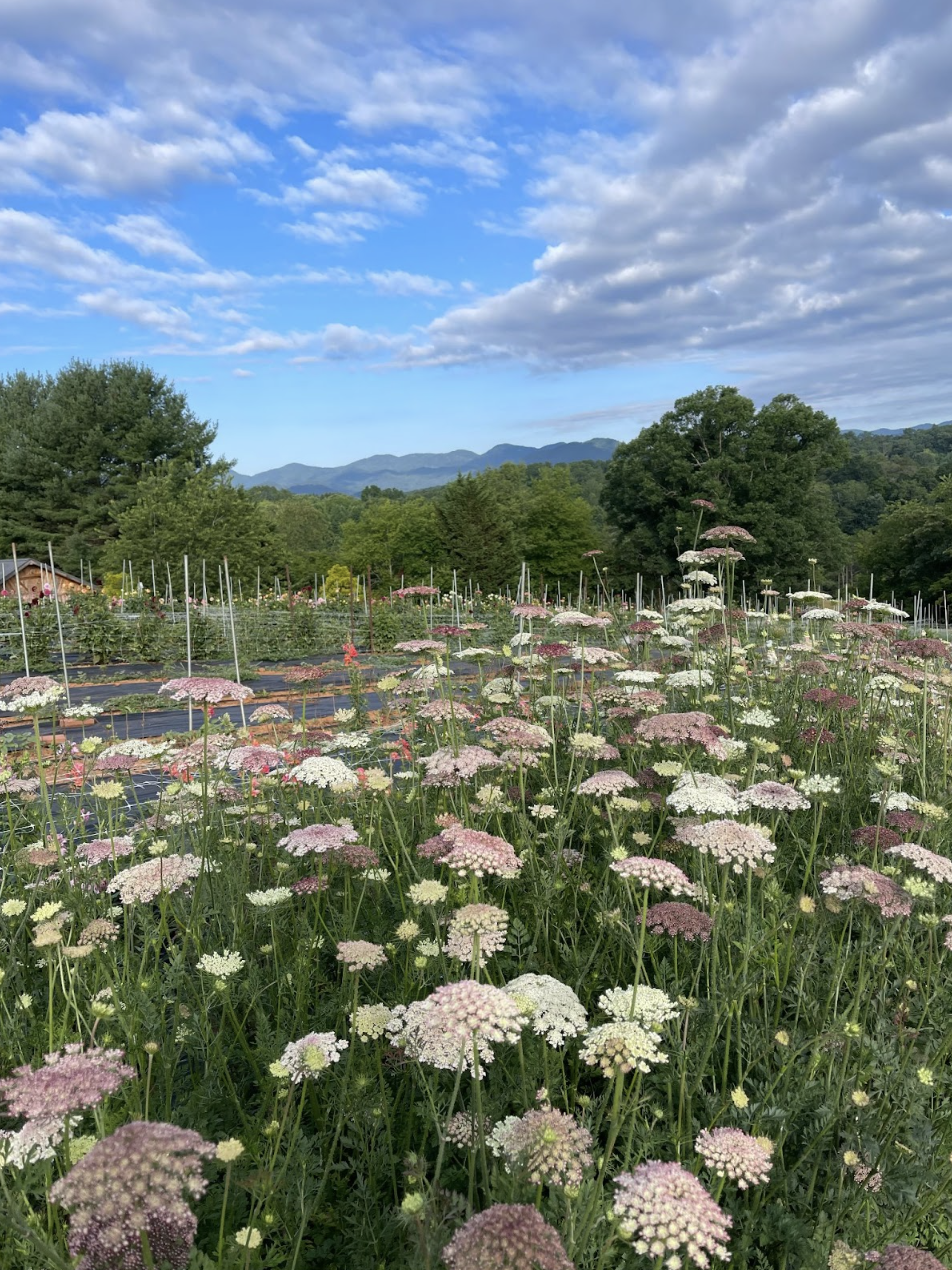
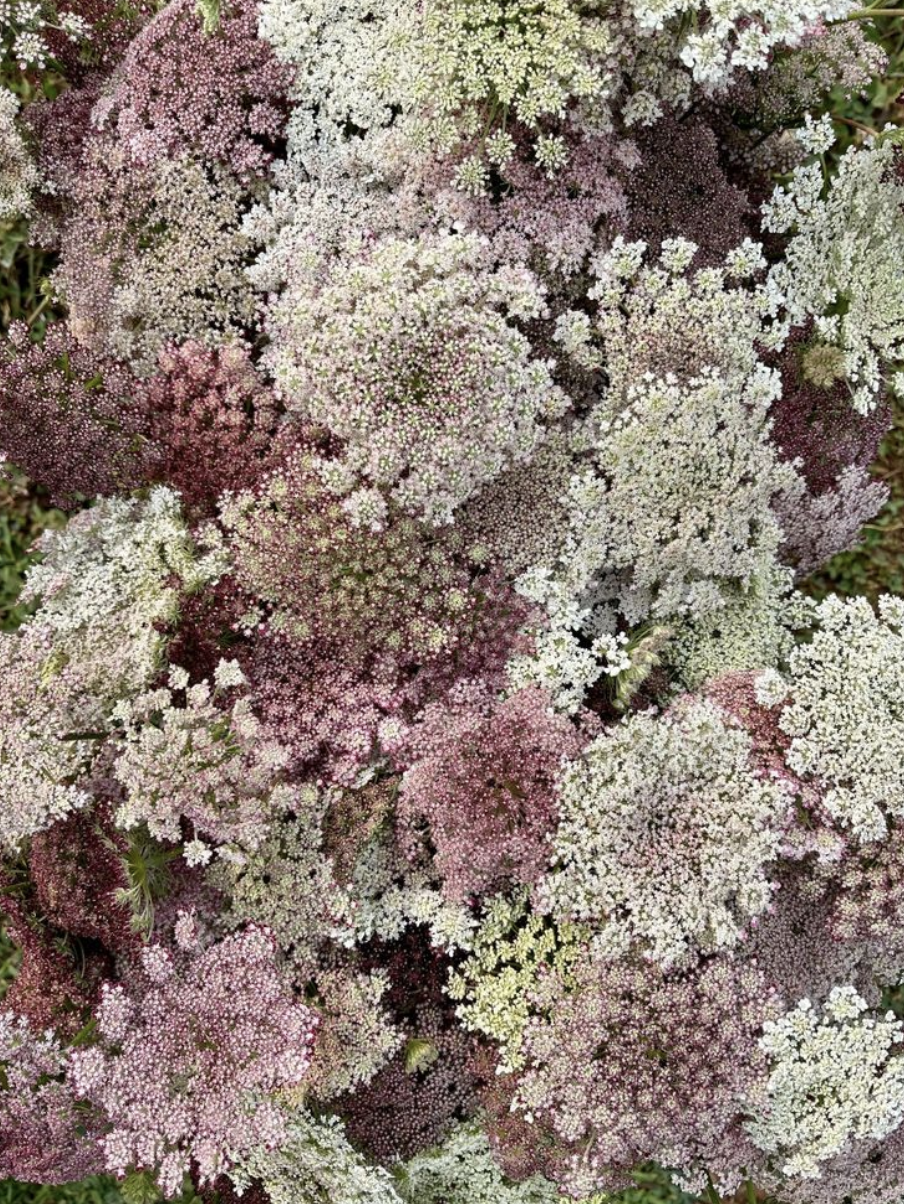
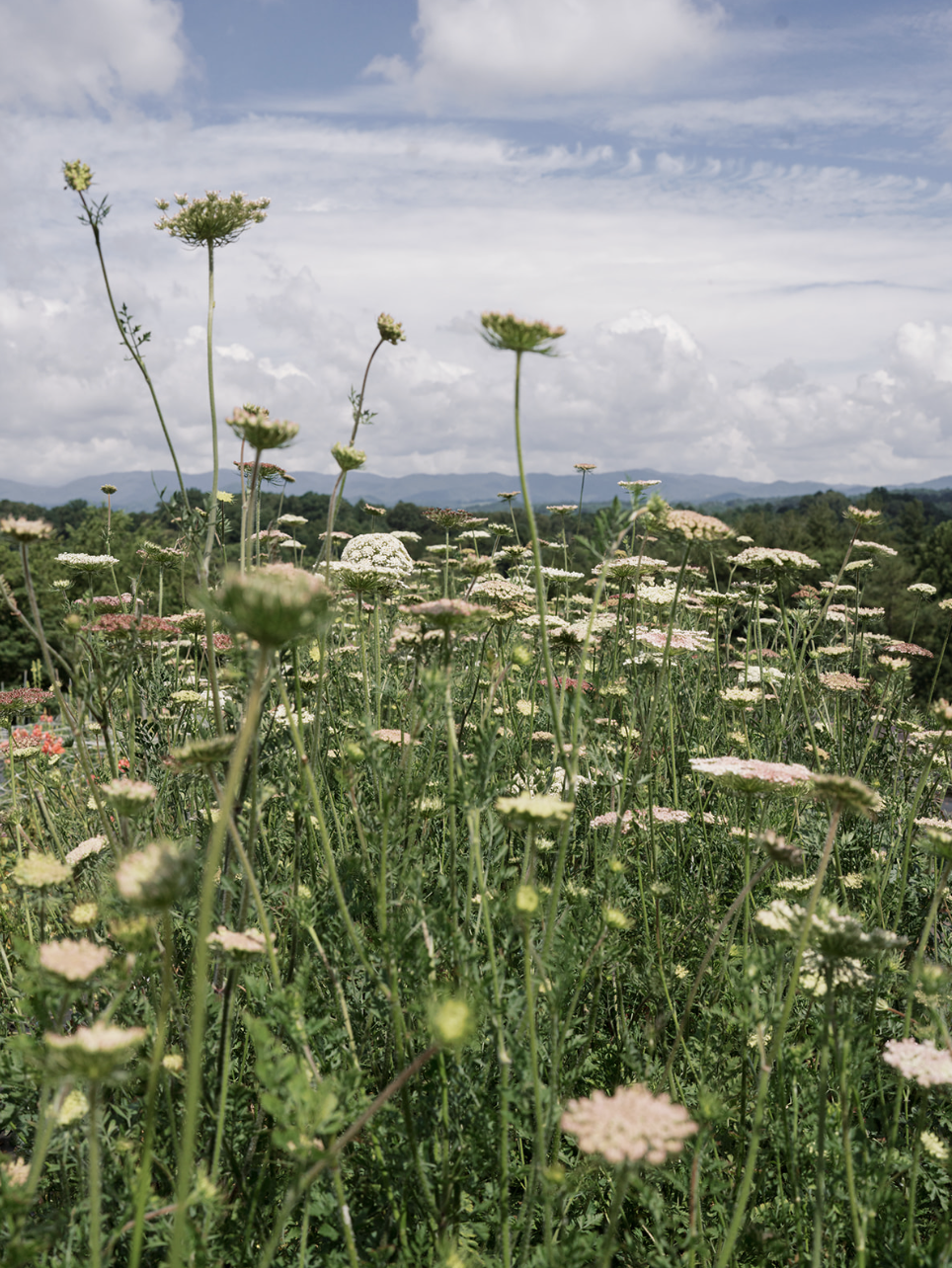
Chocolate Lace Flower is one of those airy, textural blooms that adds quiet depth to an arrangement or bouquet. Similar in shape to Queen Anne’s Lace but richer in tone, it brings soft plum-brown hues to spring floral design.
We love using it in garden-style arrangements where movement and layering matter. It pairs beautifully with blush, ivory, and raspberry tones in early-season wedding flowers. As a cool-season annual, it prefers the mild temperatures of spring and can struggle once true summer heat arrives.
Delphinium
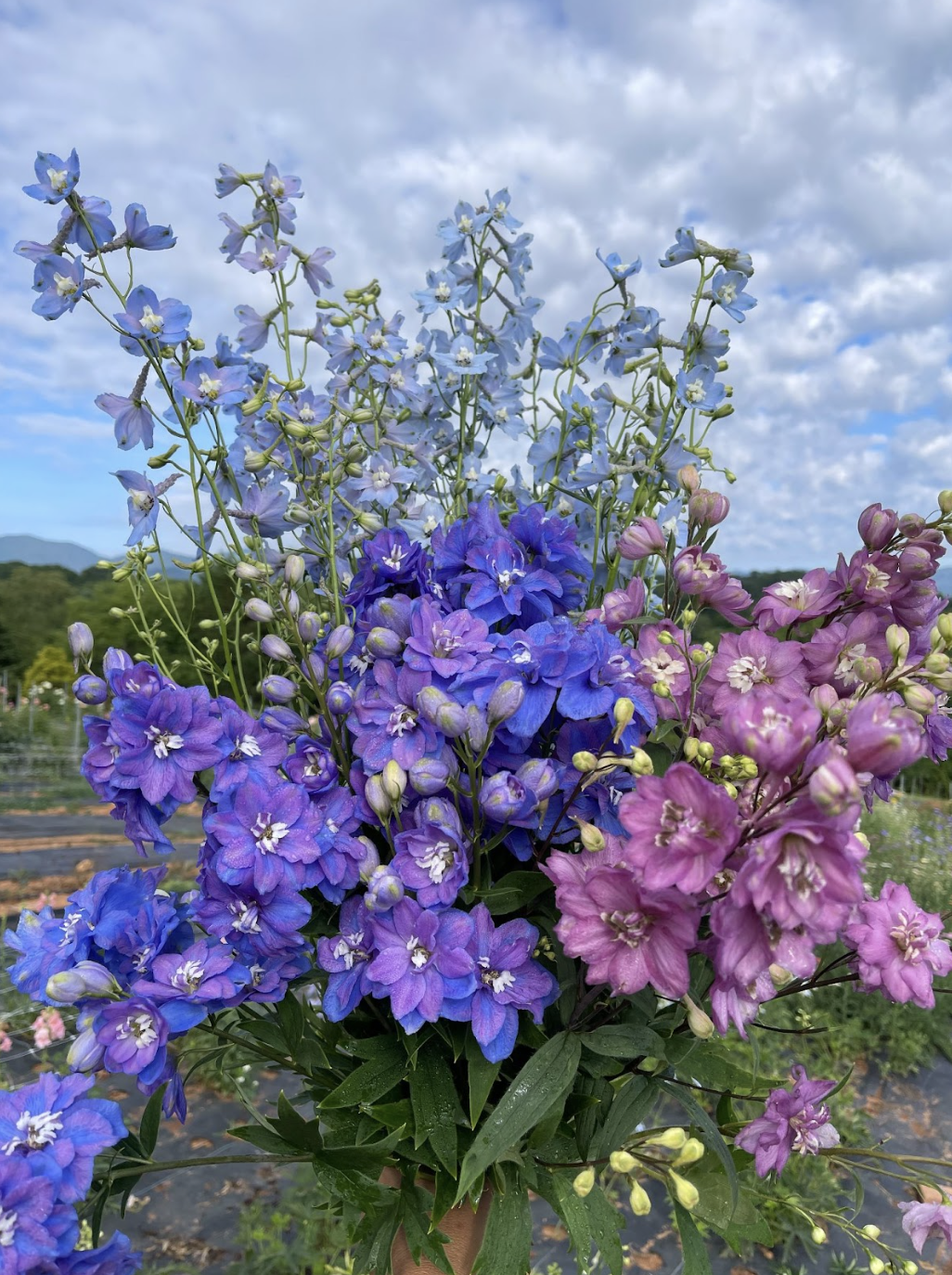
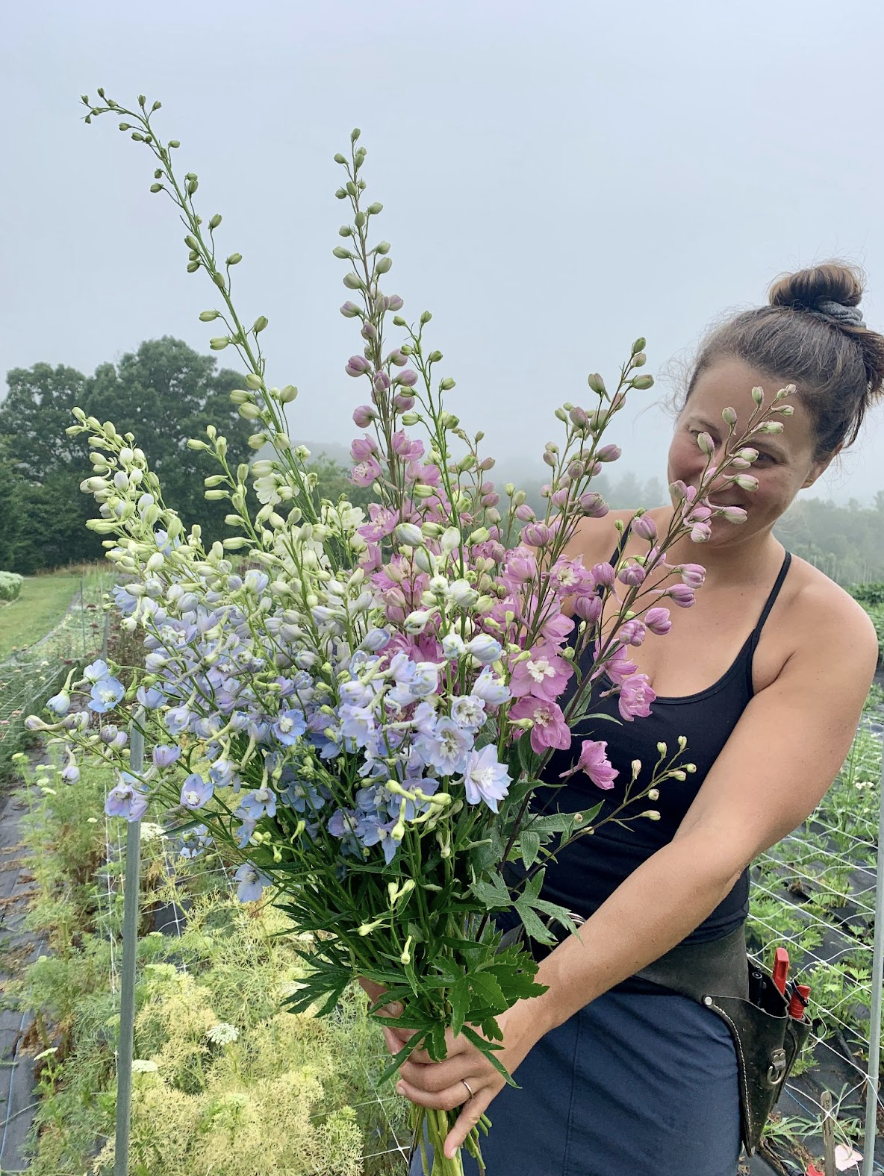
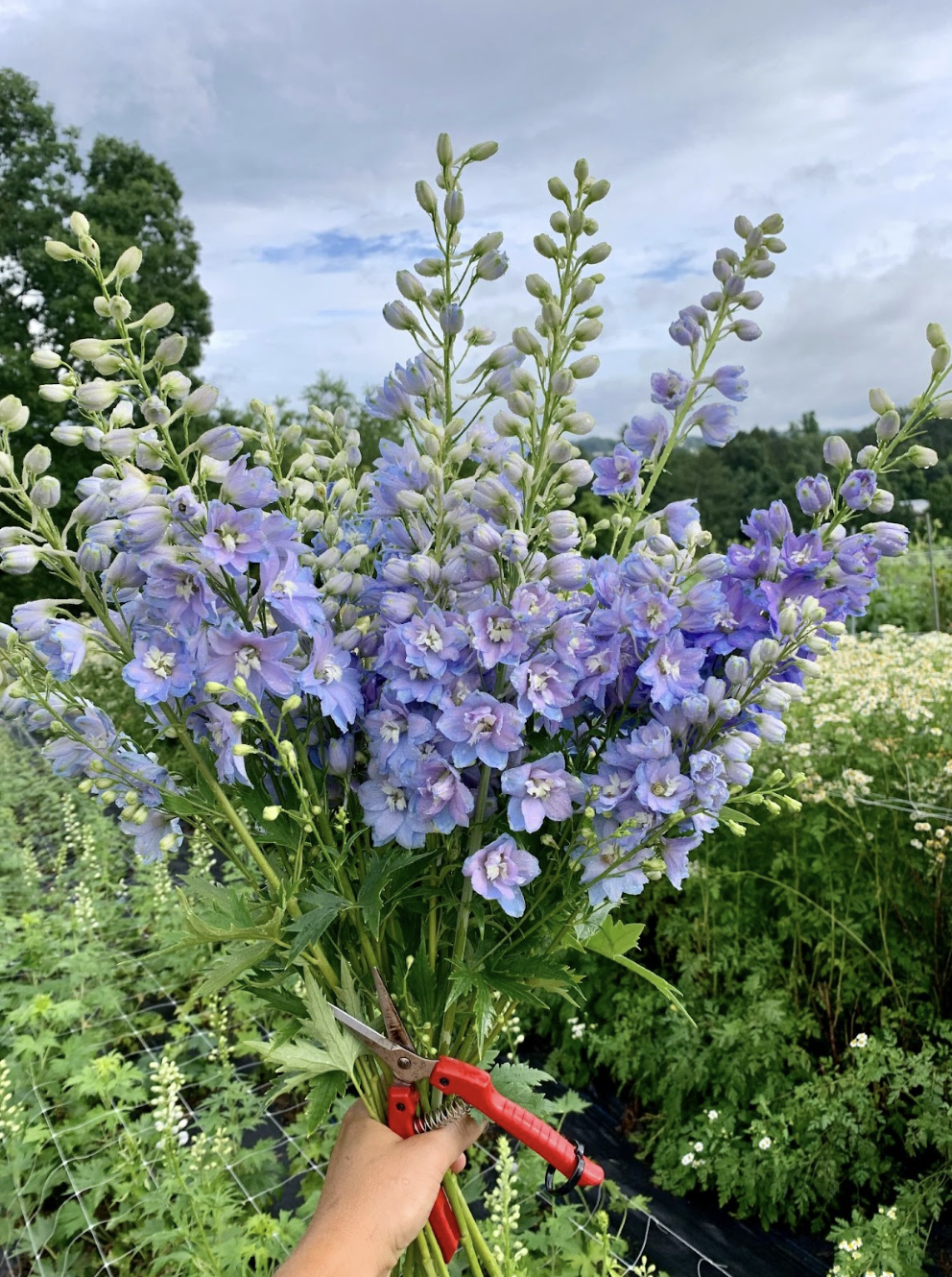
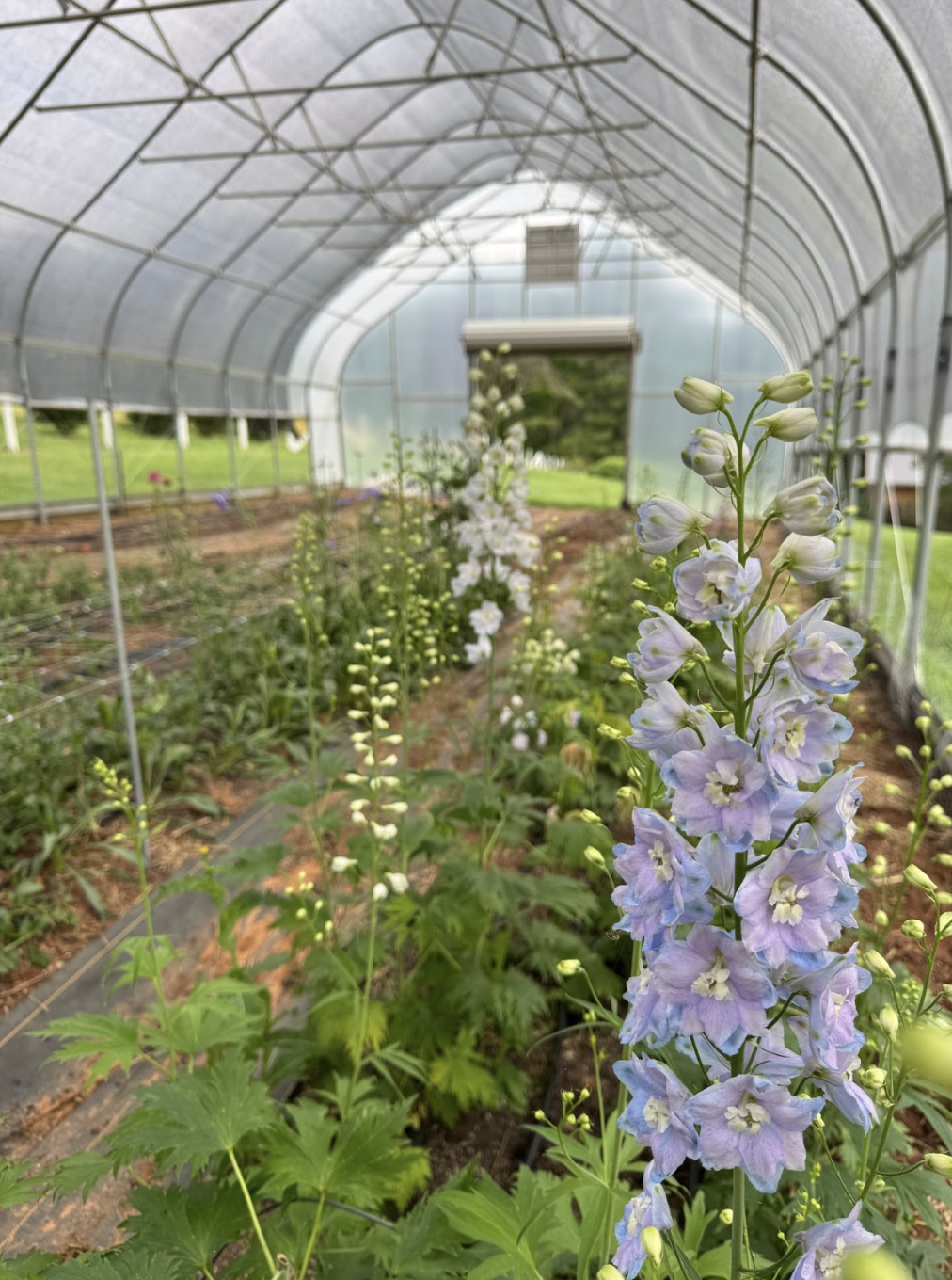
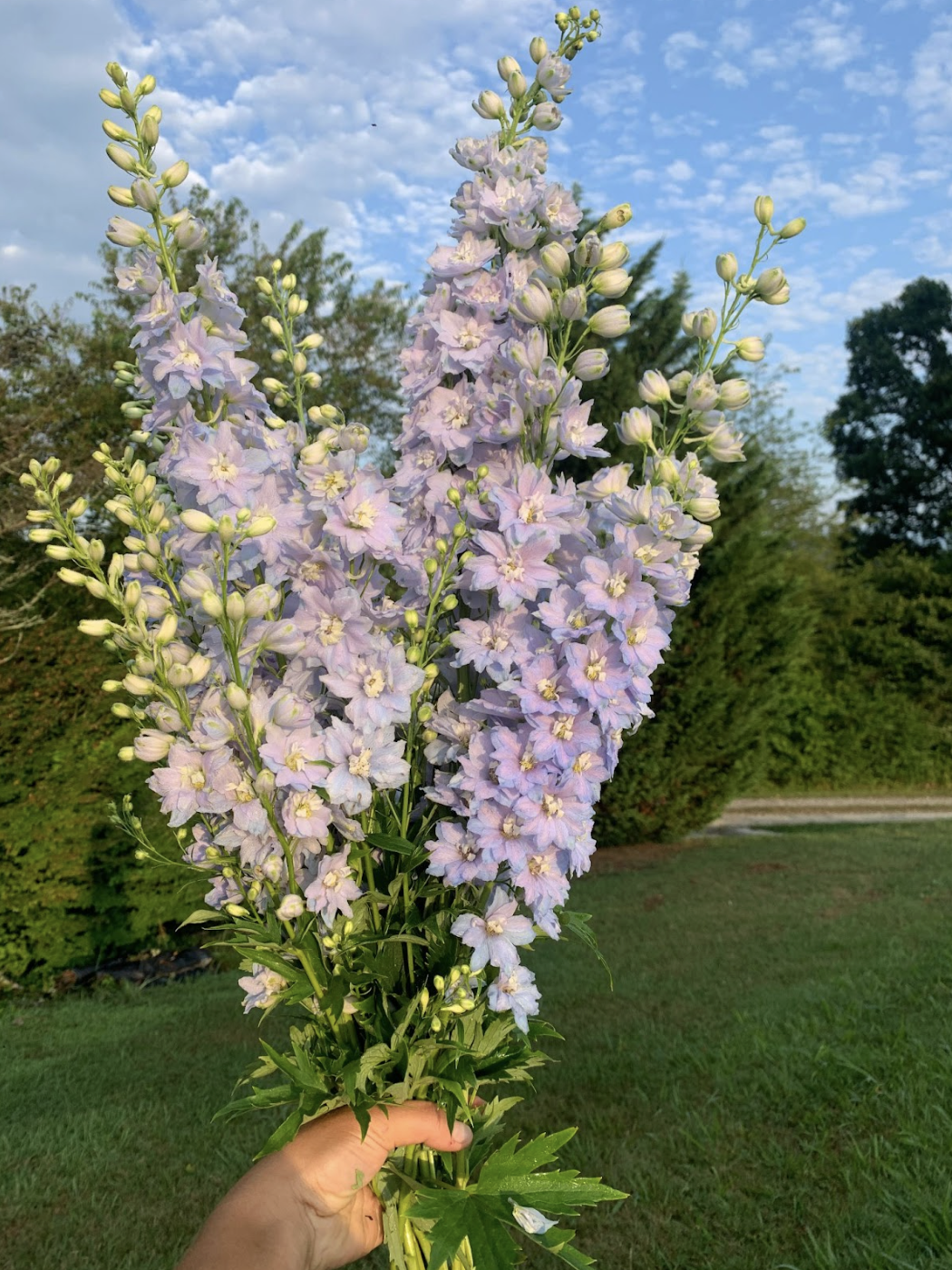
Like snapdragons, we grow delphinium in both the high tunnel and the field. Tunnel-grown delphinium tends to be taller (SO tall!) and more robust, and last year our tunnel crop continued producing for nearly the entire season.
We grow varieties such as Cliveden Beauty, Pacific Giant Astolat, and Guardian Blue. Delphinium thrives in cool temperatures and benefits from early planting. It’s a staple in romantic spring wedding bouquets and large-scale ceremony installations. And it's one of the only true blue-toned flowers.
Foxglove
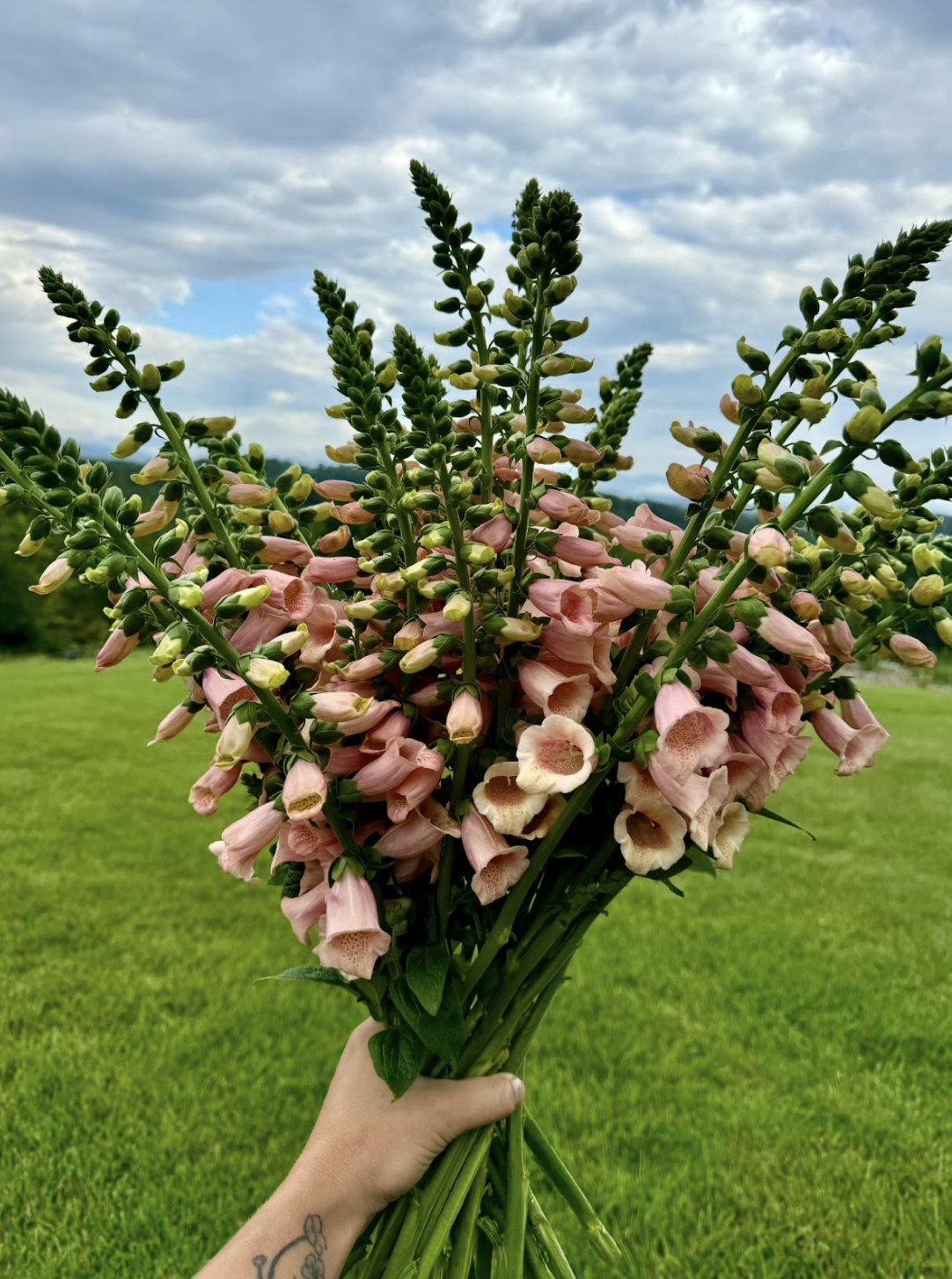
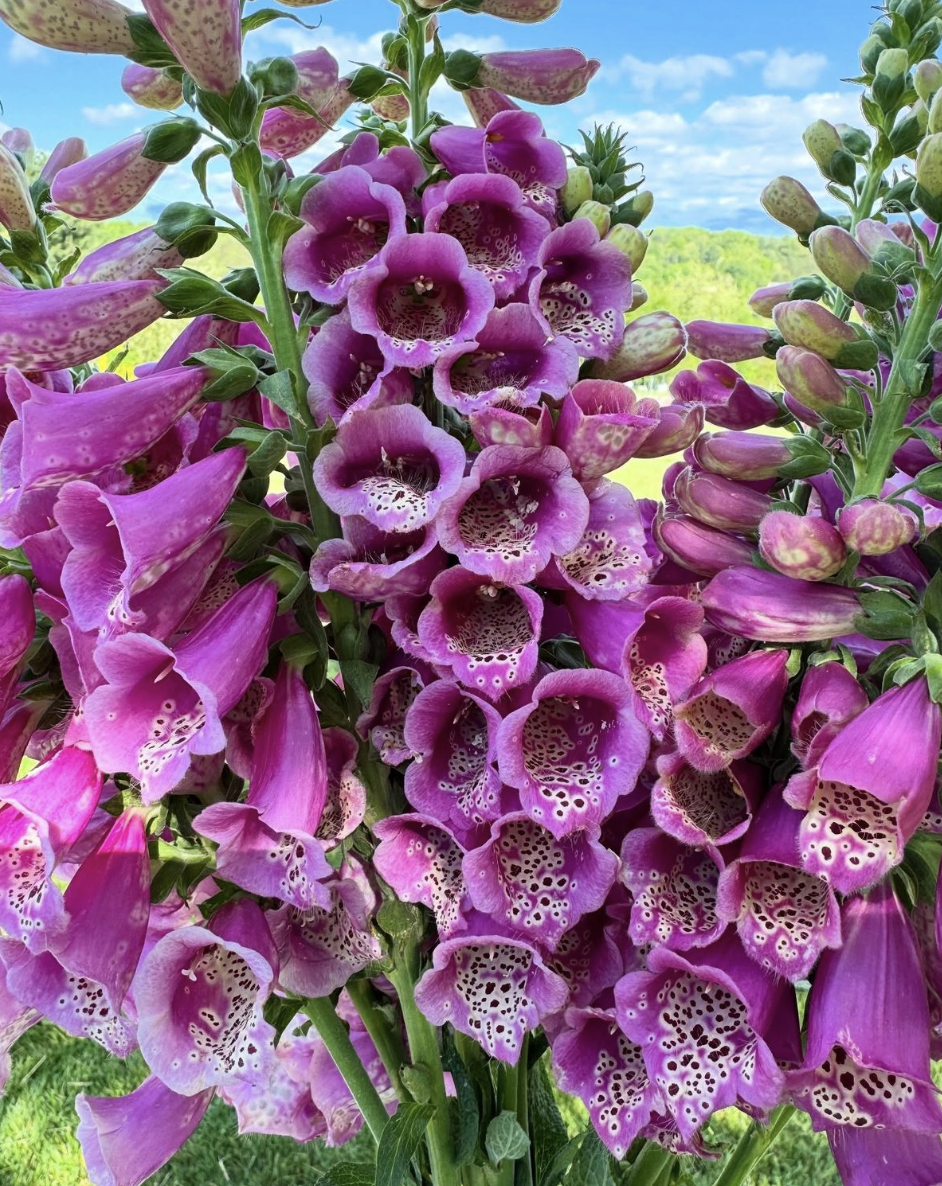
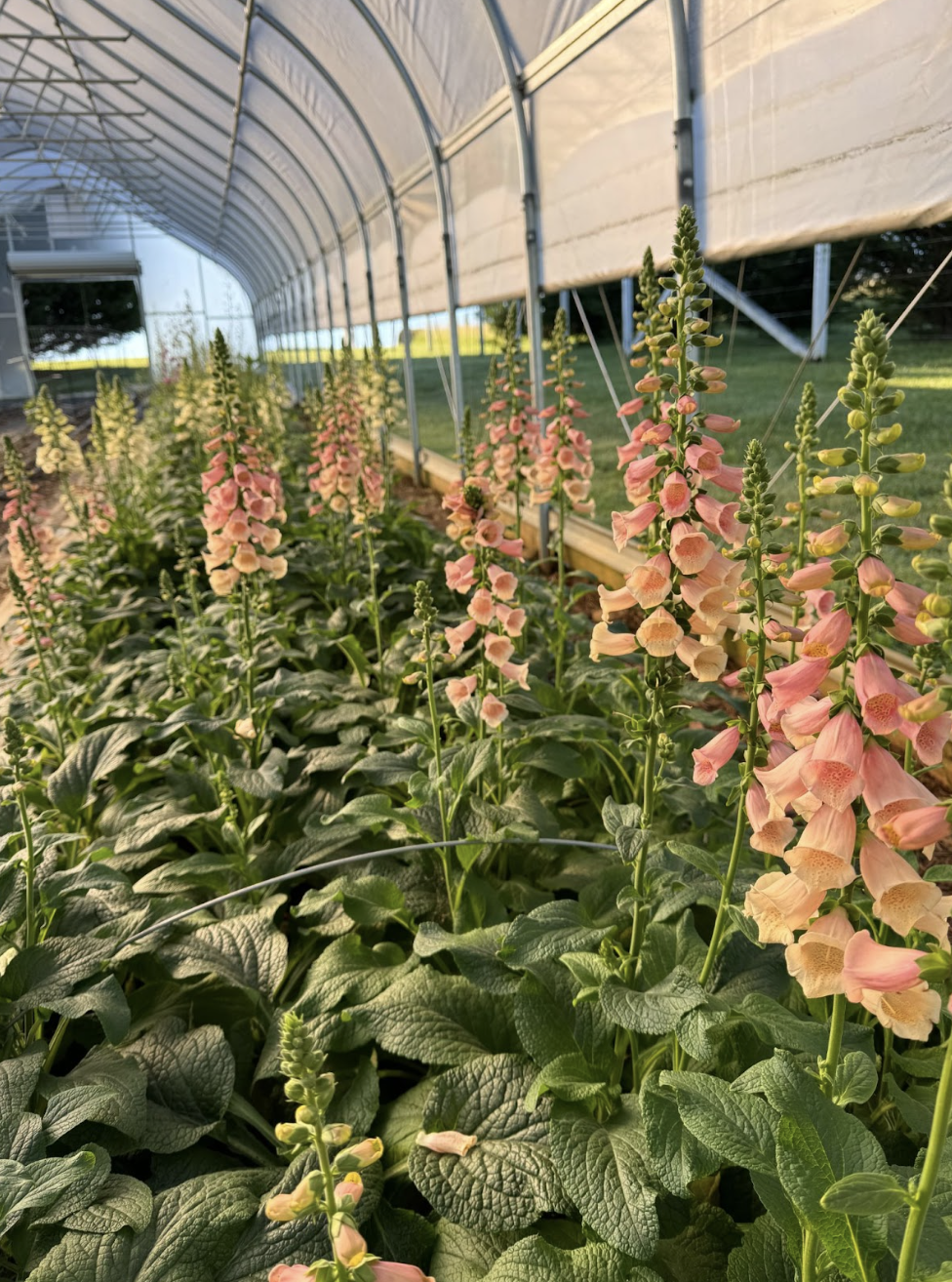
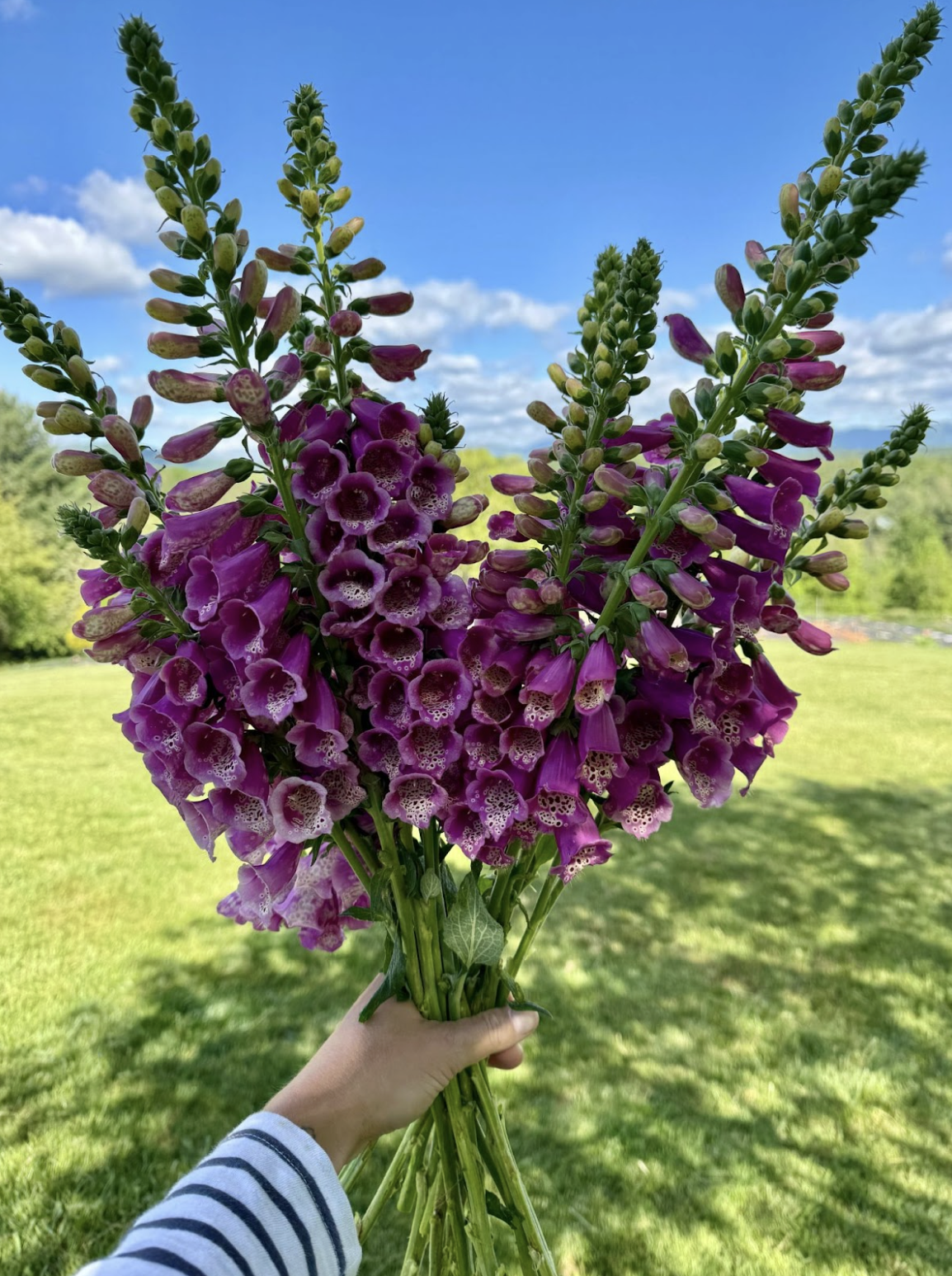
Foxgloves are another flower variety that has thrived in our high tunnels. We’ve found that field-grown foxglove can have shorter stems, especially in warmer springs, but they’re still worth growing for their soft, storybook-like blooms.
Our favorite varieties include Camelot Creme, Dalmatian Peach, and Dalmatian Rose. These shades feel especially at home in garden-inspired wedding flowers. Like many cool-season blooms, foxglove benefits from a chill period and performs best when planted early. They will also continue blooming into the fall, if kept watered and deadheaded throughout the summer months.
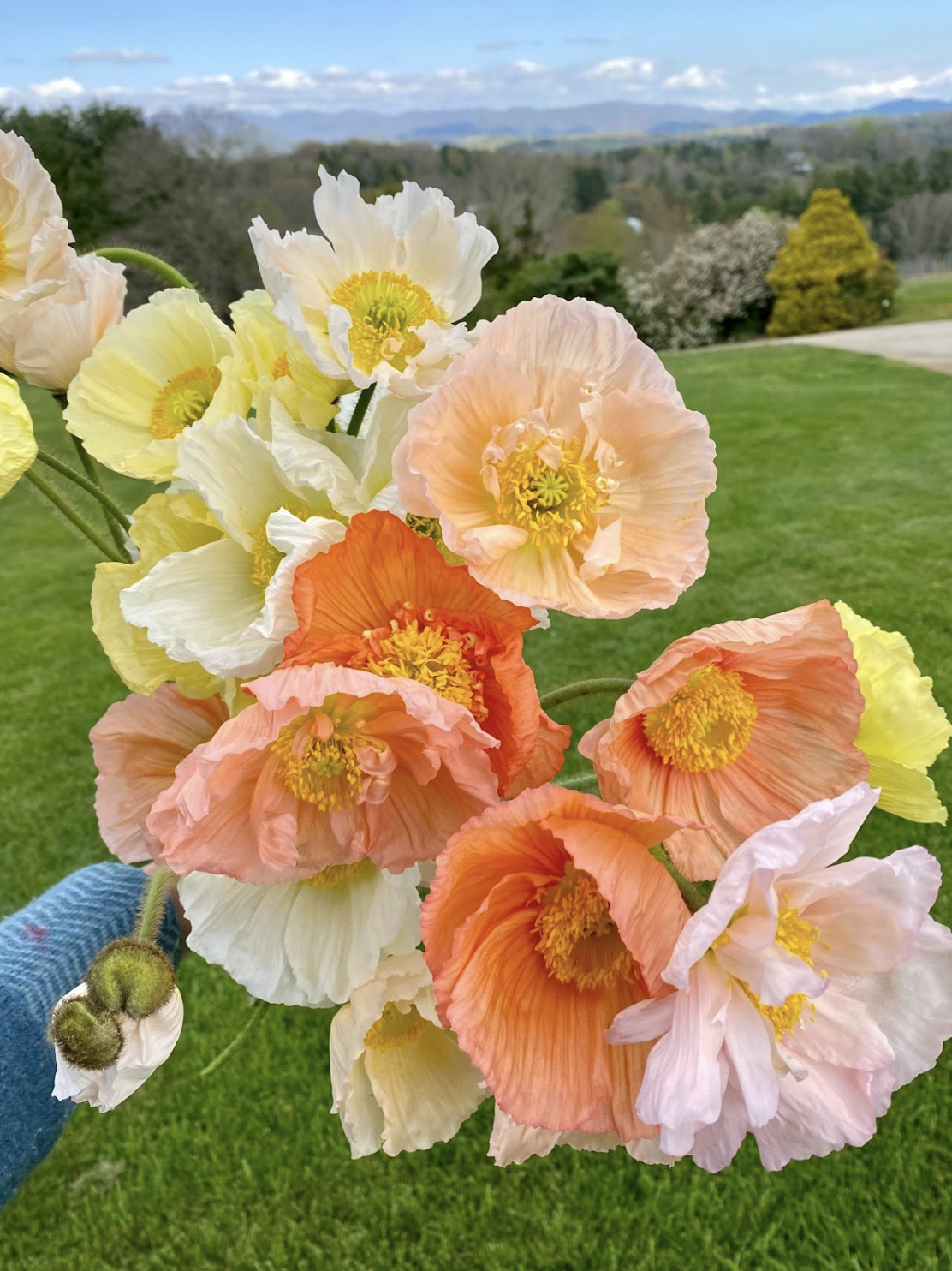
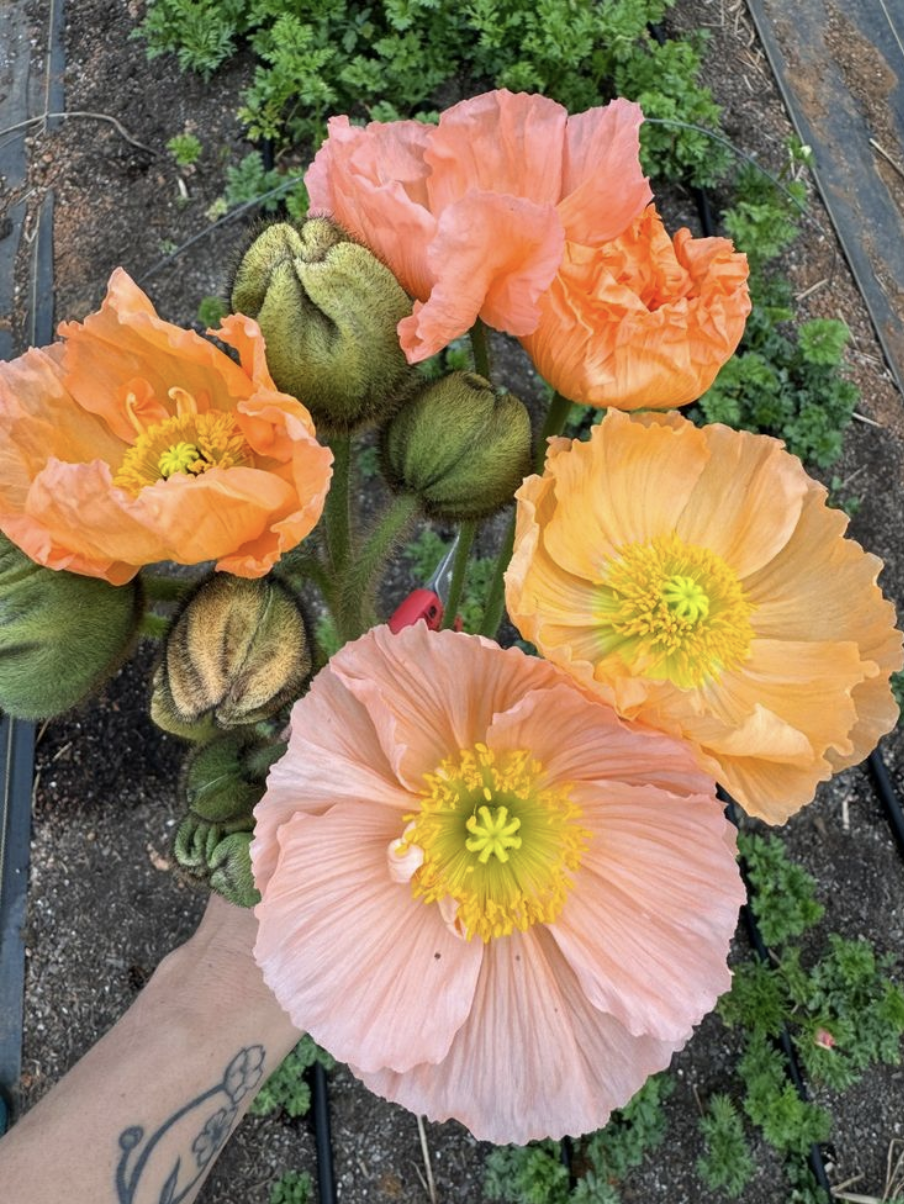
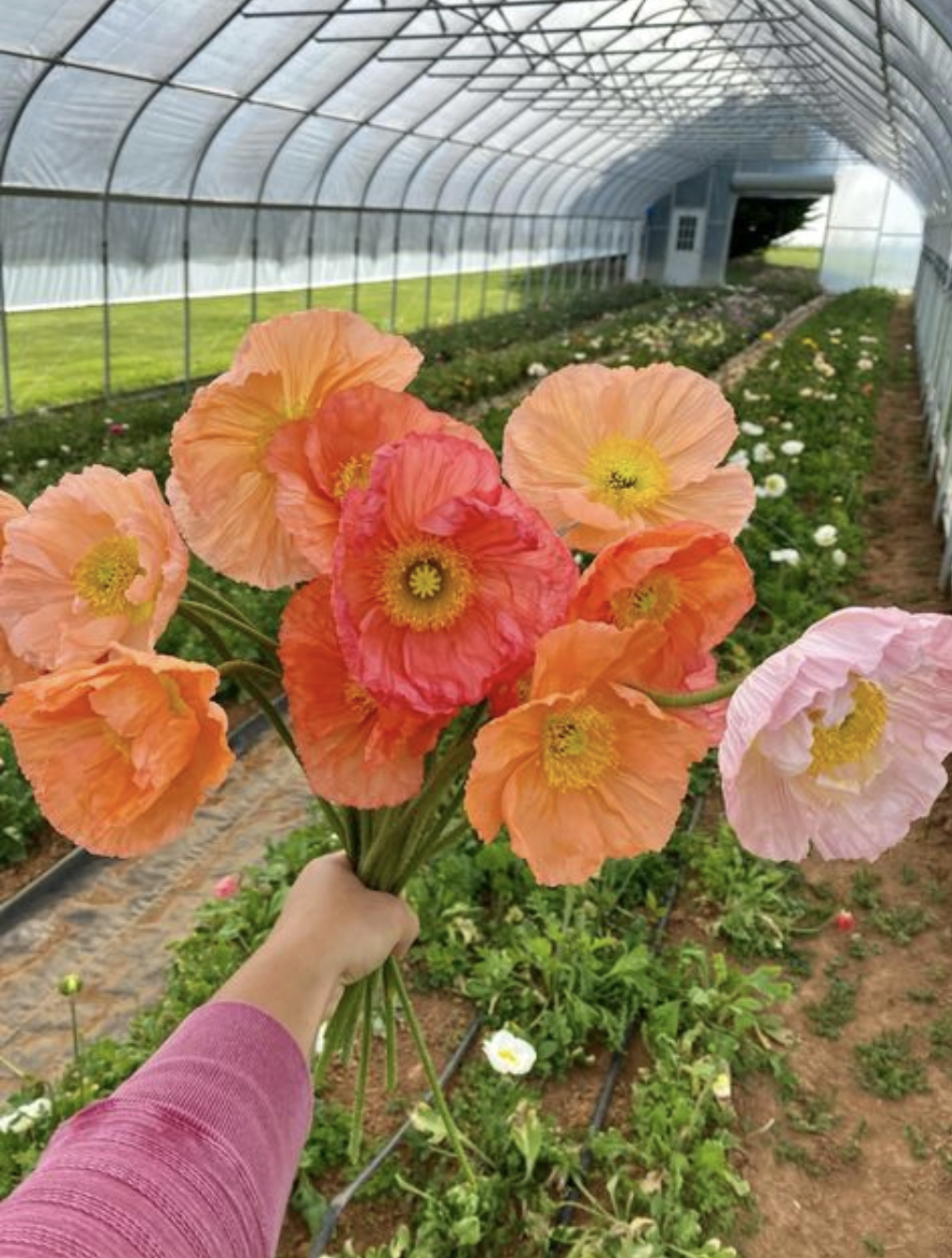
Iceland Poppies
Iceland poppies are the perfect pop of color in early spring. Their bright yet delicate petals catch the morning sun in a way that makes them look like little dancing bits of sunshine. They are the definition of romantic whimsy!
These are classic cool-season flowers that prefer mild temperatures and often fade once summer heat sets in. For spring bouquets and arrangements, they offer unmatched color and movement.
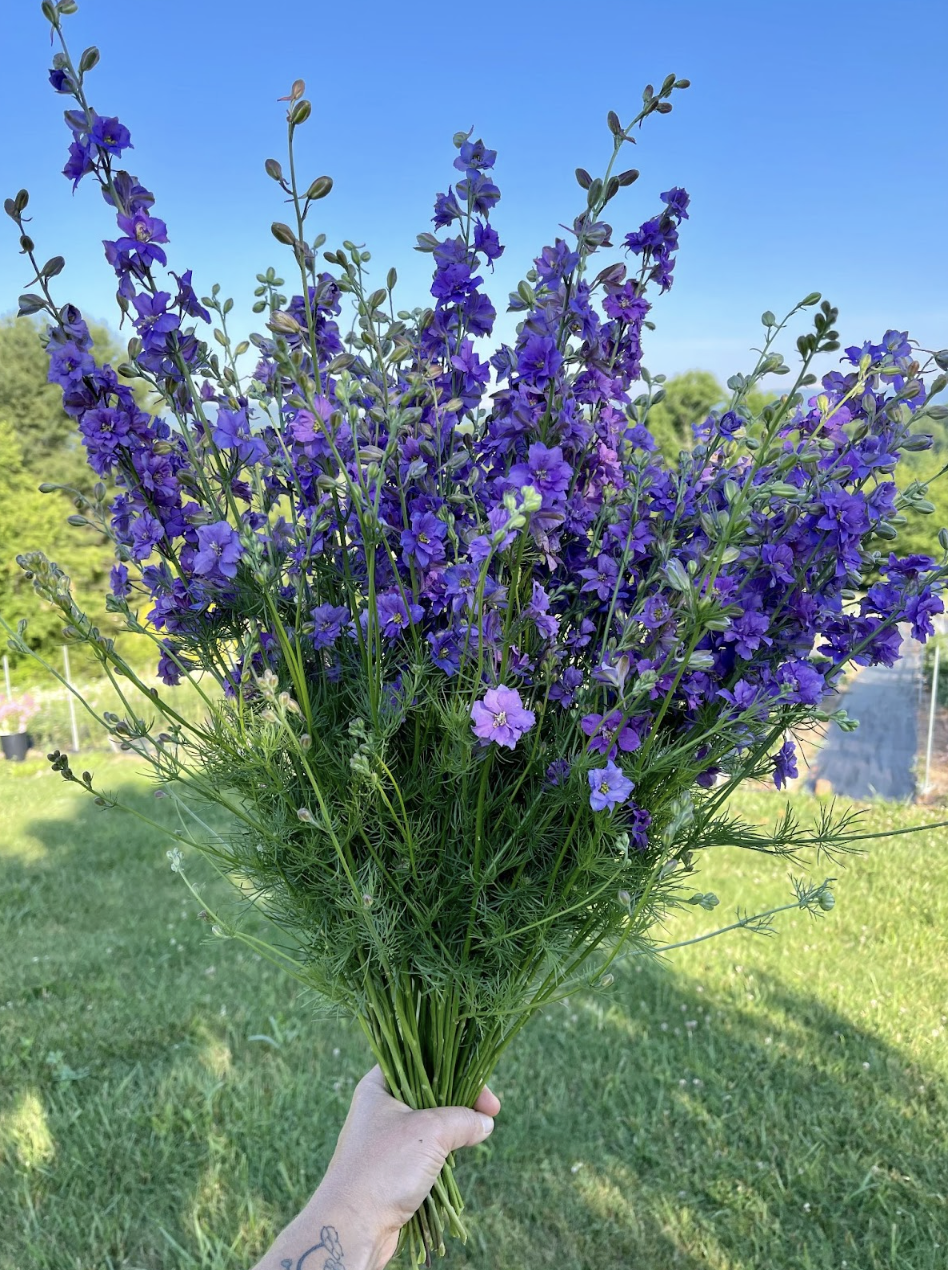
Larkspur
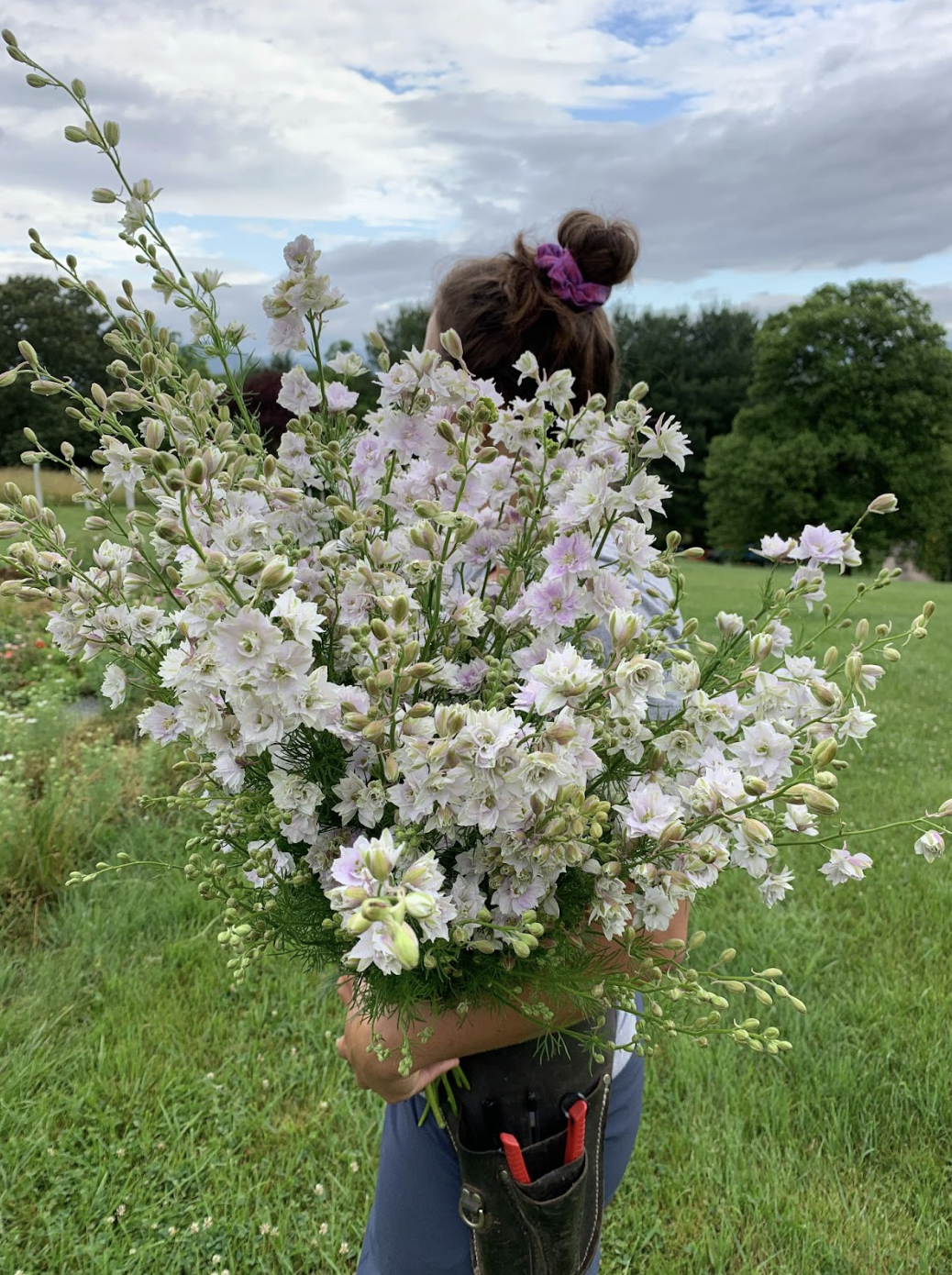
Larkspur thrives in cool soil and often performs best when sown early; they grow particularly well when direct-sown. We grow Cannes Mix and the QIS colors, all of which offer tall stems and soft, romantic color. Larkspur adds height and a natural, airy feel to spring arrangements. Larkspur is especially lovely in pastel wedding palettes.
Nigella (Love in a Mist)
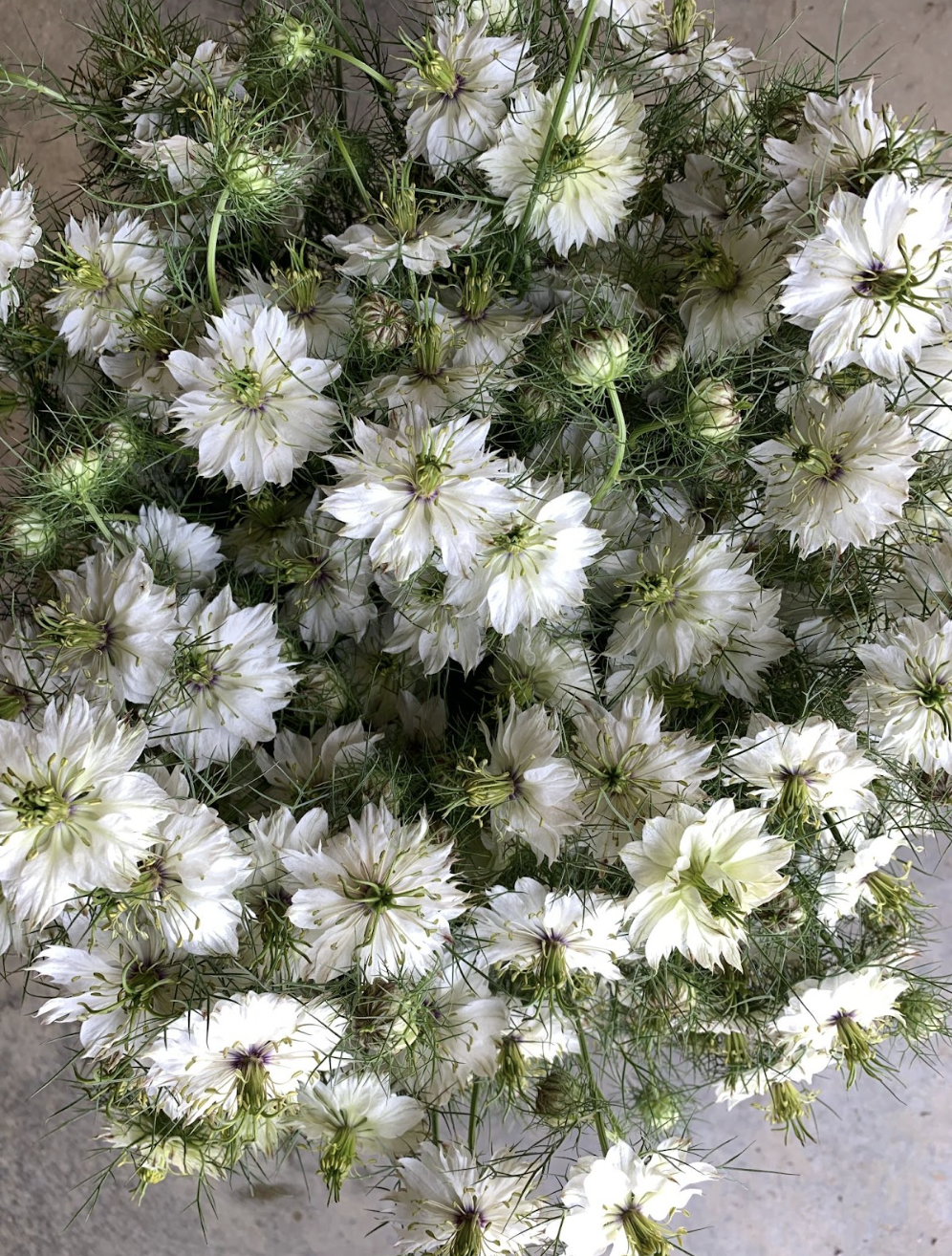
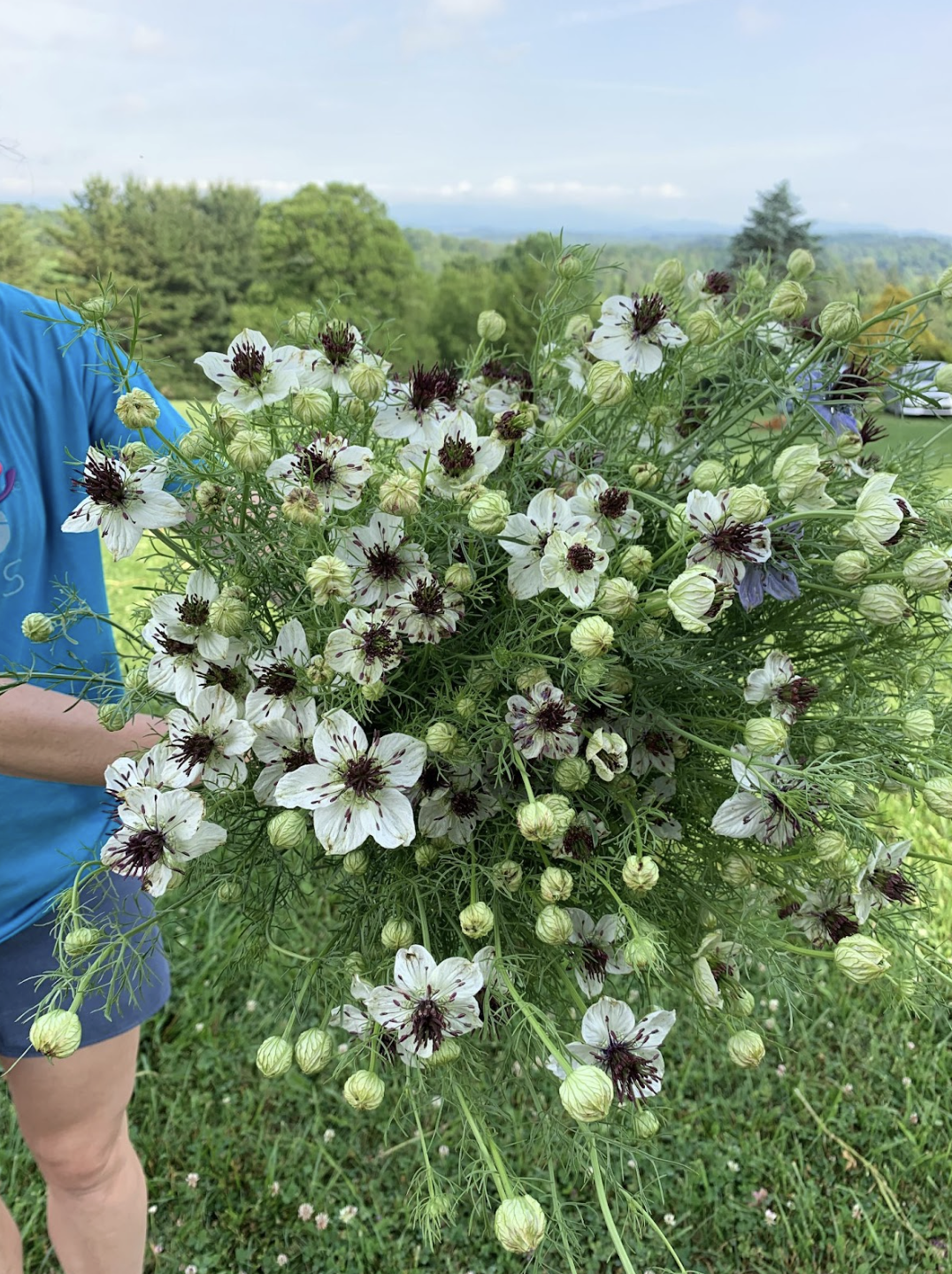
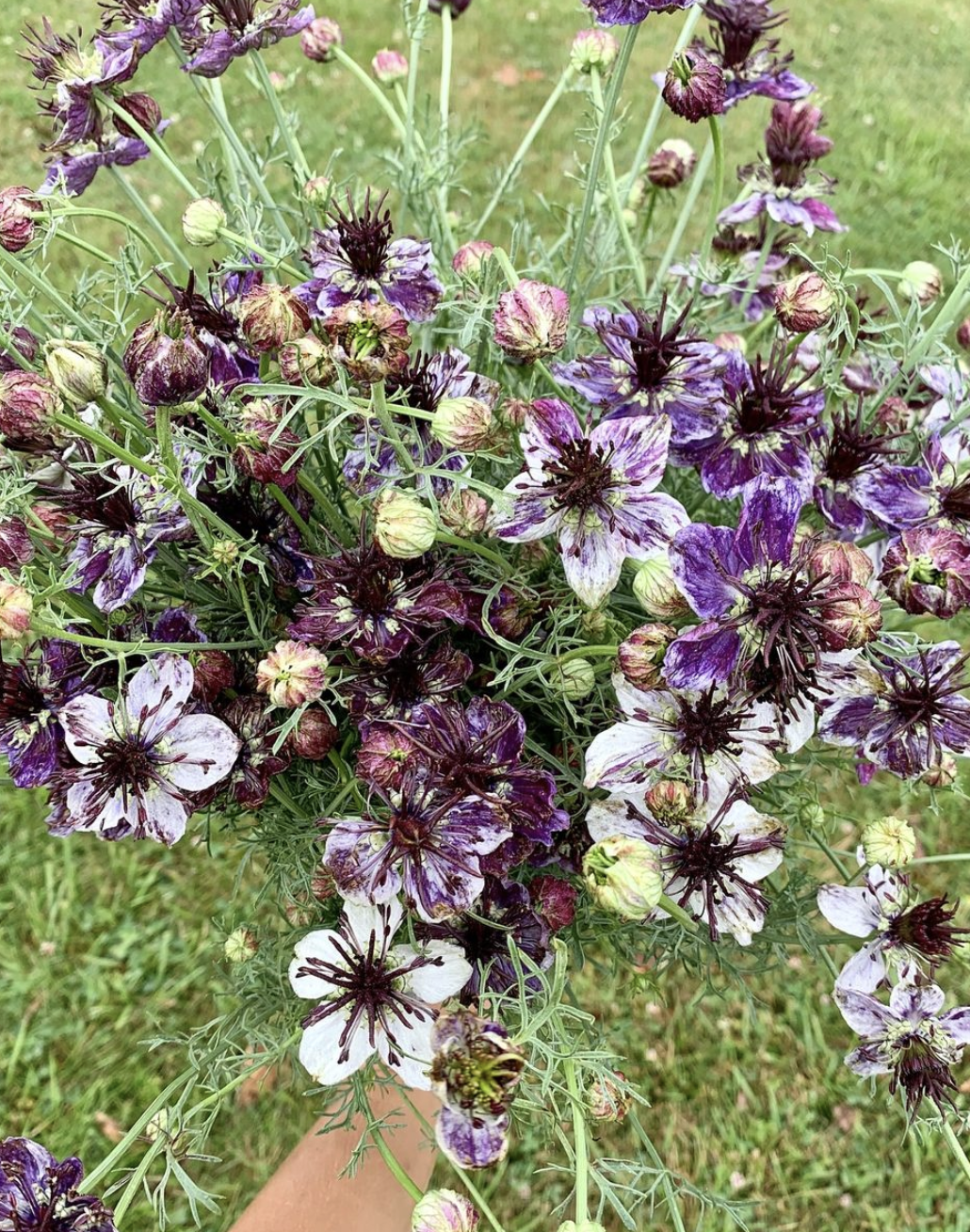
Also known as Love in a Mist, nigella is one of those flowers that’s beautiful in every stage. The star-shaped blooms are delicate and airy, but they also mature into sculptural seed pods that add architectural interest and dry beautifully for later use.
We grow Miss Jekyll Light Blue & White and Delft Blue, and we use both the flowers and the seed pods in floral design. Nigella thrives in cool weather and prefers to be sown early; it also does very well when direct sown.
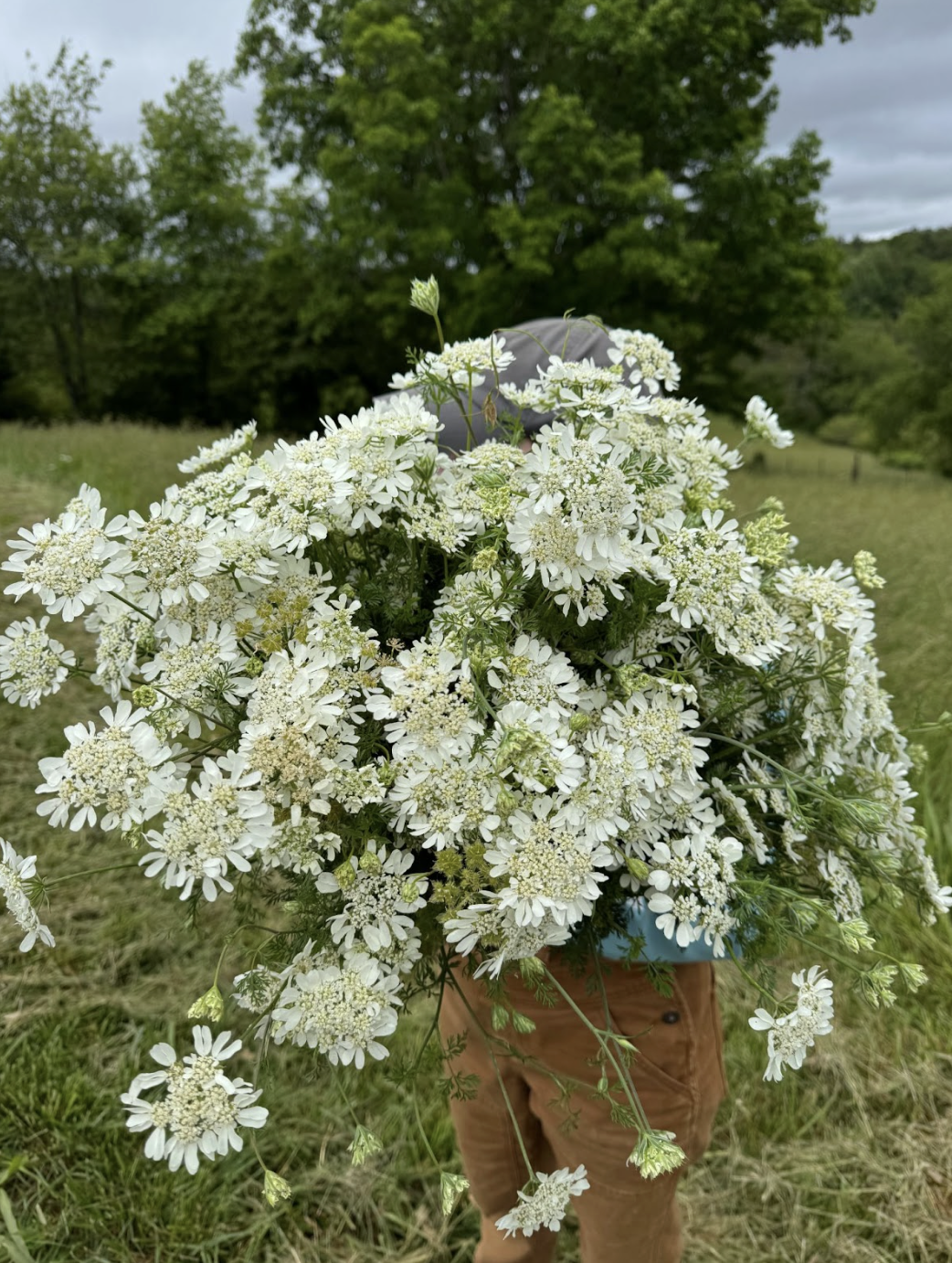
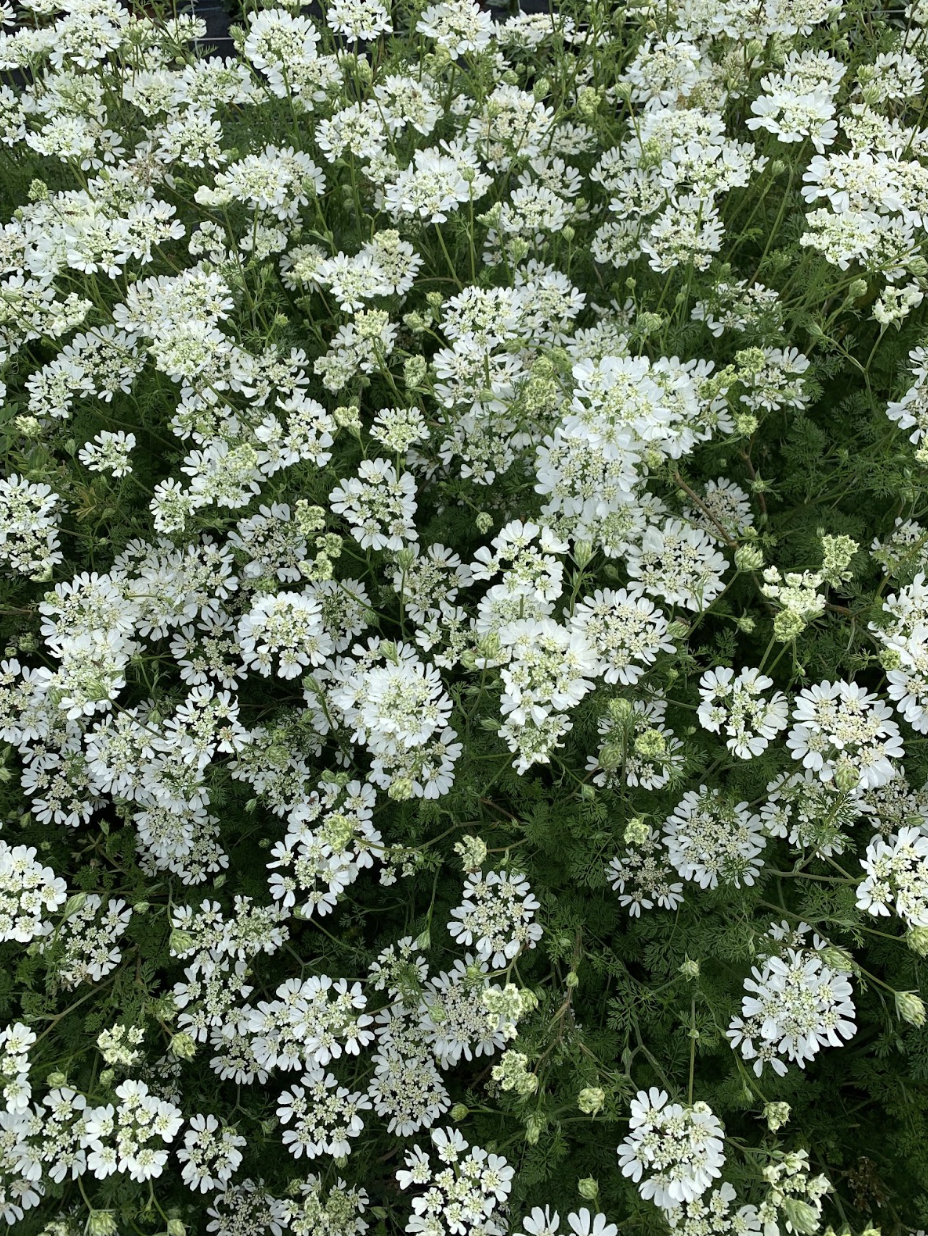
Orlaya
Orlaya is pure romance. Delicate white umbels that float on tall stems. It brings a lace-like softness to bouquets and works beautifully in romantic, neutral wedding color palettes. We call it a “fancy Queen Anne’s Lace.”
This cool-season annual appreciates early sowing and moderate temperatures. It fades quickly once summer heat arrives, making spring its moment to shine.
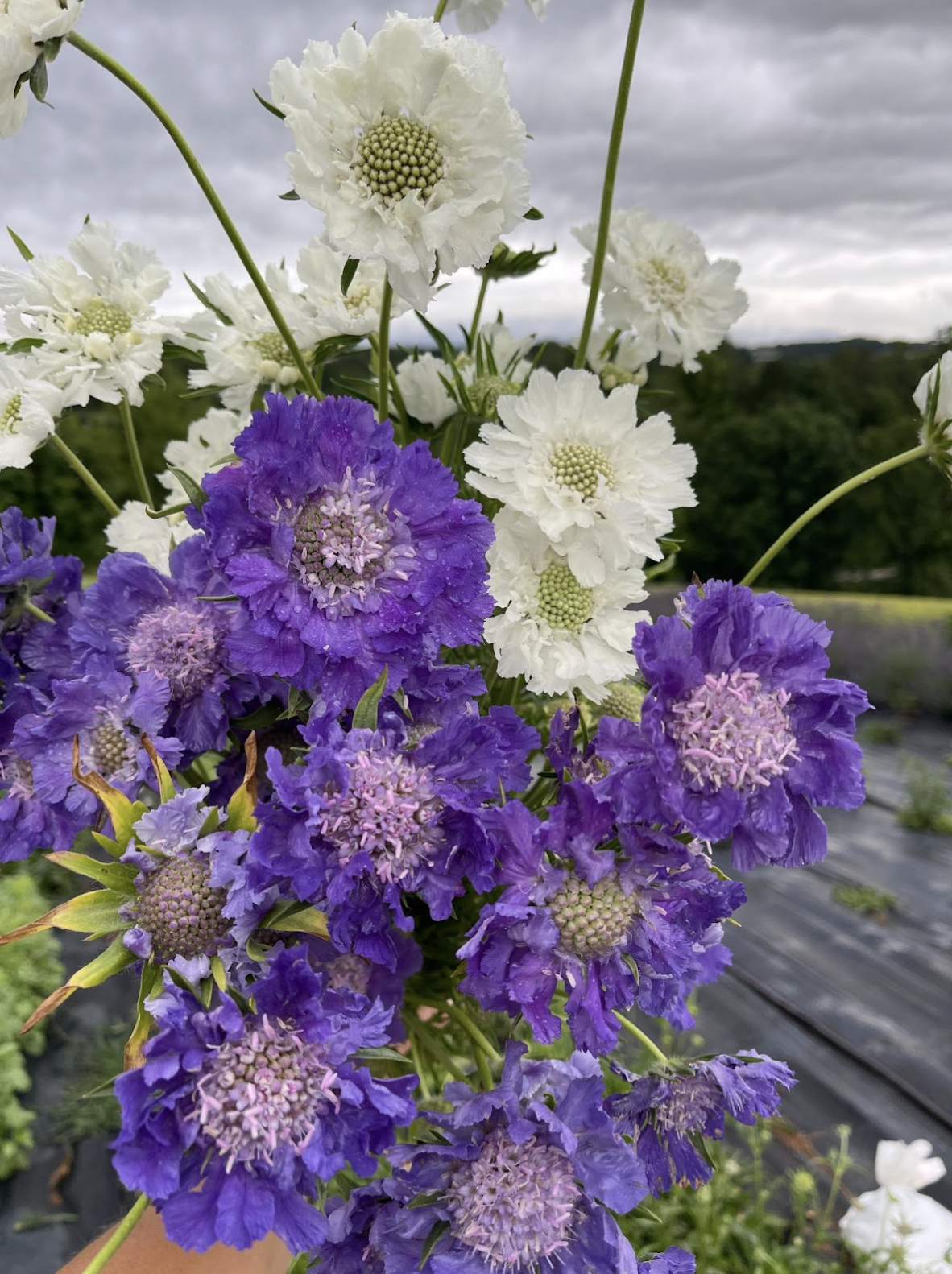
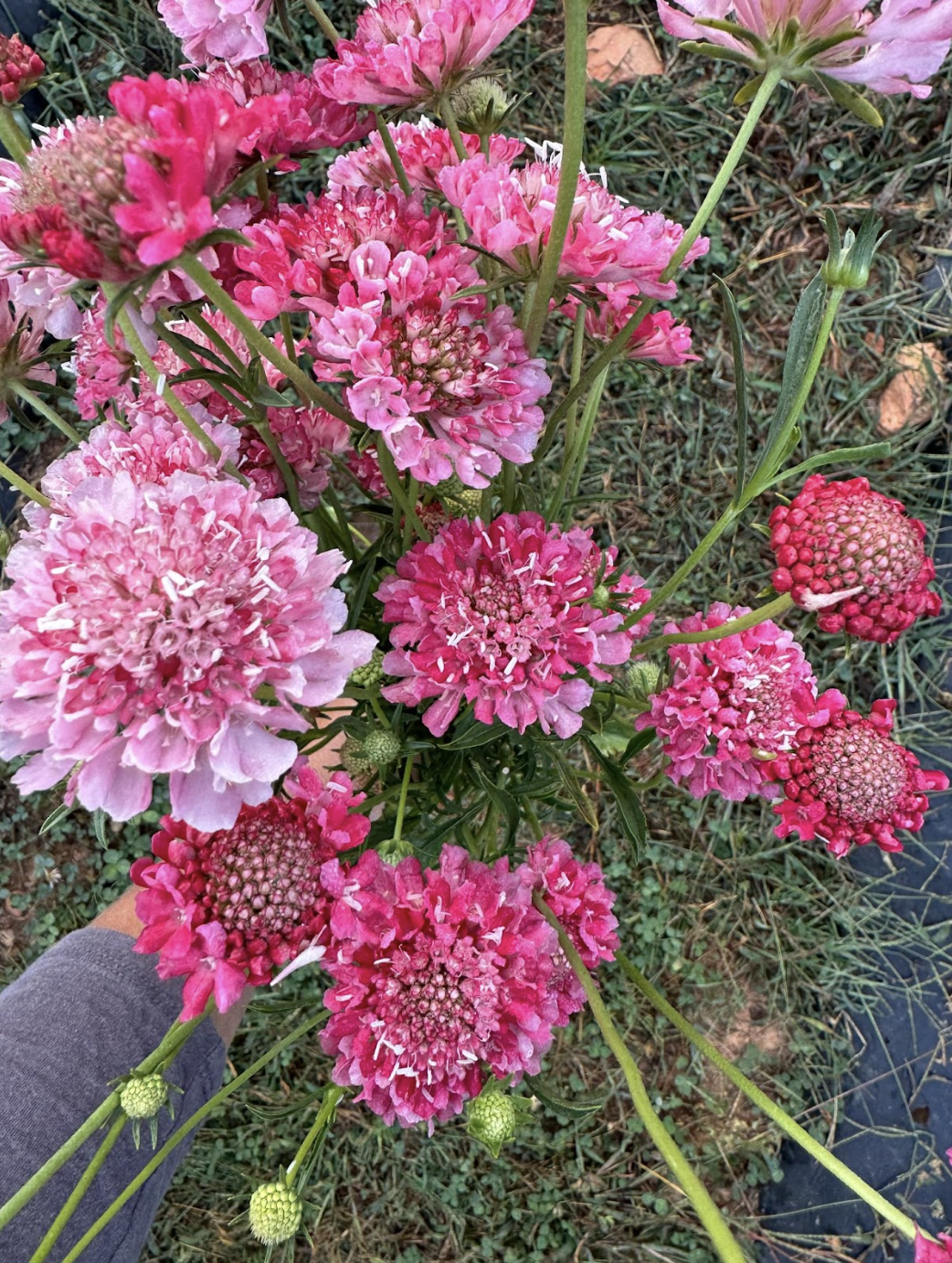
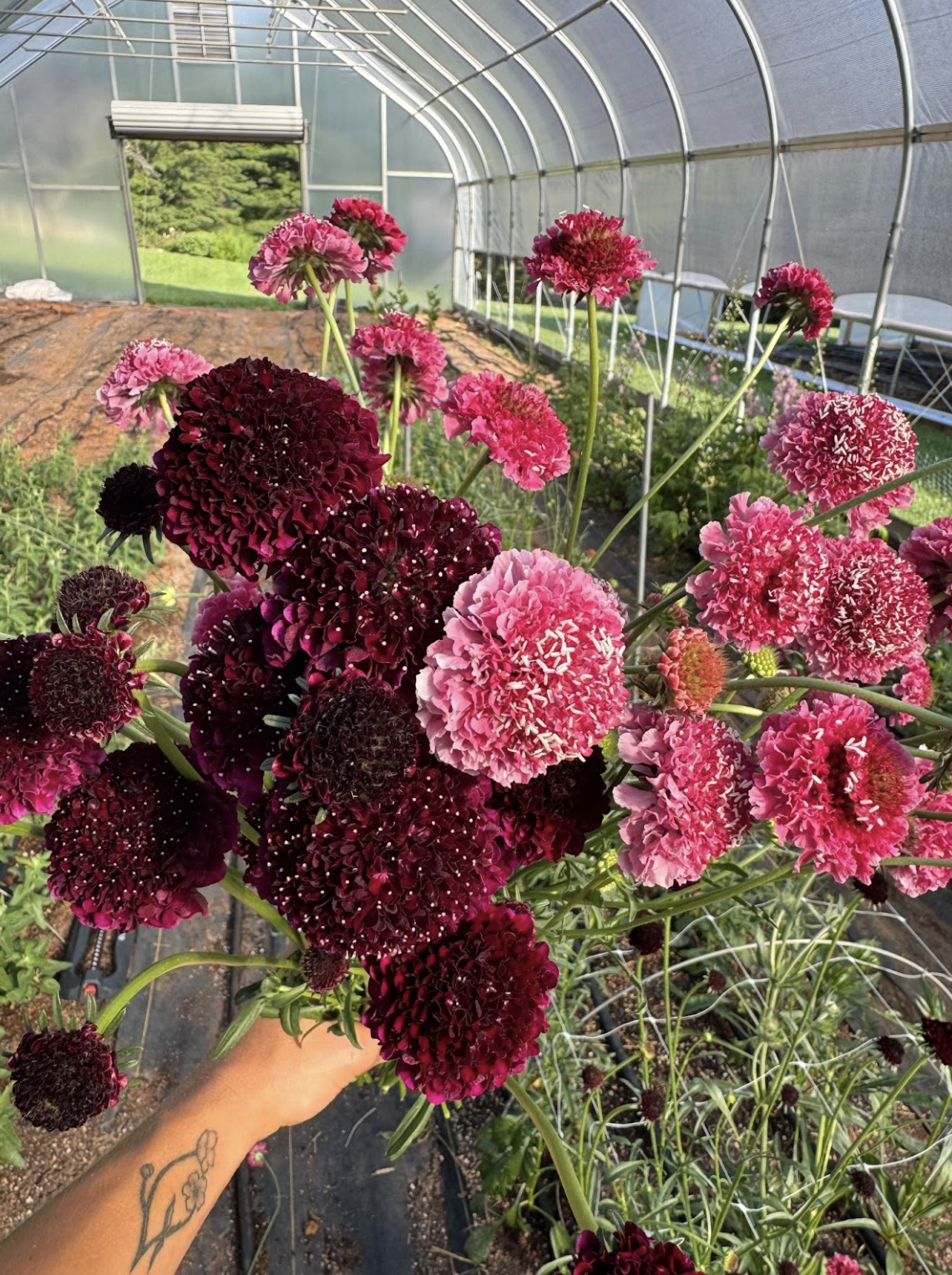
Scabiosa
Scabiosa (also known as Pincushion Flower) is one of our mainstays, both in the field and in the high tunnel. It’s incredibly versatile and produces for us over a long window when planted in succession.
We grow a variety of colors and design with them all season long, from soft pink and white to moody burgundy. The pincushion blooms add texture and depth to spring wedding bouquets and garden-style centerpieces. Scabiosa handles cool weather well and benefits from early February seed starting. It even thrives during the heat of the summer.
Other flowers worth considering for fall-planting or early spring sowing: saponaria, yarrow, feverfew, chamomile, didiscus and sweet peas.
Why Plant In Late Winter
Most of these varieties are considered cold-hardy annuals or cool-season biennials. They benefit from a period of cold exposure (known as vernalization), which helps trigger strong stem development and abundant blooms.
If started now under lights or in a greenhouse and transplanted out early, they’ll establish while temperatures are still mild. That early root development is what gives you tall stems, strong growth, and beautiful spring flowers for cutting.
This timing is especially important for anyone growing flowers for spring blooms. Many of these, like snapdragons, Iceland poppies, and orlaya, are foundational crops for early-season floral design.
A Note for Zone 7 and Warmer
If you live in Zone 7 or warmer, February may actually be too late to start some of these indoors.
In milder climates, these flowers are often planted in the fall so they can overwinter and naturally receive the cold period they need. By spring, they’re already established and ready to bloom. You can still experiment with direct sowing before the first of March, but you may notice shorter stems and smaller plants since they won’t receive as much cold exposure.
On our farm (Zone 6b/7a), we do a bit of both:
We fall-plant many of these varieties to overwinter.
Then we start another succession in late winter to extend our spring flower harvest.
That layered approach gives us more flexibility and a longer cutting window.
Starting Seeds with the Season in Mind
February seed starting isn’t about rushing spring. It’s about working with the weather. Cool-season flowers thrive when we respect their natural rhythm.
If you’re planning a spring cutting garden or dreaming of armfuls of early blooms, now is the time to begin. And if you’re unsure what works in your growing zone, pay attention to your frost dates and your climate’s patterns. Every garden is different, and timing matters.
We’ll be in the greenhouse this month, sowing trays of tiny seeds and trusting what we know: spring will come.
