
Our Top 5 Spring-Blooming Perennials to Grow for Flower Farmers & Farmer Florists
/Some of the most meaningful flowers on the farm were planted years ago…
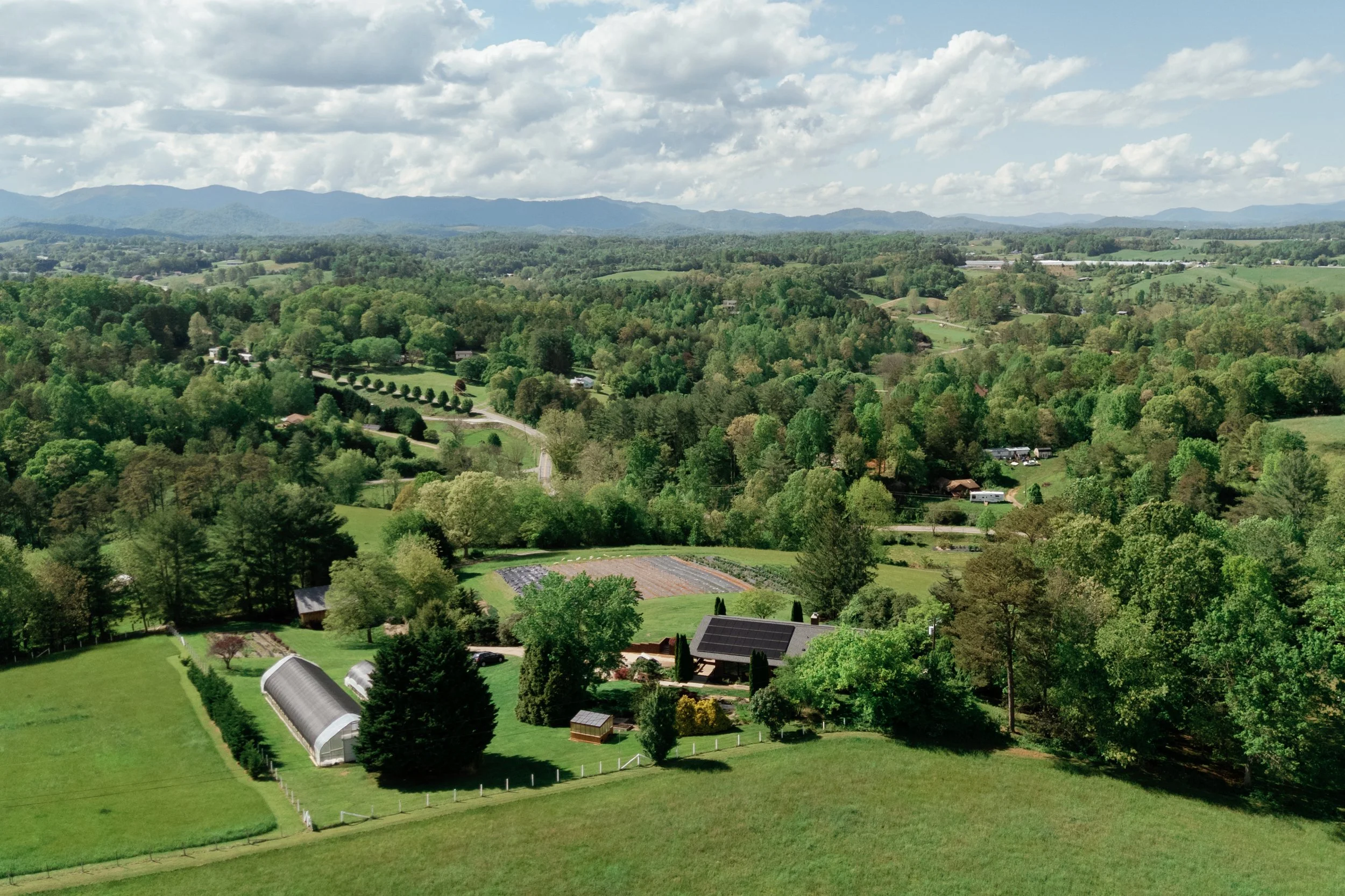
At Flourish, we think of our perennial plants as long-term partners in the life of the farm. Long before they ever produced a harvestable stem, many of these perennials went into the ground as bare roots, small plugs, or hopeful little plants tucked into newly prepared beds. At the time, they felt like a leap of faith and an investment in a future version of the farm that didn’t quite exist yet.
Unlike annual flowers that grow from seed and bloom in a single season, many perennial flowers take several years to become established. But once they settle in, they return each spring stronger than the year before, offering a steady supply of some of our most unique blooms.
Over the past several seasons, we’ve slowly built up these perennial plantings here at Flourish. Some were chosen because they produce beautiful cut flowers for spring bouquets and weddings, while others bring structure, texture, or early-season color to the farm landscape.
For flower farmers and farmer-florists, spring-blooming perennial flowers are especially valuable. They help bridge the gap between the earliest cold-hardy annuals and the abundance of summer flowers, providing reliable harvests during a time when many fields are just waking up.
Flourish’s Favorite Spring-Blooming Perennials
These are five of our favorite spring-blooming perennials to grow for flower farms and floral design:
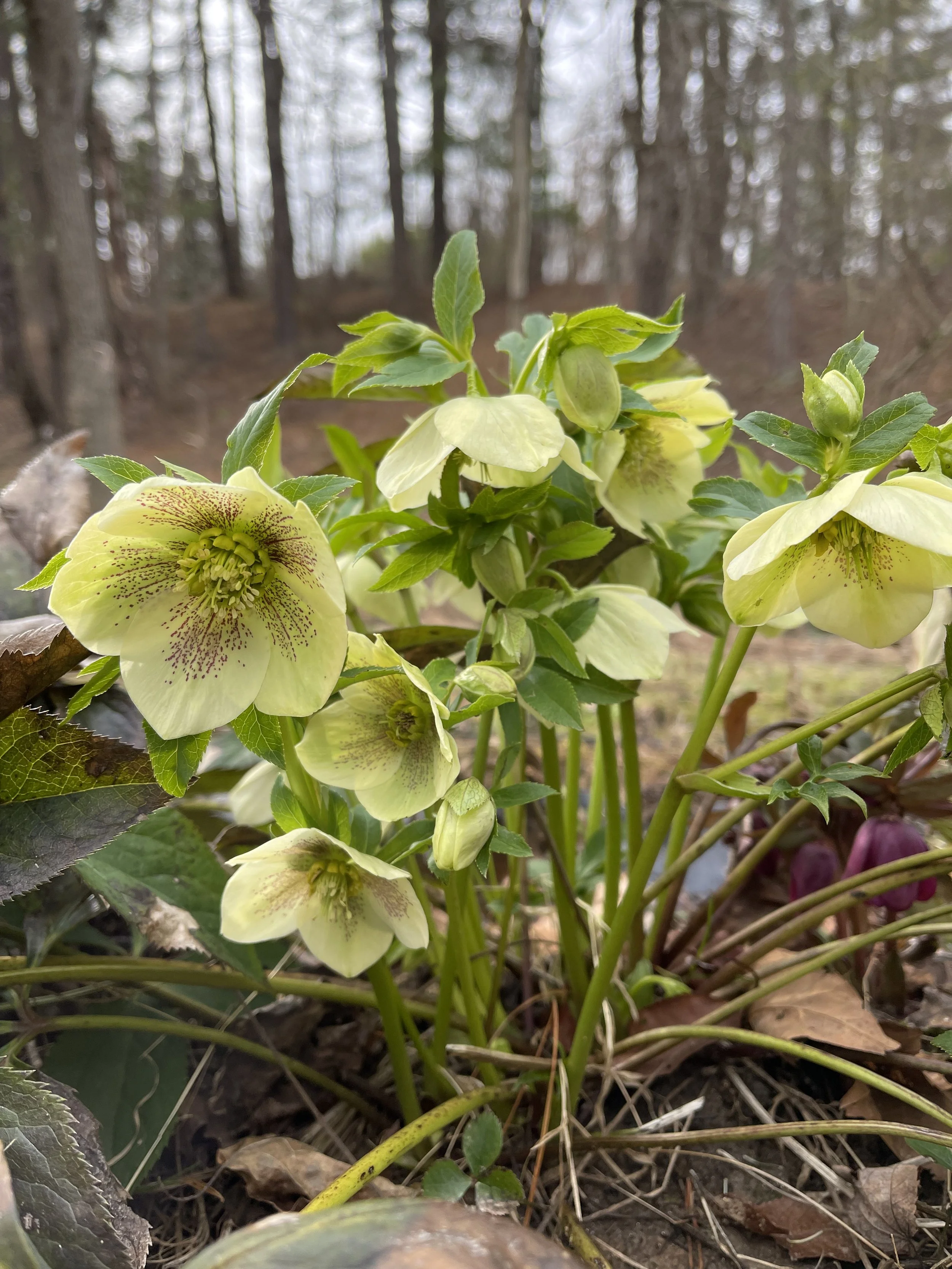
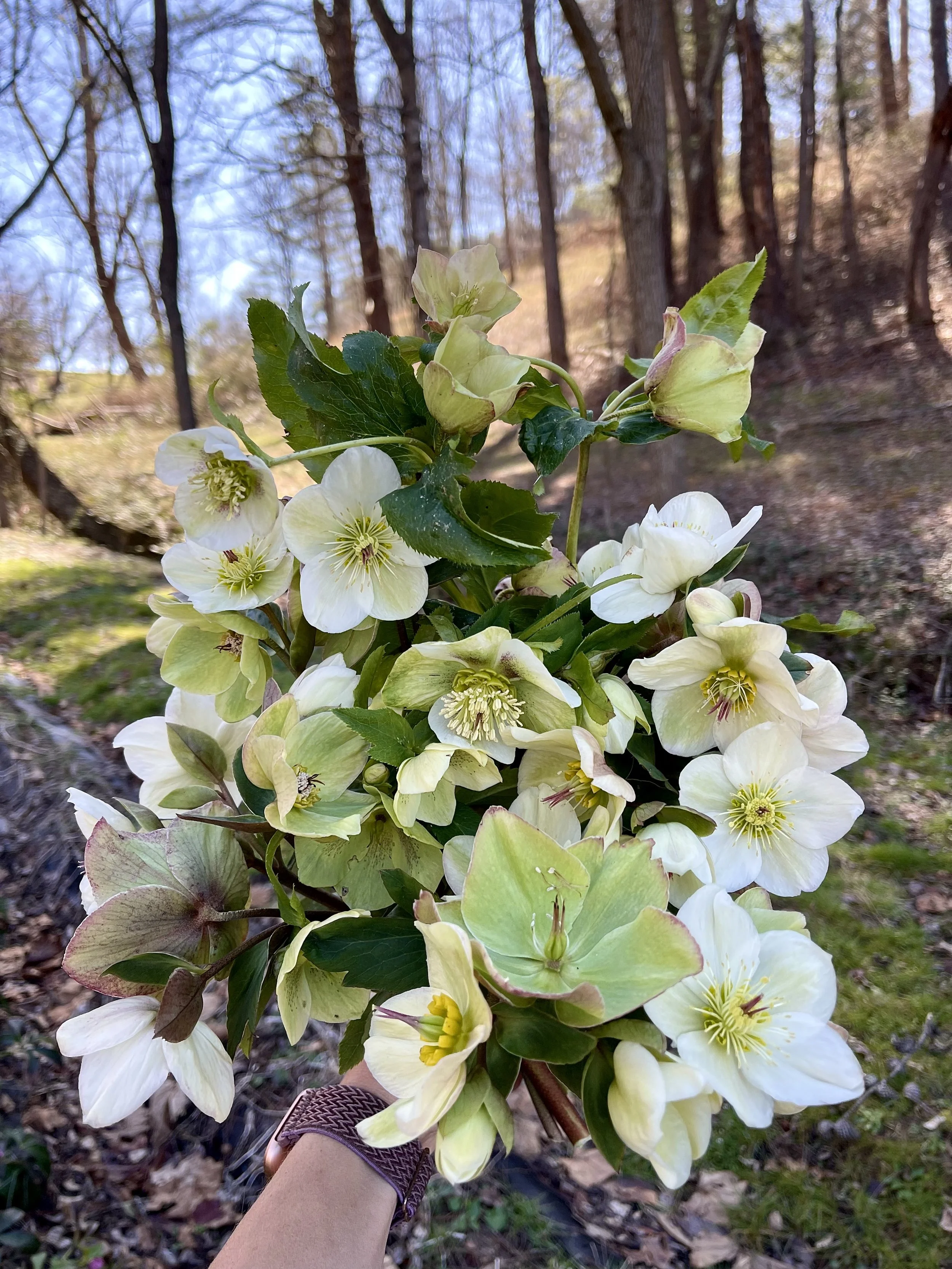
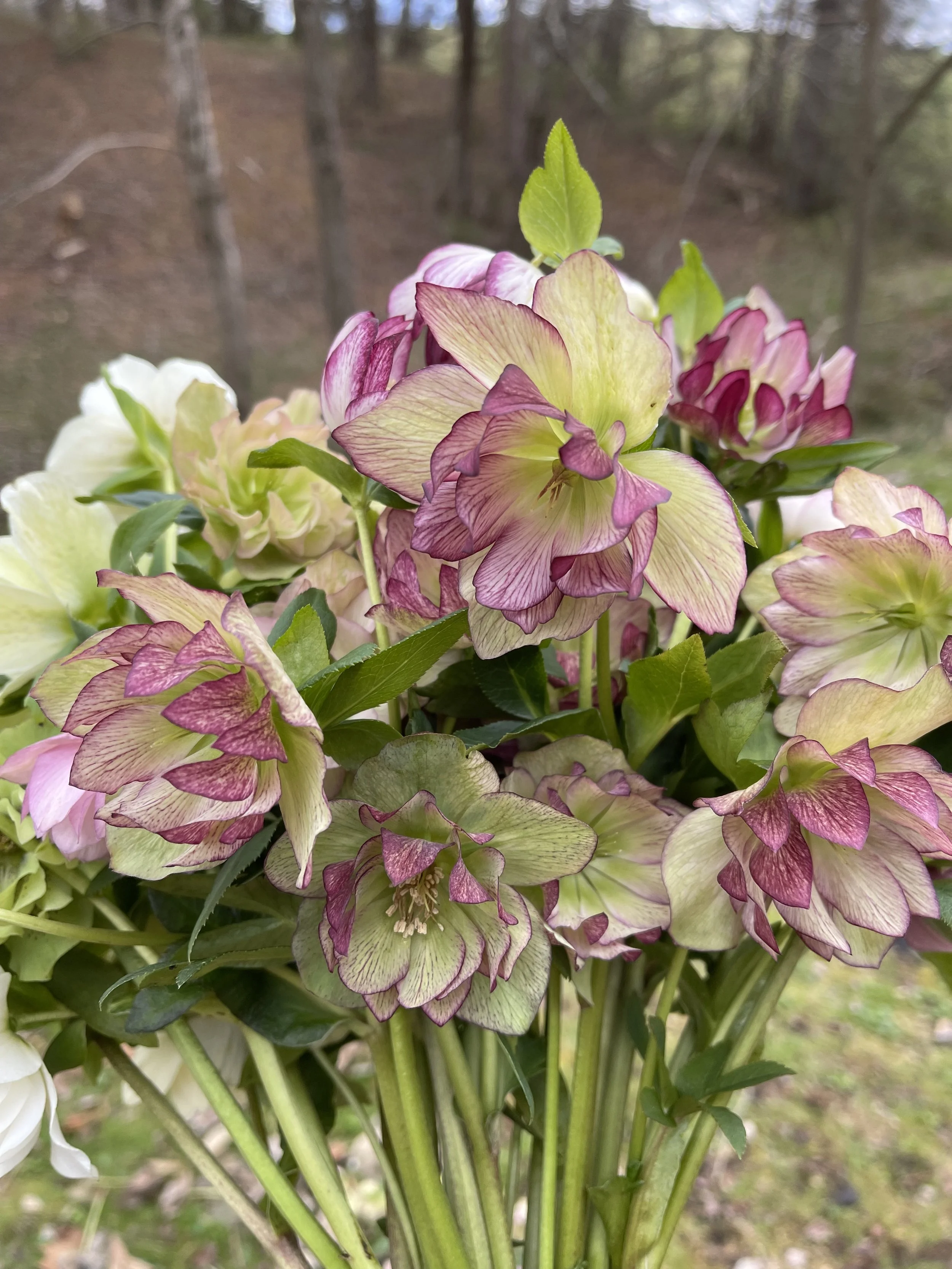
Hellebores
Latin: Helleborus
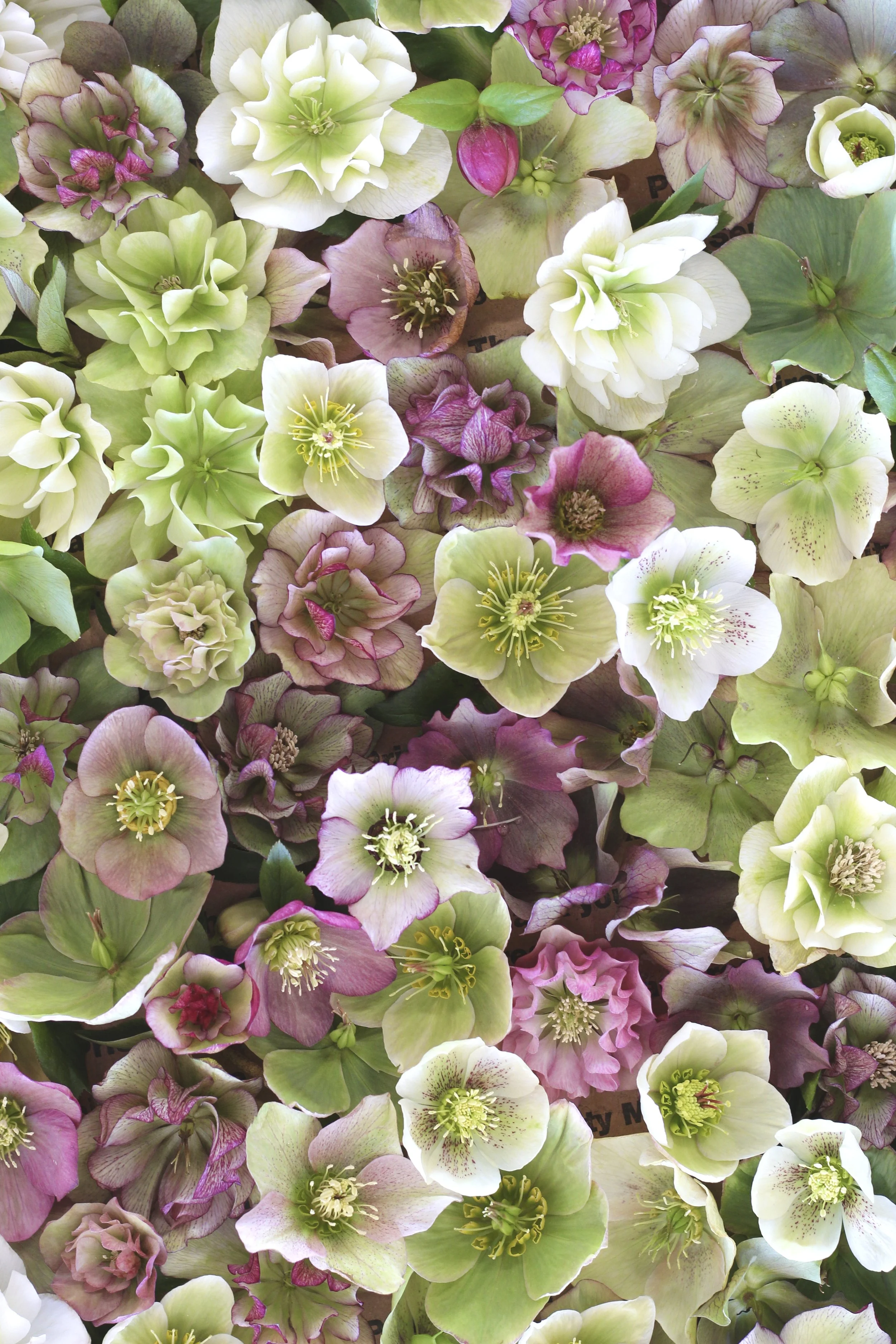
Flourish varieties: Ice N Roses series, Wedding series
If you spend any time in the early spring garden, you’ll quickly understand why hellebores are beloved by gardeners and flower farmers alike.
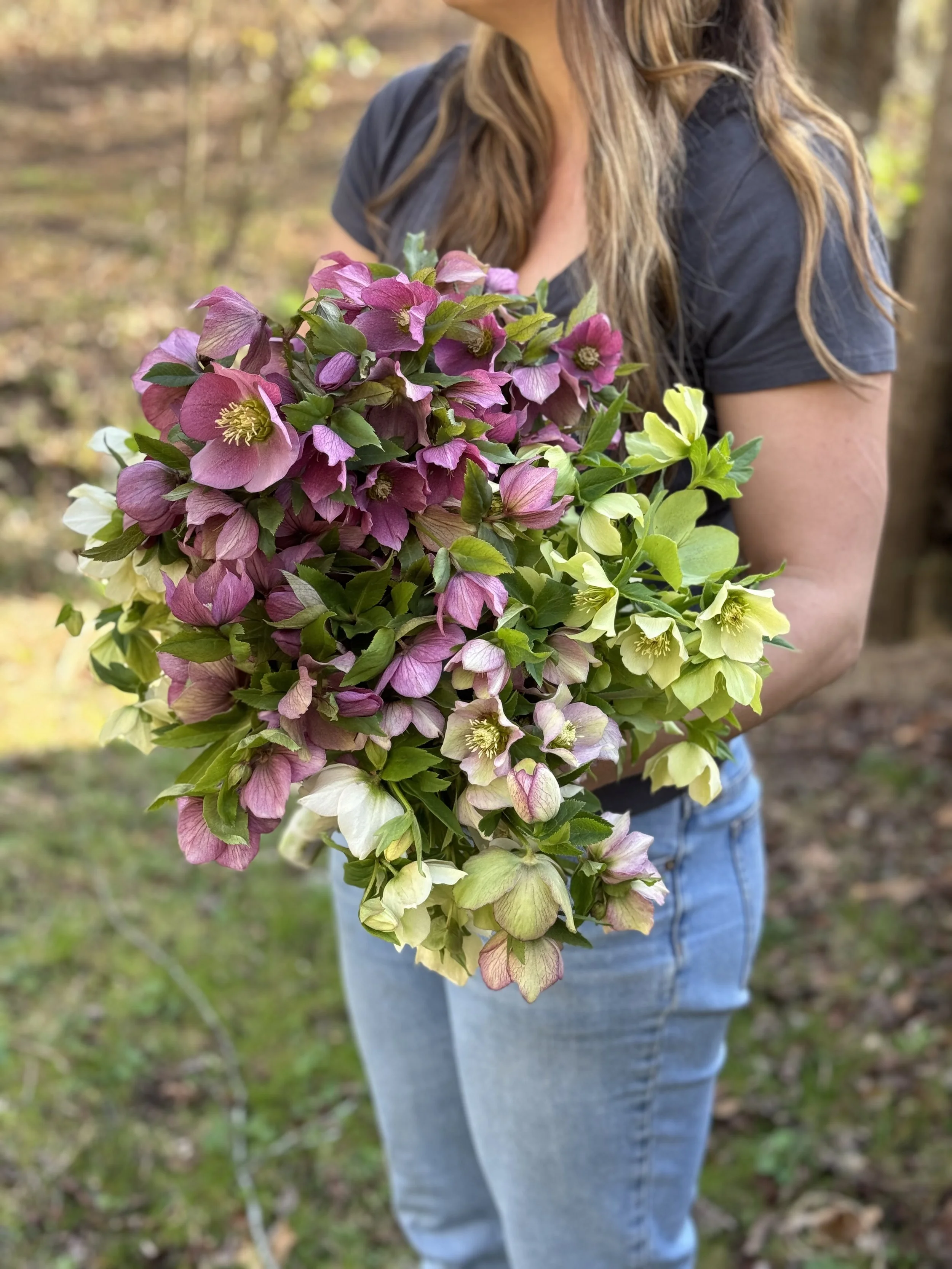
Also called Lenten rose, hellebores are among the very first perennial flowers to bloom each year. Their blooms appear in late winter and early spring, sometimes even pushing through frost-dusted soil when little else is awake.
For floral design, hellebores are wonderfully versatile. Their soft, muted tones (ranging from creamy whites and dusty pinks to deep plums and greens) pair beautifully with early-spring flowers like ranunculus, anemones, and tulips. The flowers also develop interesting seed heads as they mature, adding even more texture to arrangements.
Hellebores take a few years to establish and can be slow to multiply, but once settled, they become a dependable early-season crop. On the farm, they’re one of those plants that quietly earns its place year after year.
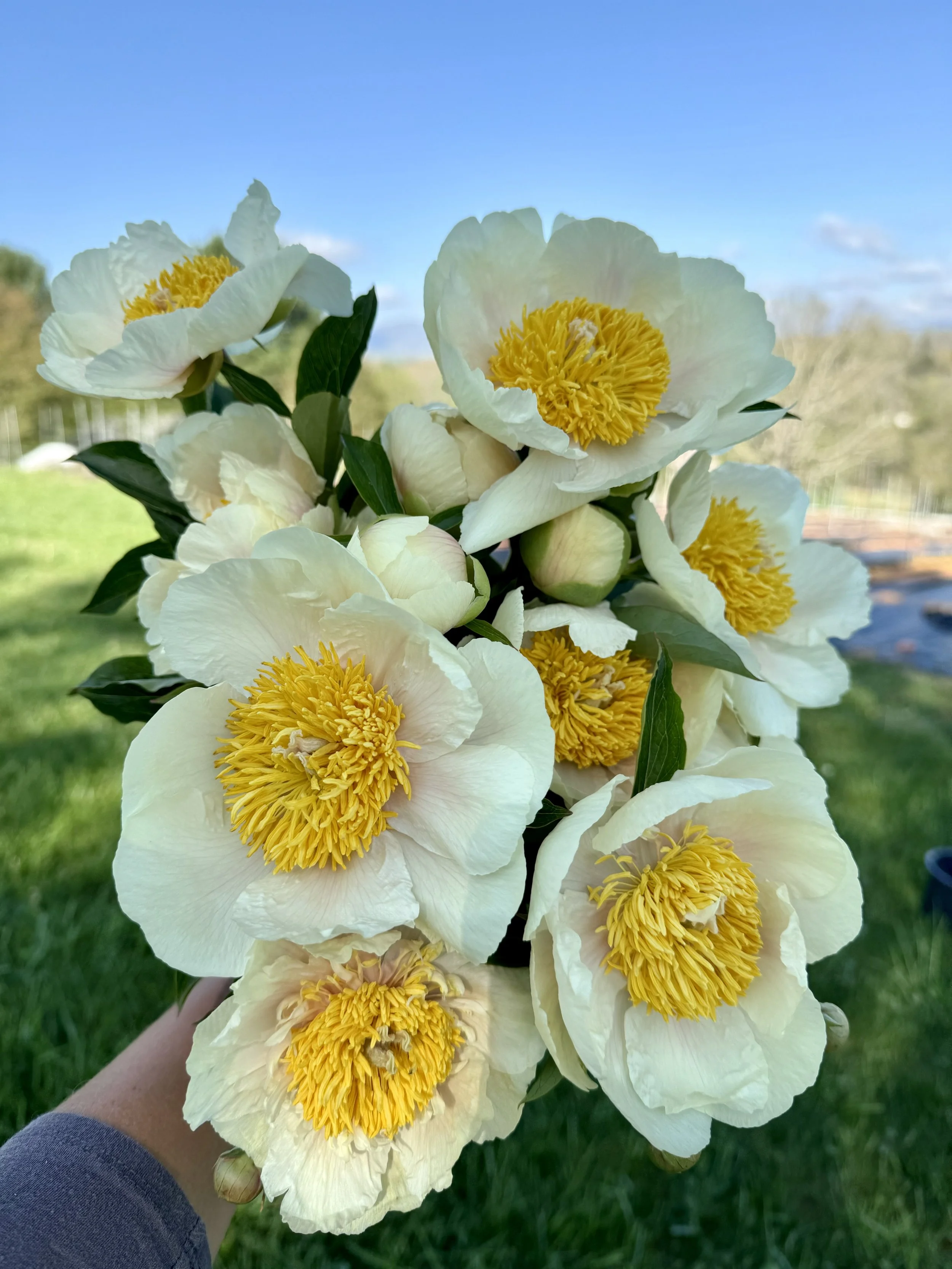
Peonies
Latin: Paeony
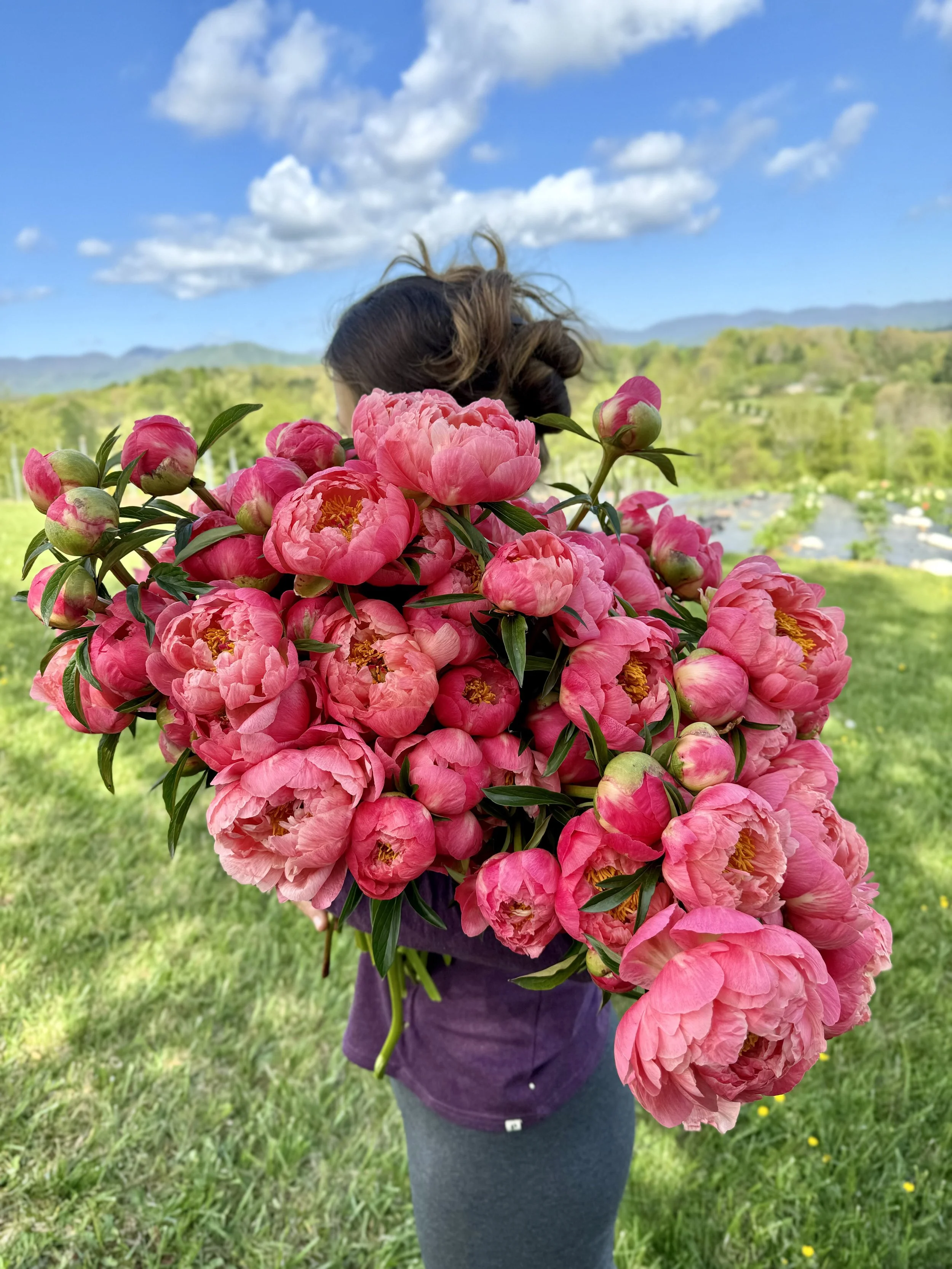
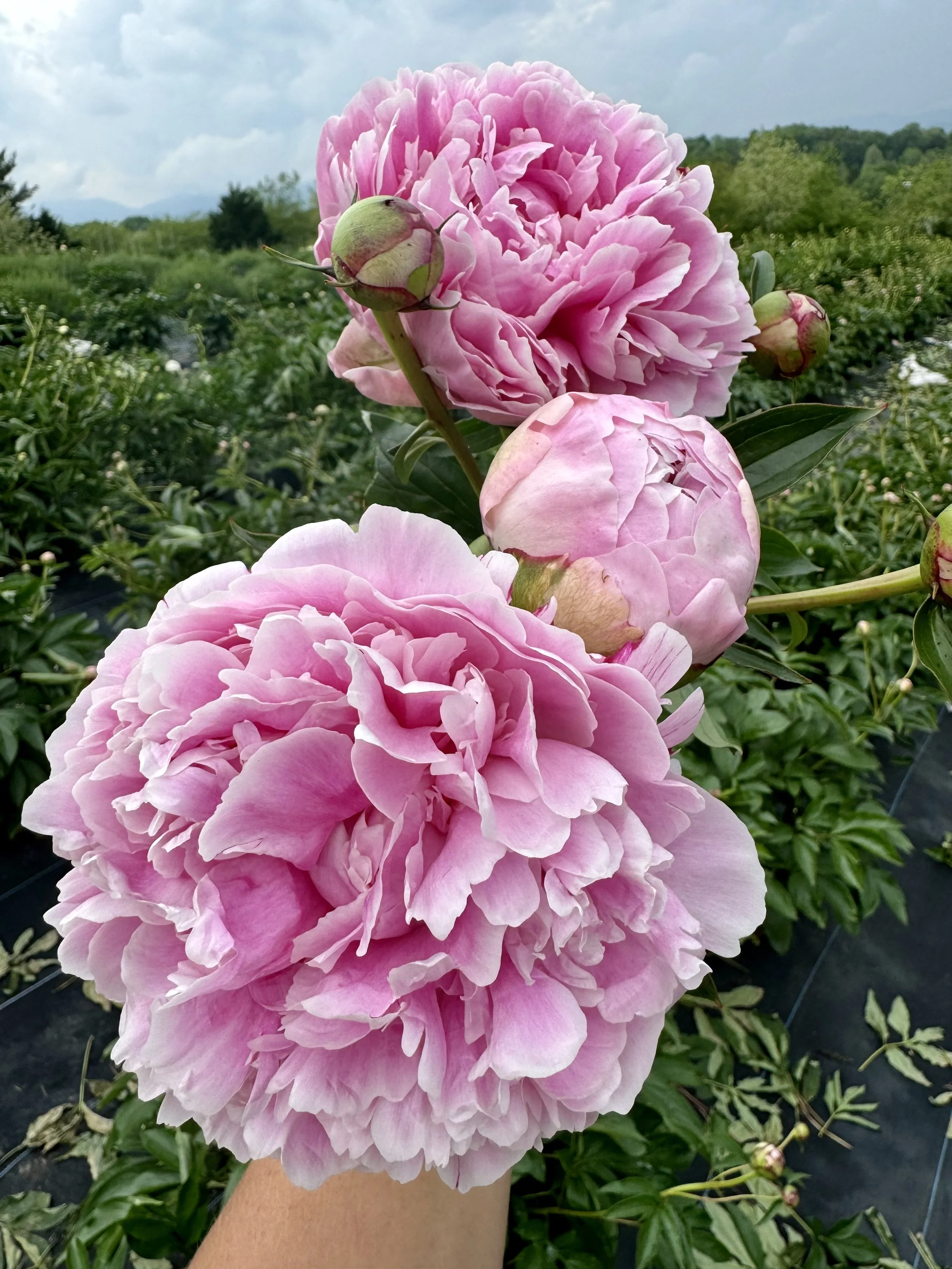
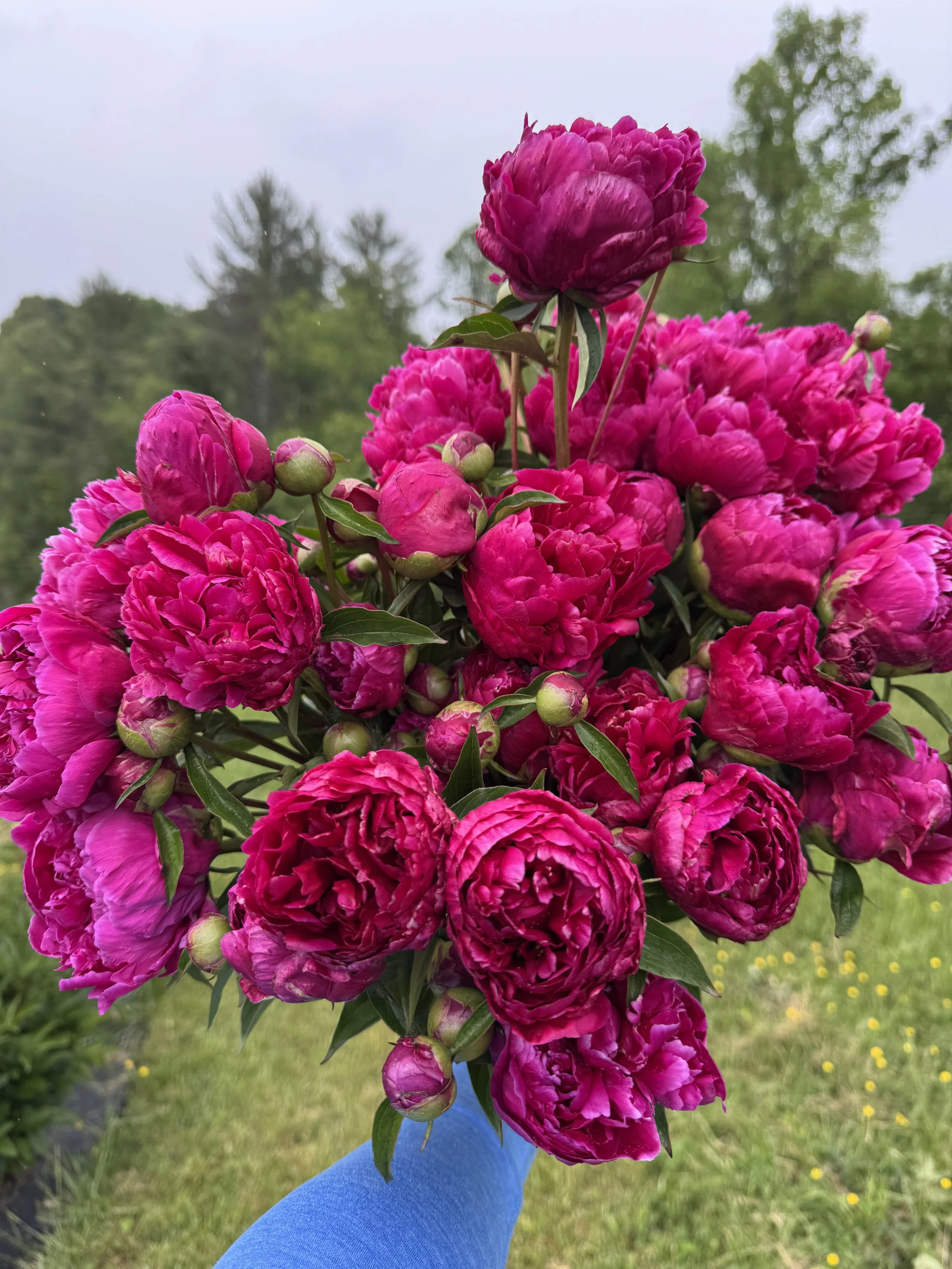
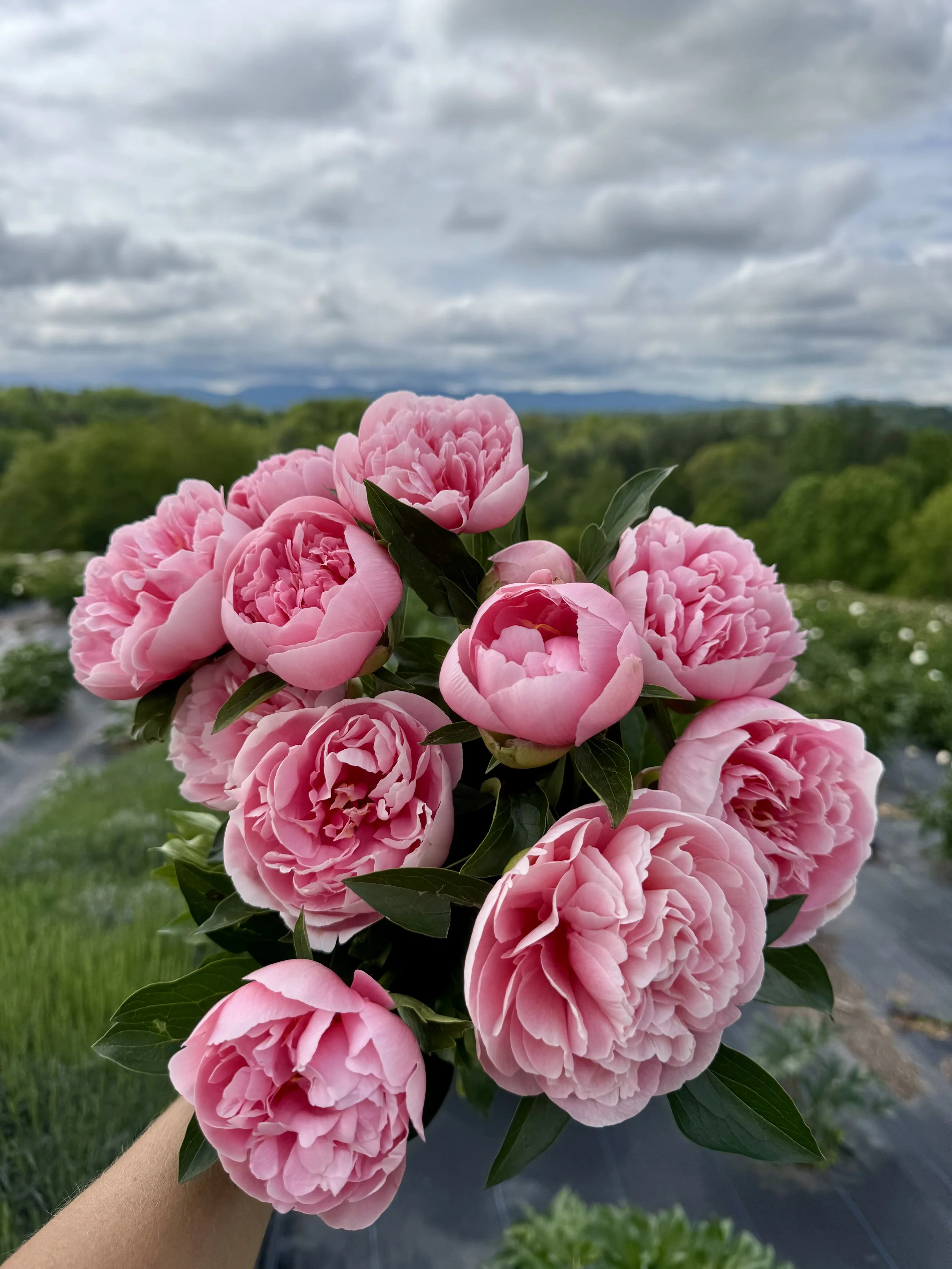
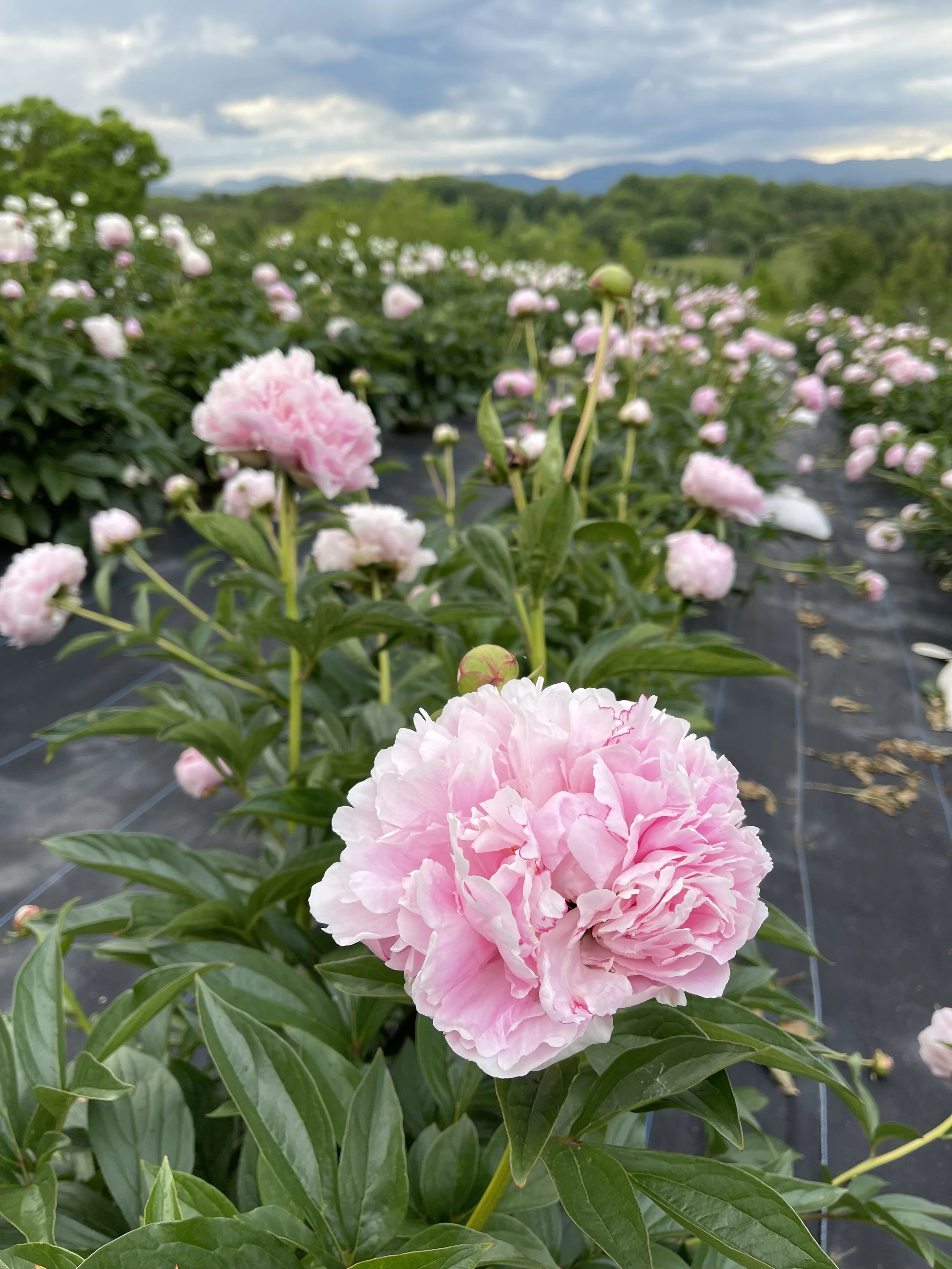
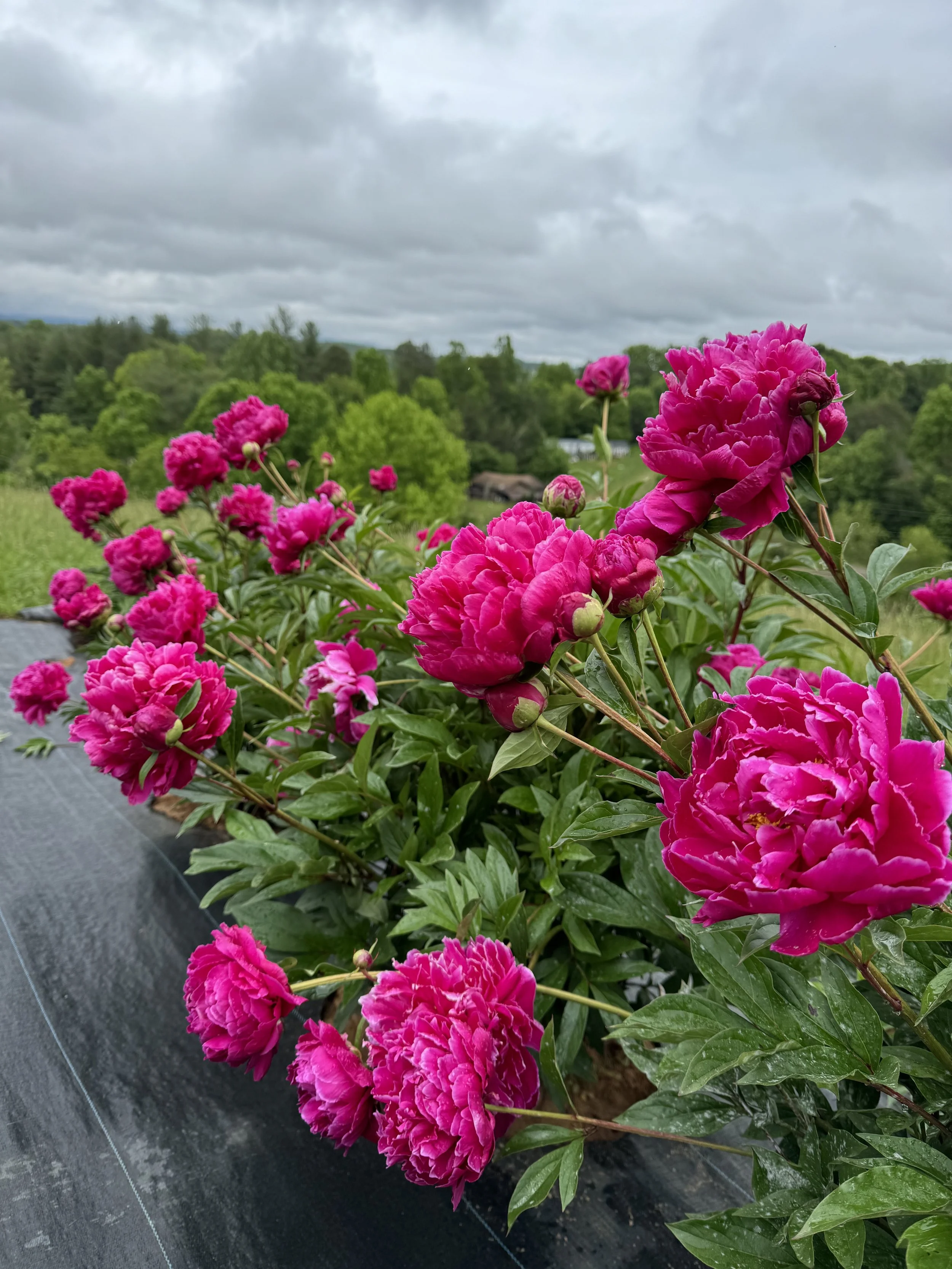
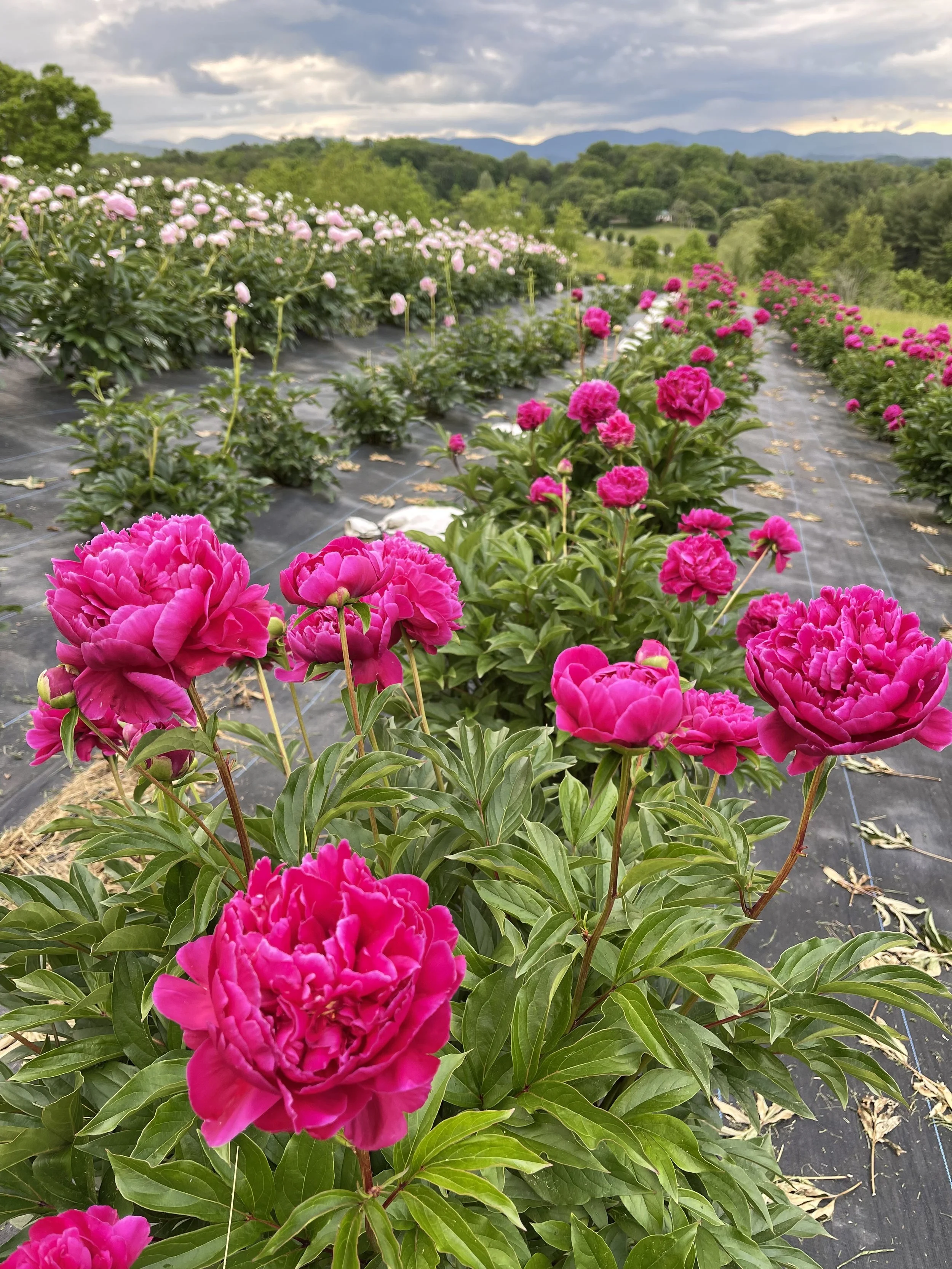
Flourish varieties: Claire de Lune, Duchess de Nemour, Lady Alexandra Duff, Etched Salmon, Karl Rosenfield
Few flowers are as beloved as peonies.
For flower farmers, peonies are both a long-term investment and a seasonal highlight. These classic spring cut flowers do take patience, as most plants require two to three years before they produce strong stems suitable for harvest. But once established, they can remain productive for decades.
Peonies bloom for only a short window each spring, but that is part of their magic. Their lush, ruffled blooms and soft fragrance make them a favorite for spring wedding flowers, especially for garden-inspired floral design.
From a farmer-florist perspective, peonies are also incredibly versatile. They can be harvested in the tight “marshmallow” stage and stored for several weeks, allowing growers to extend their availability beyond the natural bloom window – which is especially helpful because they bloom so quickly. We harvest 2-3 times per day, cutting thousands of flowers per day within a 3 week window of time.
There’s something deeply satisfying about watching a peony bed mature over time. Each year, the plants grow larger, the stems grow longer, and the harvest becomes more abundant.
Baptisia
Latin: Baptisia
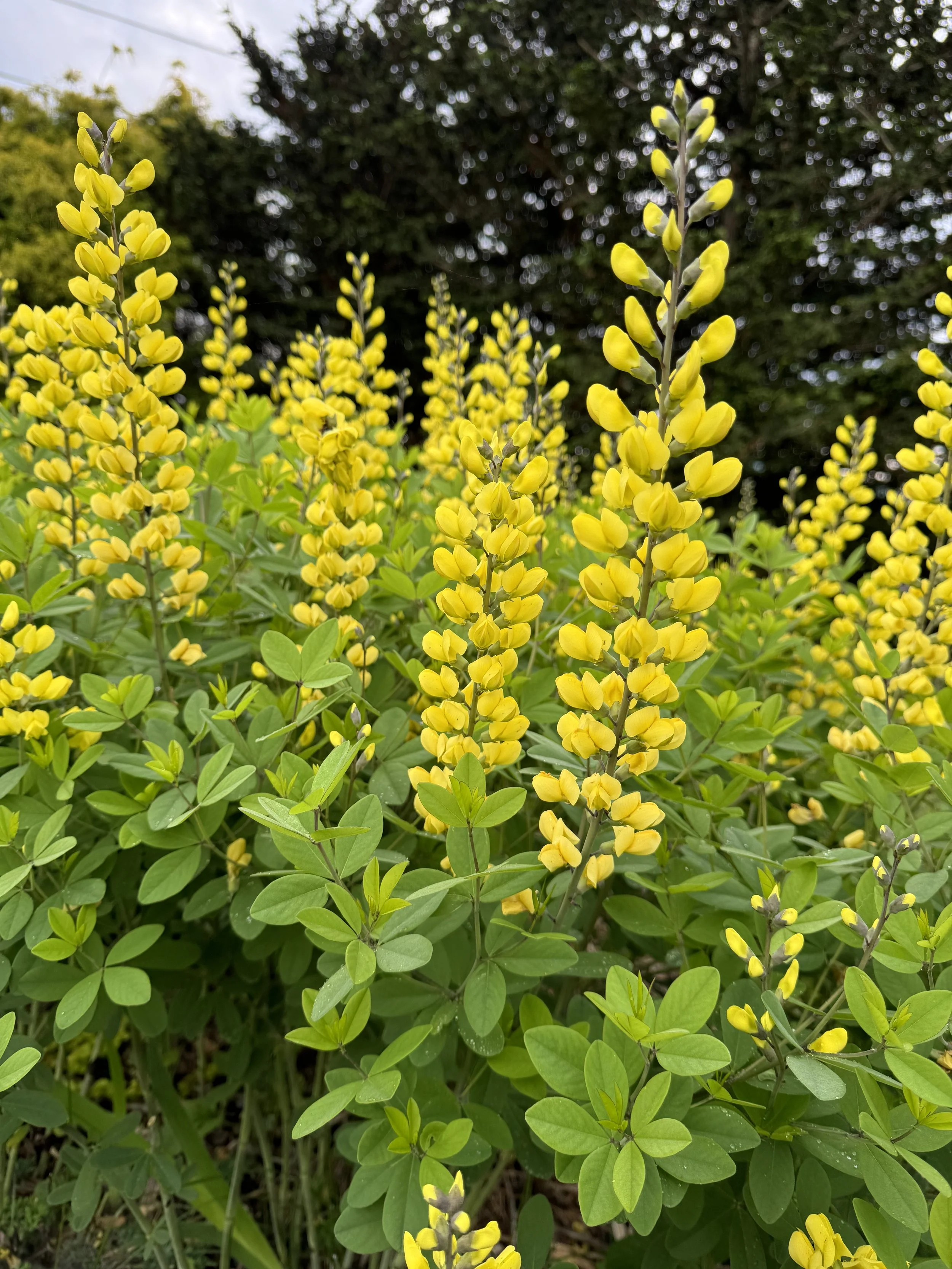
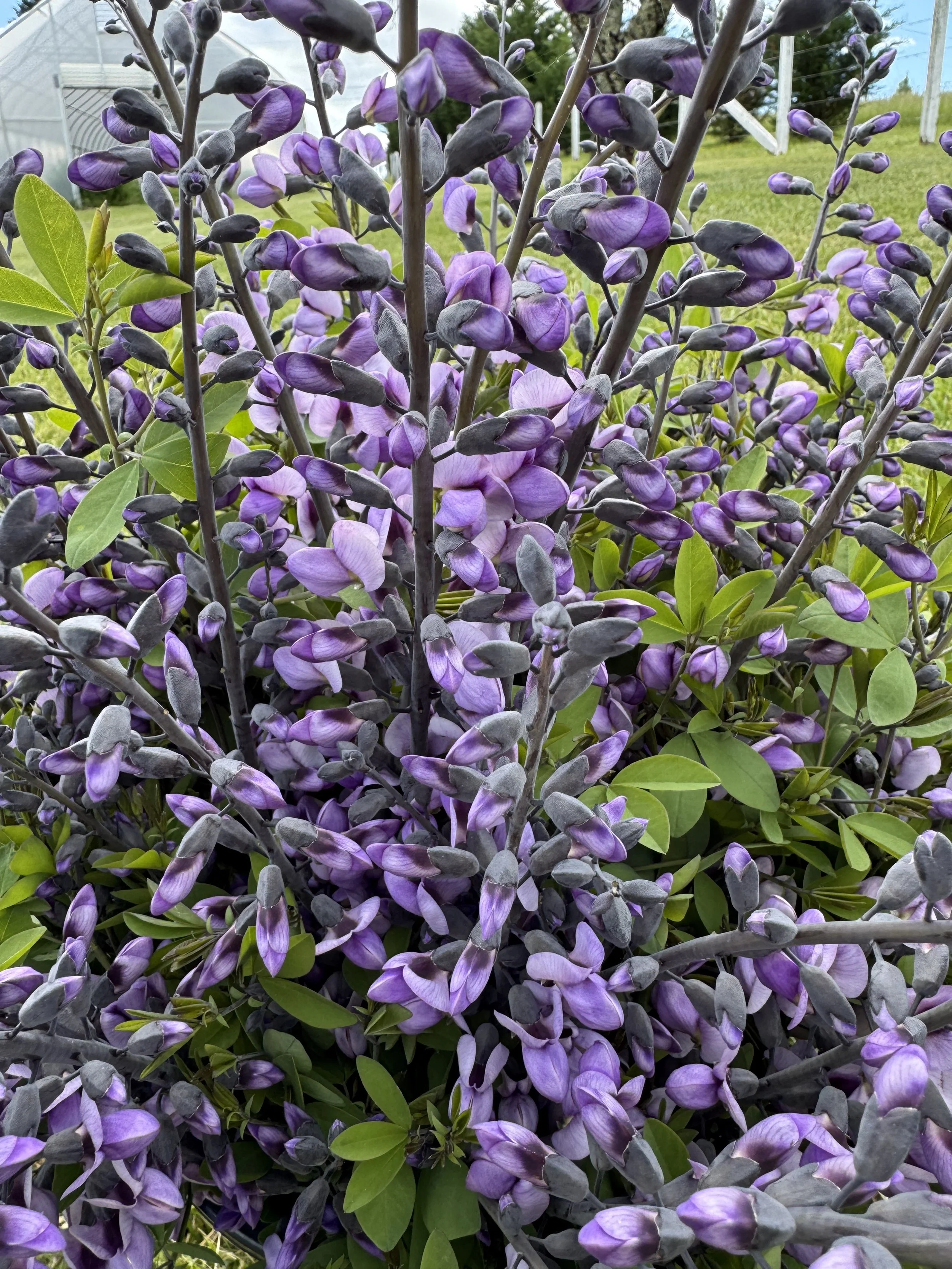
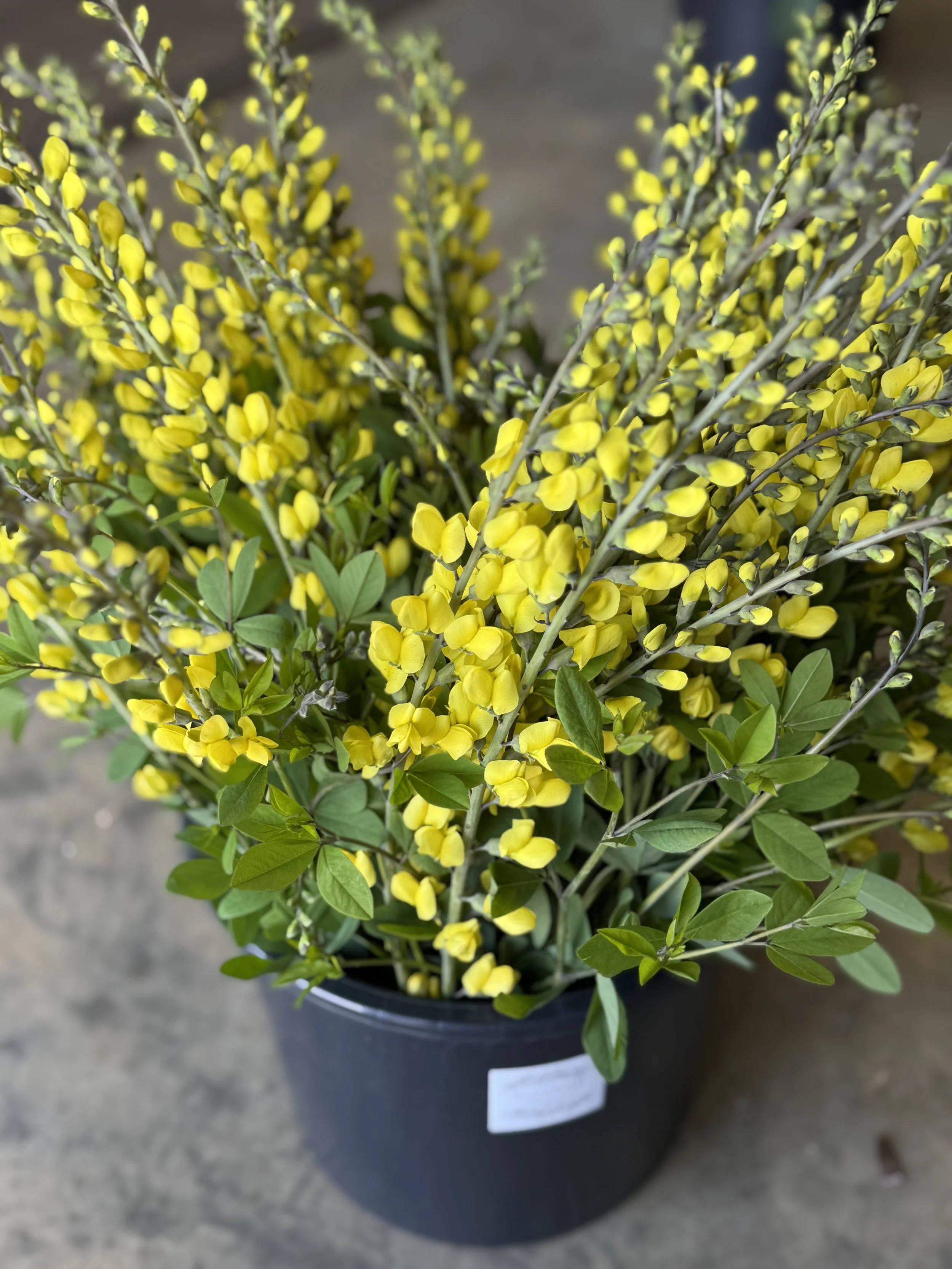
Flourish varieties: Purple Smoke, Carolina Moonlight
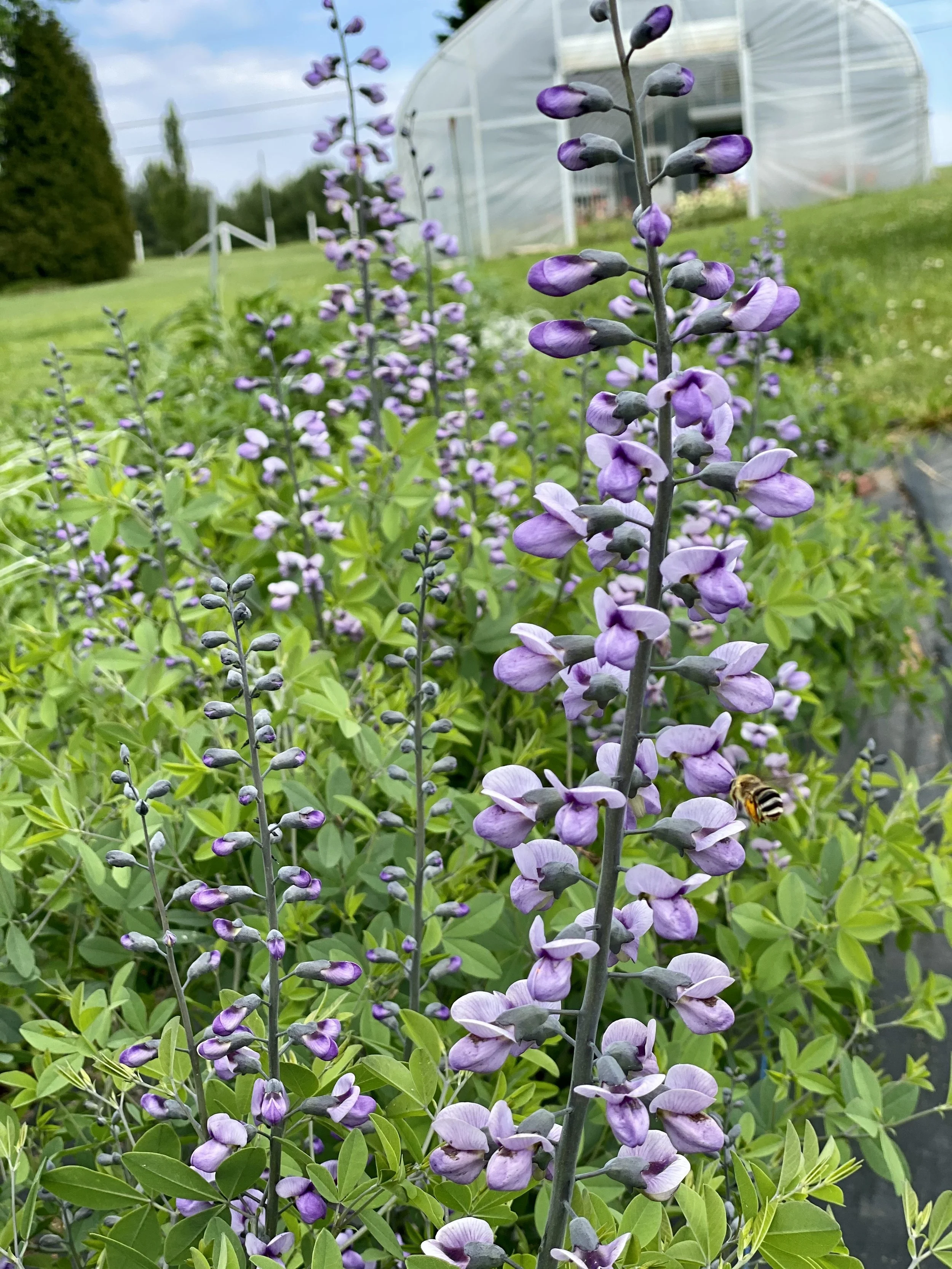
Sometimes called false indigo, baptisia produces tall stems of lupine-like flowers in shades of soft blue, lavender, cream, and yellow. The flowers appear in late spring and bring beautiful vertical movement to arrangements.
For flower farmers, baptisia is a particularly resilient perennial. Once established, it tolerates heat, drought, and poor soil conditions remarkably well. Its deep root system allows it to reliably return each year with minimal care.
Beyond the blooms themselves, the interesting seed pods that form later in the season can also be harvested for floral work, adding texture and structure to late summer arrangements.
Geum
Latin: Geum
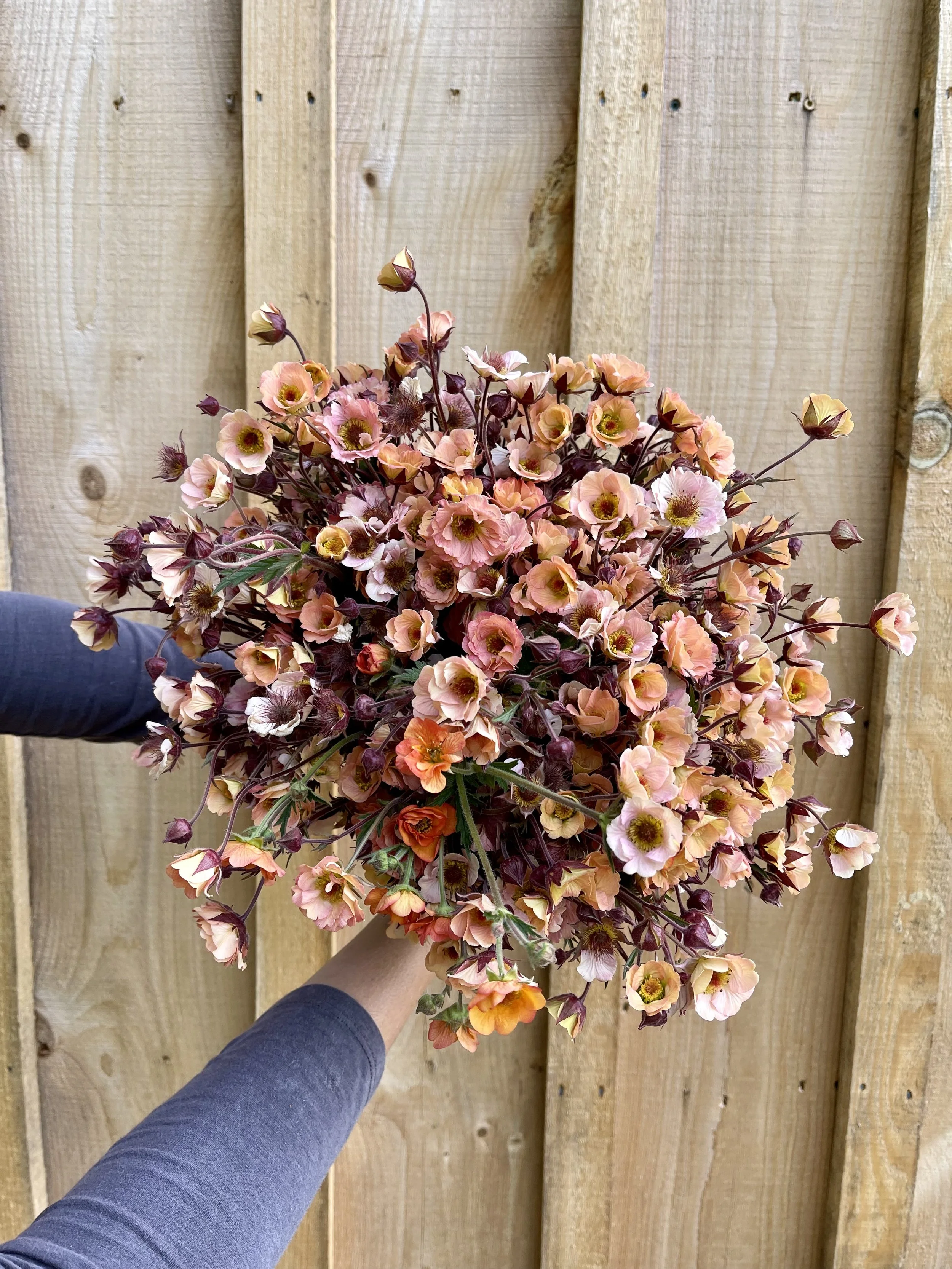
Flourish varieties: Totally Tangerine, Cocktail series
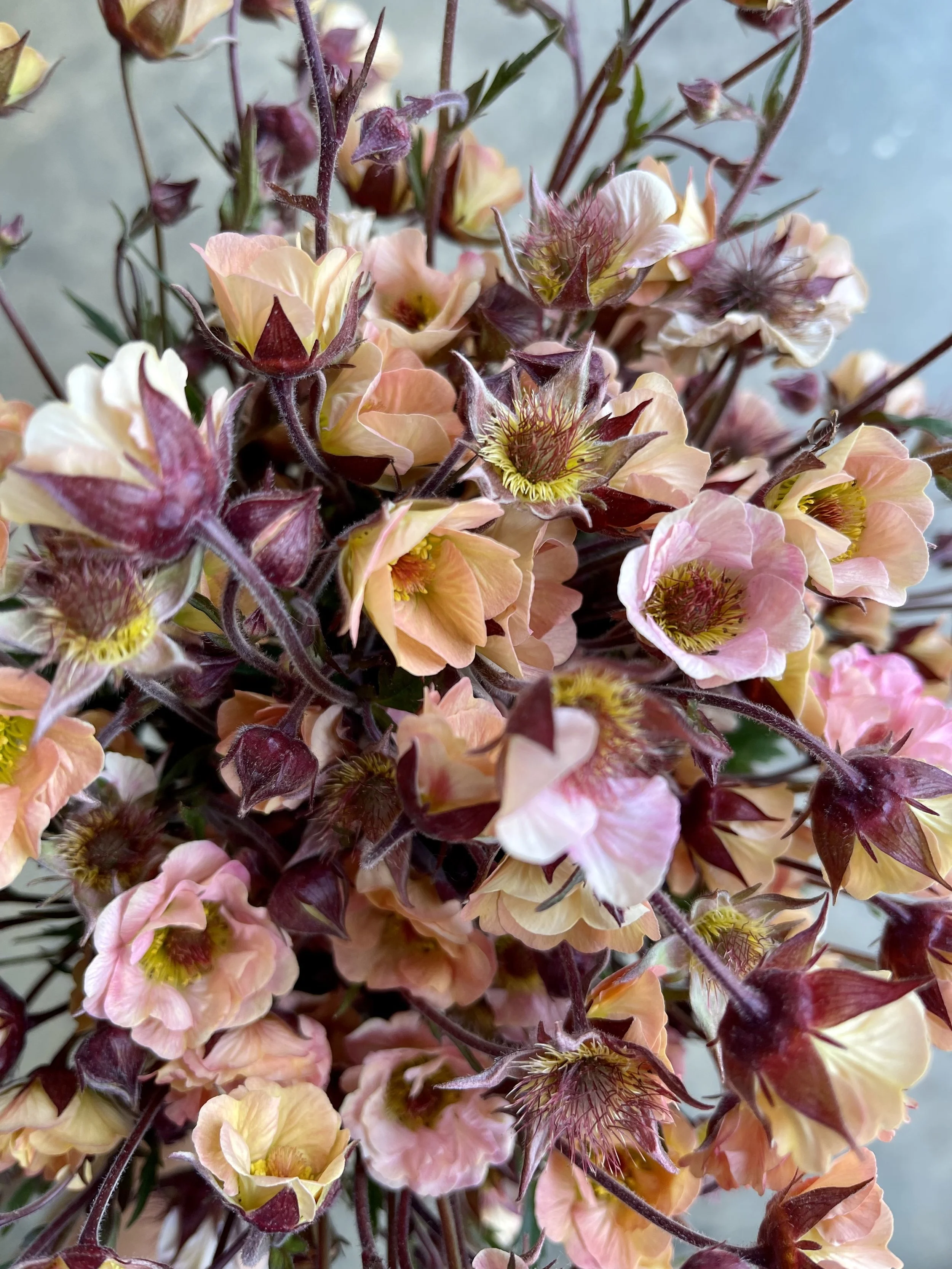
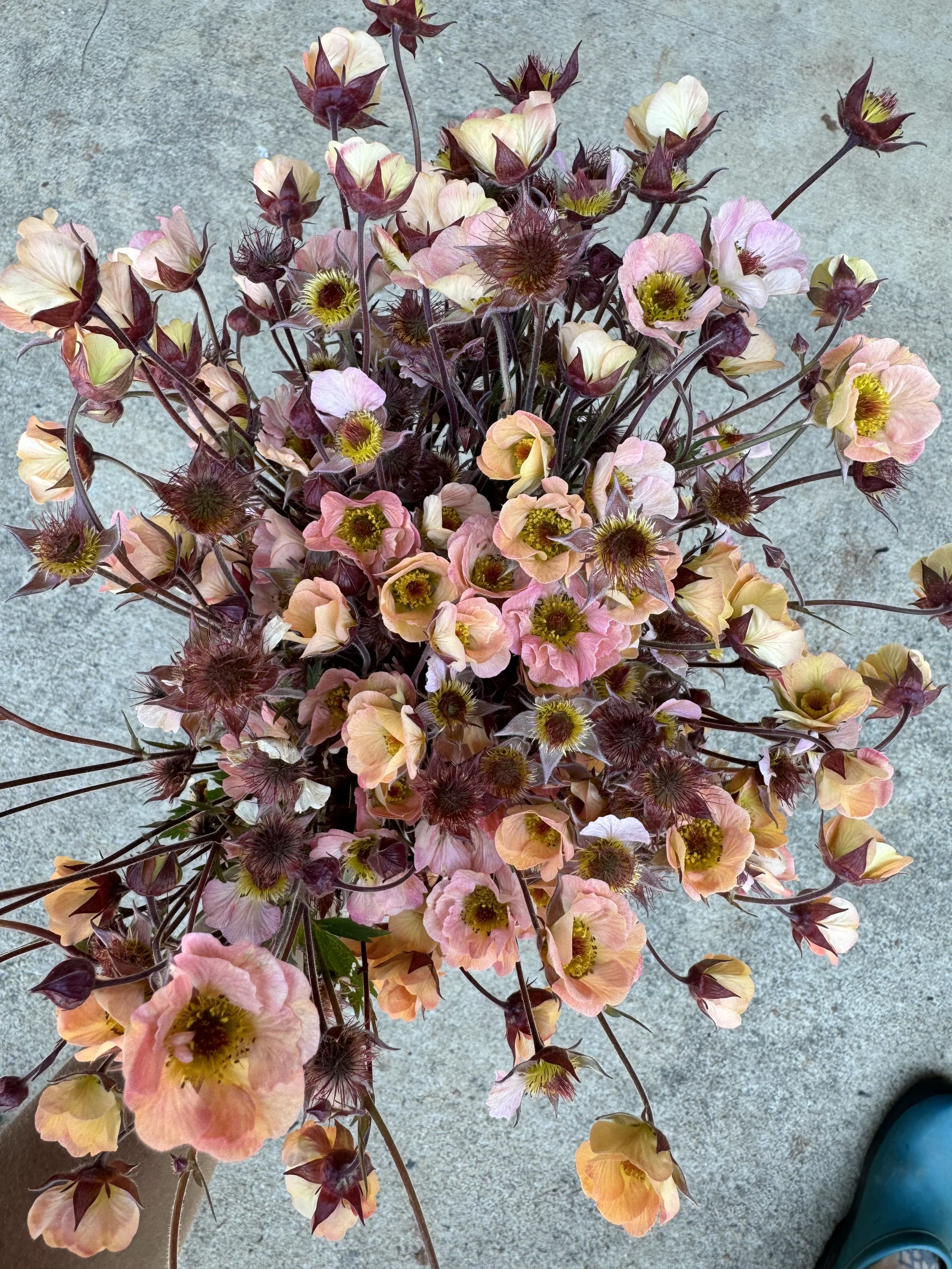
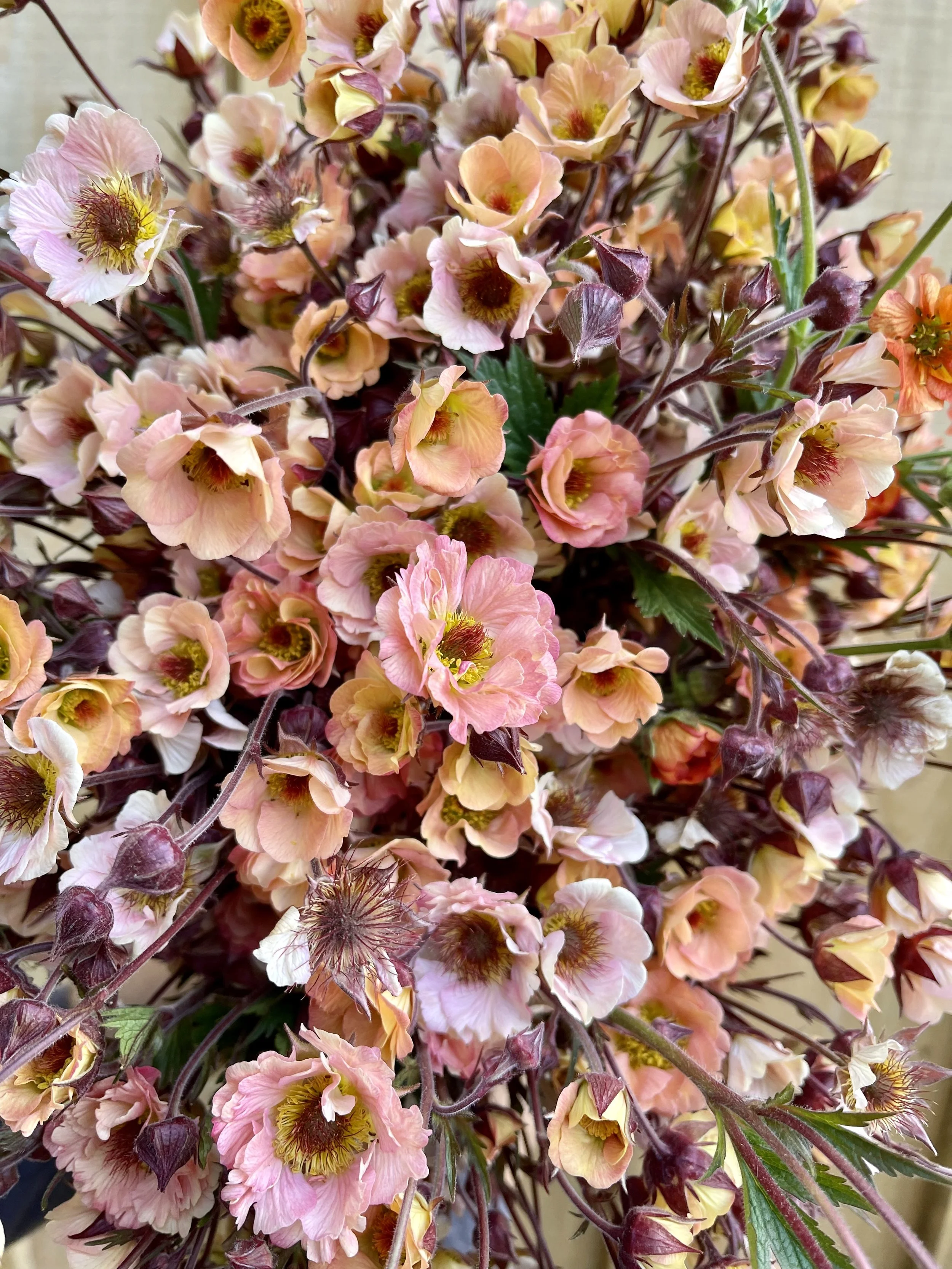
These charming spring bloomers produce delicate stems topped with softly ruffled flowers in shades of apricot, coral, peach, and gold. The Cocktail Series geums are especially loved by flower farmers for their unique colors and garden-style charm.
Geum typically takes a couple of seasons to become fully productive. In the first year, stems can be quite short, sometimes only a few inches long. But with time and regular harvesting, the plants become much more vigorous and produce longer stems suitable for bouquets. Bonus: Geum plants can handle part-shade growing conditions.
Because geum blooms early and repeatedly through the spring, it’s an excellent addition to a spring flower farm planting plan, filling in the weeks when many annual crops are still maturing.
Leucojum
Latin: Leucojum
Flourish varieties: Gravetye Giant
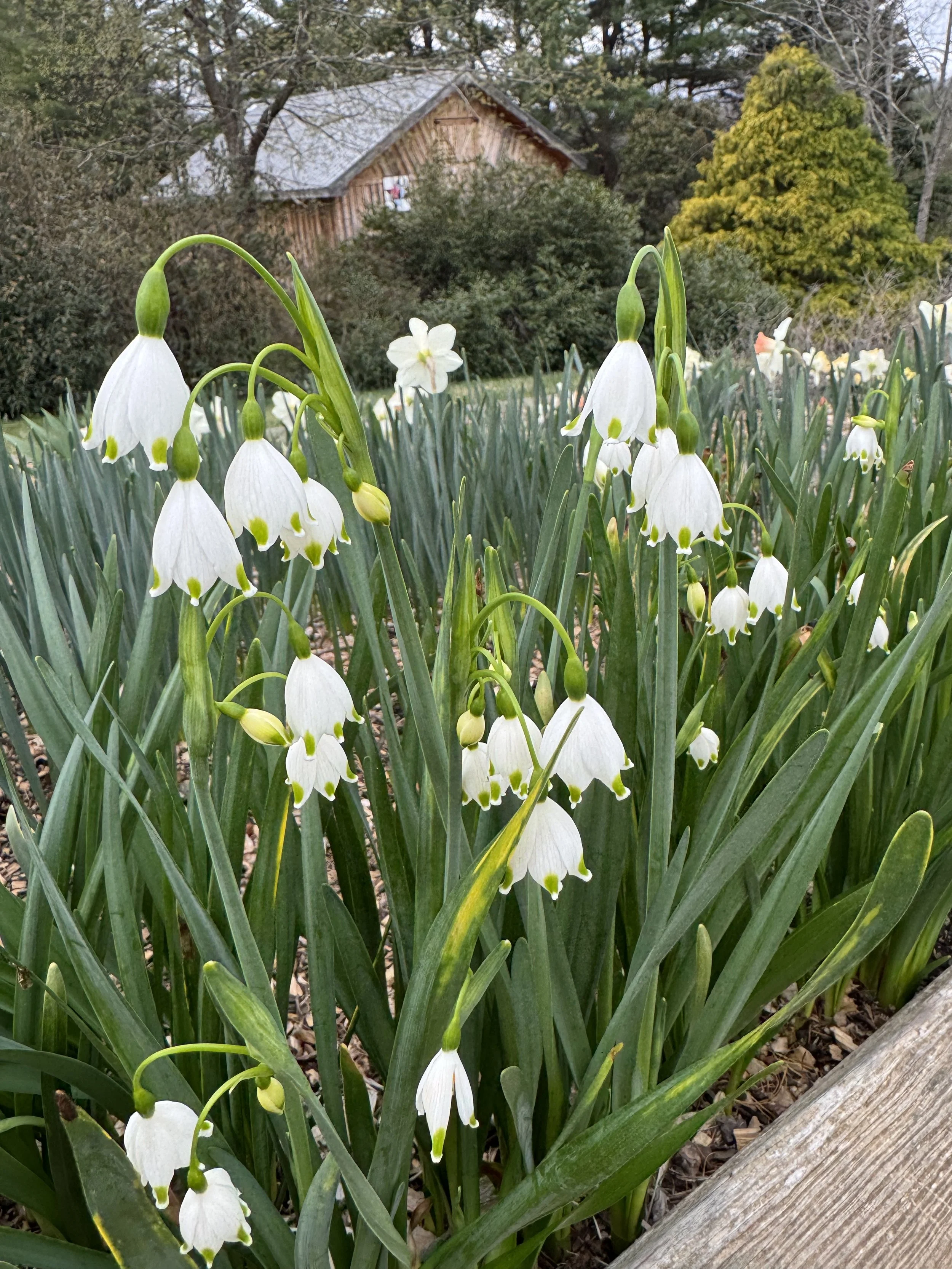
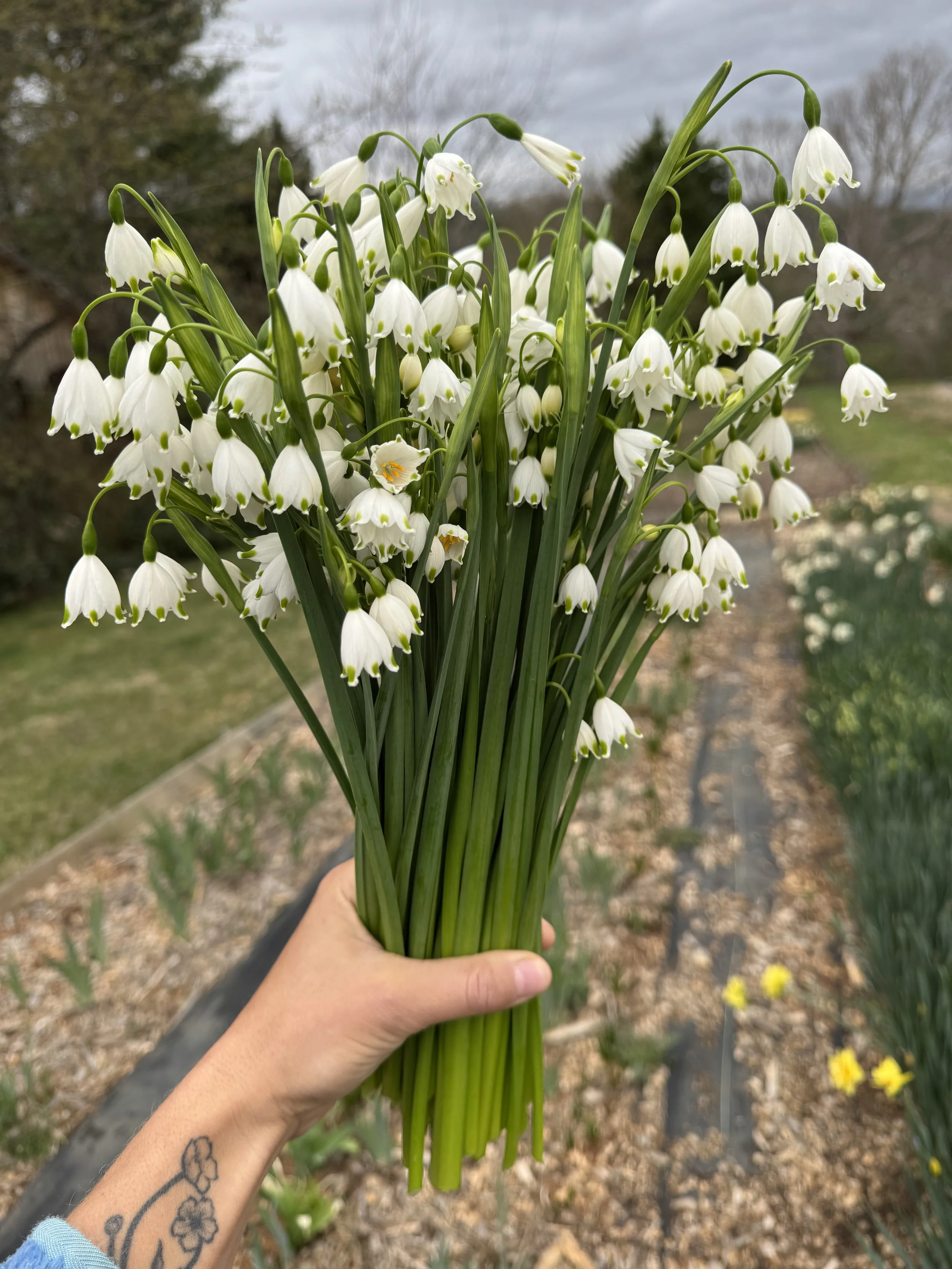
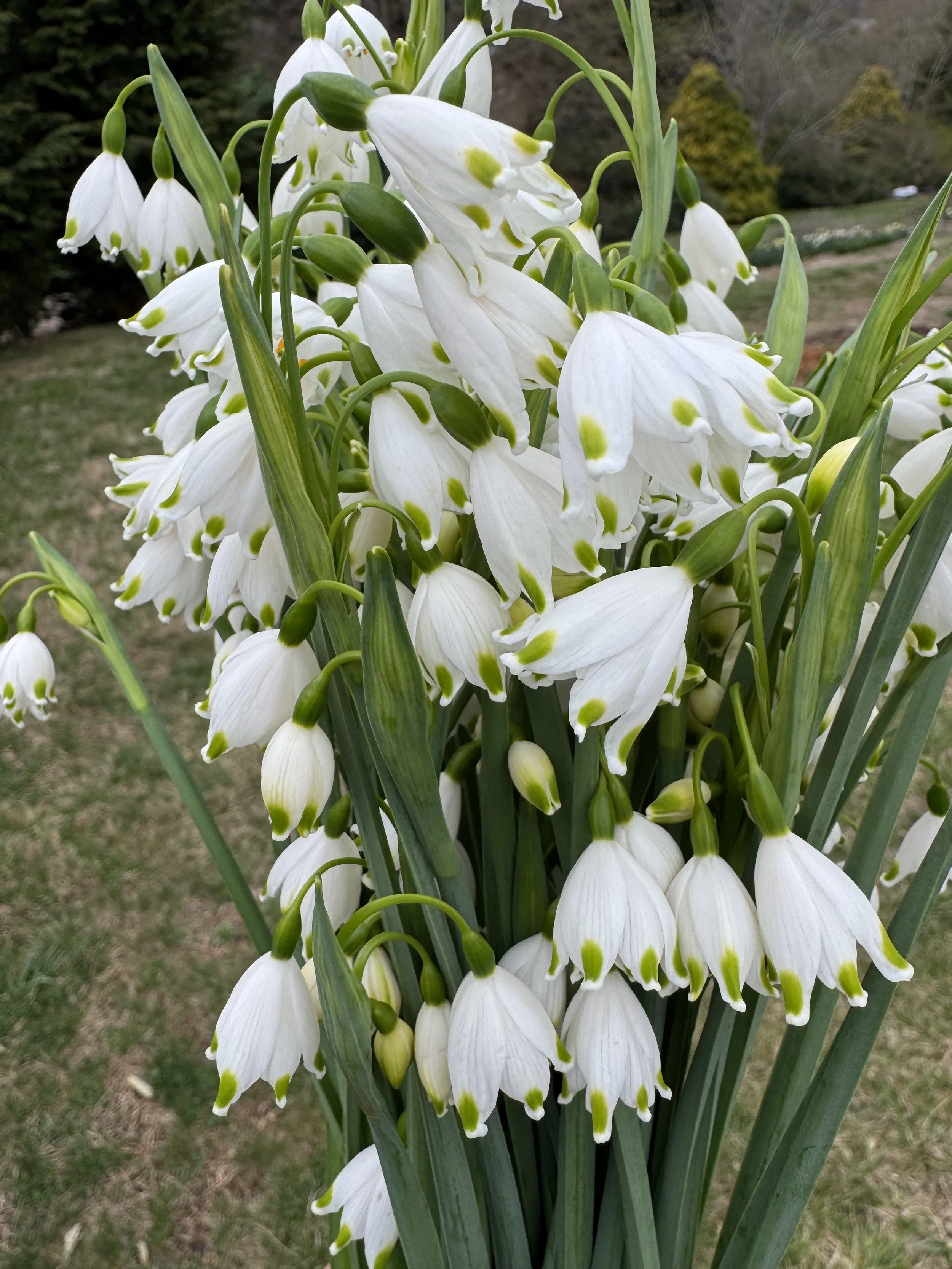
Leucojum is a small but mighty perennial that deserves more attention from flower farmers.
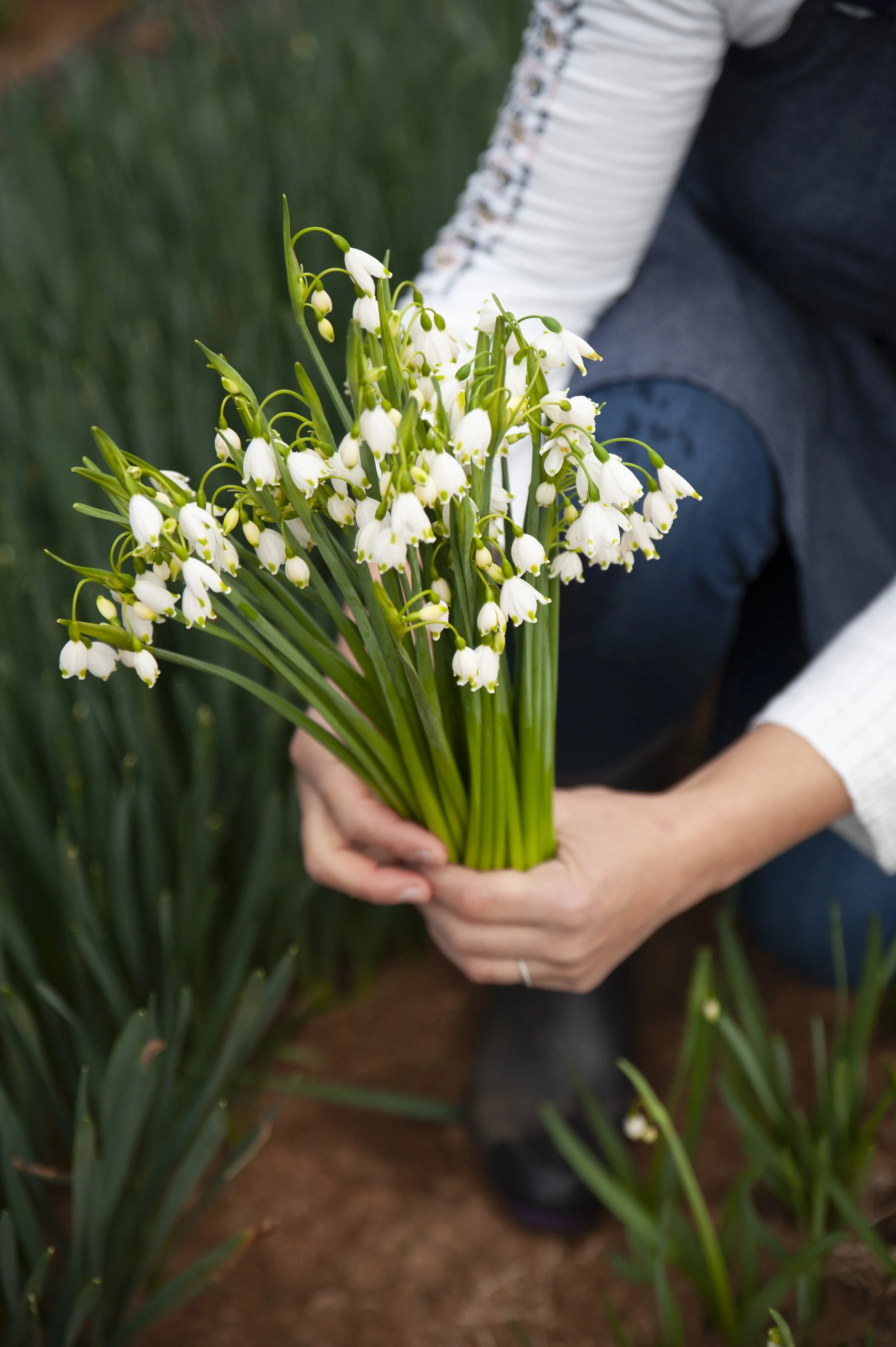
Often referred to as spring snowflakes, leucojum produces elegant white bell-shaped flowers on graceful stems in early spring. The blooms resemble snowdrops but have slightly longer stems, making them better-suited for floral work.
Leucojum is grown from bulbs and naturalizes beautifully over time, slowly forming larger clumps that return each year. Its delicate white flowers add brightness and movement to early spring arrangements.
On the farm, we especially appreciate plants like leucojum that quietly expand year after year. What begins as a modest planting eventually becomes a generous patch of reliable spring flowers.
Planting for the Future
When we plant a perennial, we’re investing not just in this year’s flowers but in many years to come. Some of these plants take time to reach full production, but once established, they become a steady and beautiful part of the farm’s production.
For flower farmers and farmer-florists, building a diverse collection of perennial flowers is one of the most rewarding ways to deepen both the landscape and the floral palette.
We look forward to each spring when they return — usually a little larger, a little stronger, and even more beautiful than the year before.
