
Our Favorite Dahlia Varieties for Flower Farmers and Farmer-Florists
/There is no shortage of beautiful dahlias in the world. With thousands of varieties available in nearly every color, shape, and size imaginable, it can be tempting to want to grow them all.
But on a working flower farm, we’ve learned that the best dahlia varieties aren’t necessarily the newest, rarest, or hardest to find. They’re the ones that earn their space in the field.
growing for consistency and scale
At Flourish, we grow dahlias primarily for floral design, including weddings and events. That means we look at a dahlia a little differently than a collector might. We need varieties that produce reliably, have good vase life, work beautifully in arrangements, and come in colors our clients consistently request.
We also need to plan enough of each variety to meet our needs. Rather than planting one or two tubers of dozens of different varieties, we prefer to grow each of our favorite dahlias in larger quantities, typically 10 to 25 or more plants of a single variety. This makes harvesting much more efficient and, more importantly, gives us the consistency we need when designing flowers for larger weddings and events.
If we need dozens of peach dahlias for a wedding, having two perfect blooms from ten different varieties isn’t nearly as useful as having a reliable block of one beautiful peach variety ready to harvest.
That philosophy also means we generally don’t chase the latest rare or expensive dahlia tubers. Spending $25 or more on a single tuber doesn’t make much sense for the way we grow, especially when we need enough plants to produce flowers at scale.
Why We Grow So Many Ball Dahlias
If you walk through our dahlia field, you’ll notice that ball dahlias make up a large portion of what we grow. Ball dahlias are some of the most useful dahlias for flower farmers and floral designers. Their compact, rounded flowers tuck easily into bouquets and arrangements, and their strong, symmetrical form provides a lovely contrast to looser, more delicate flowers.
They also tend to have a longer vase life than many of the large dinnerplate dahlias, an important consideration when we’re growing flowers for weddings and events.
which dahlias should you grow?
For flower farmers and farmer-florists deciding which dahlias to grow, our biggest piece of advice is simple: you don’t need them all! Choose the colors and flower forms that work for your design style and your customers, then grow enough of those varieties to make them truly useful.
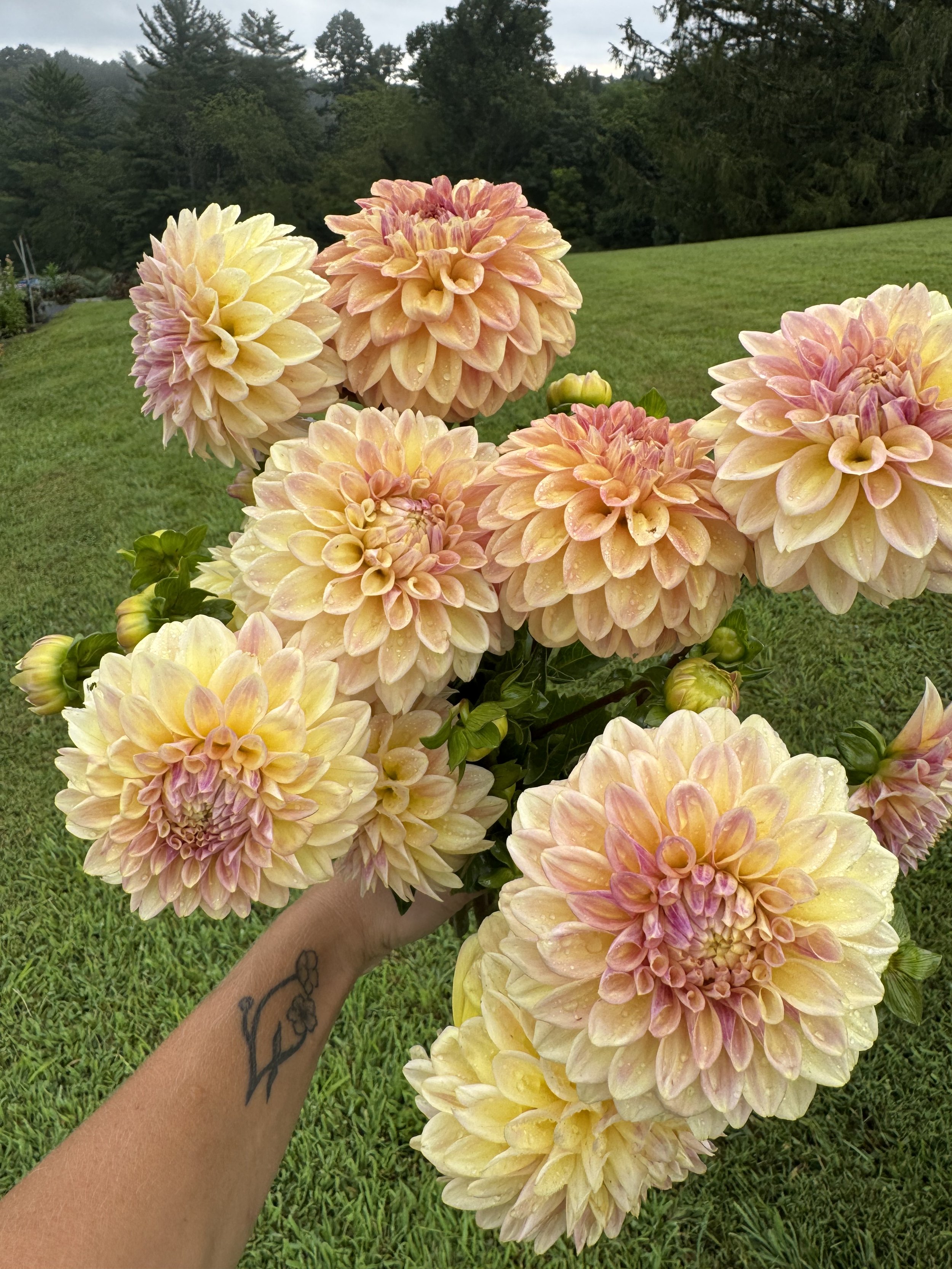
At Flourish, we focus on the colors we reach for again and again in our floral work: peach, pink, coral, white, plum, and burgundy.
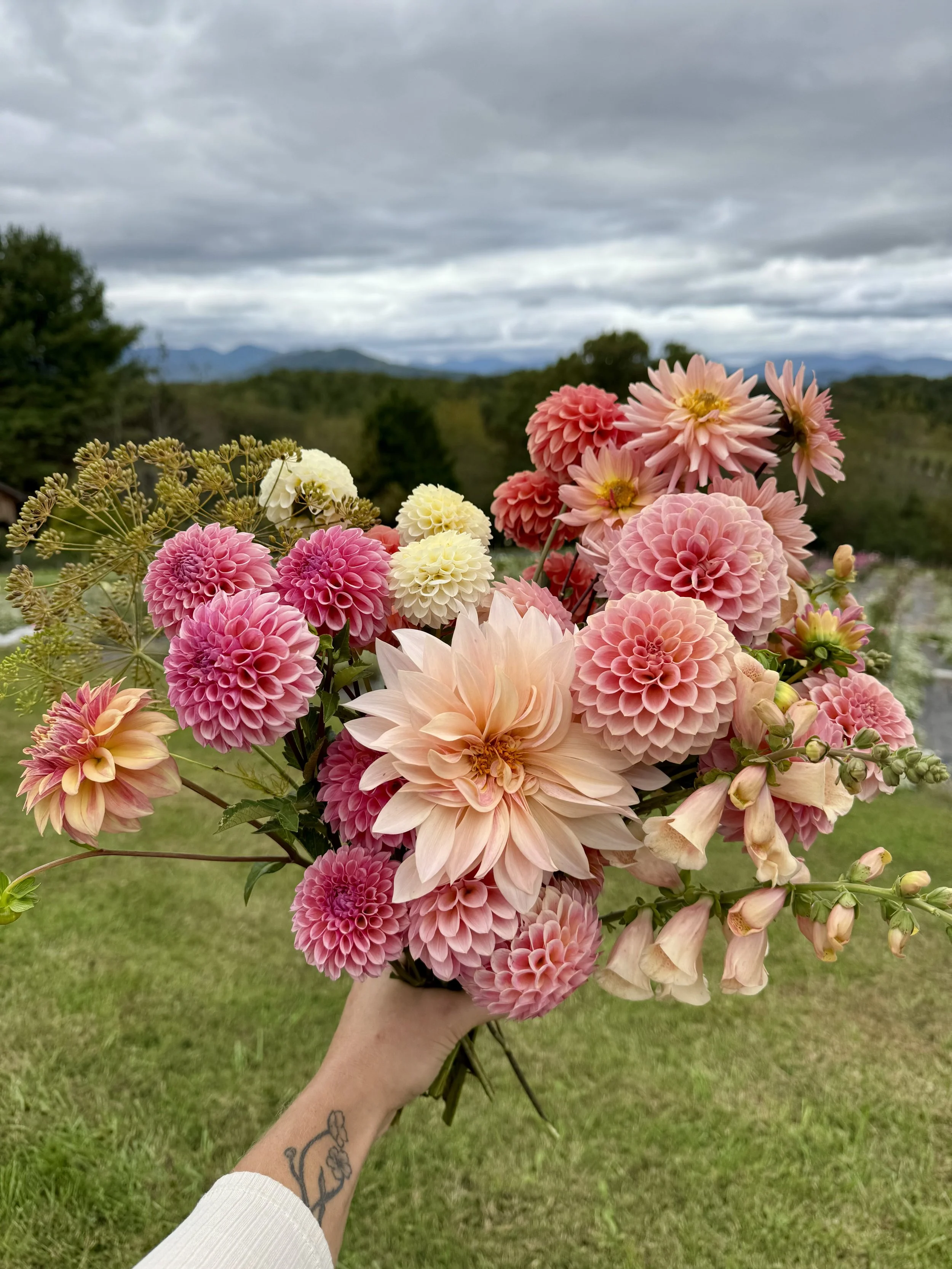
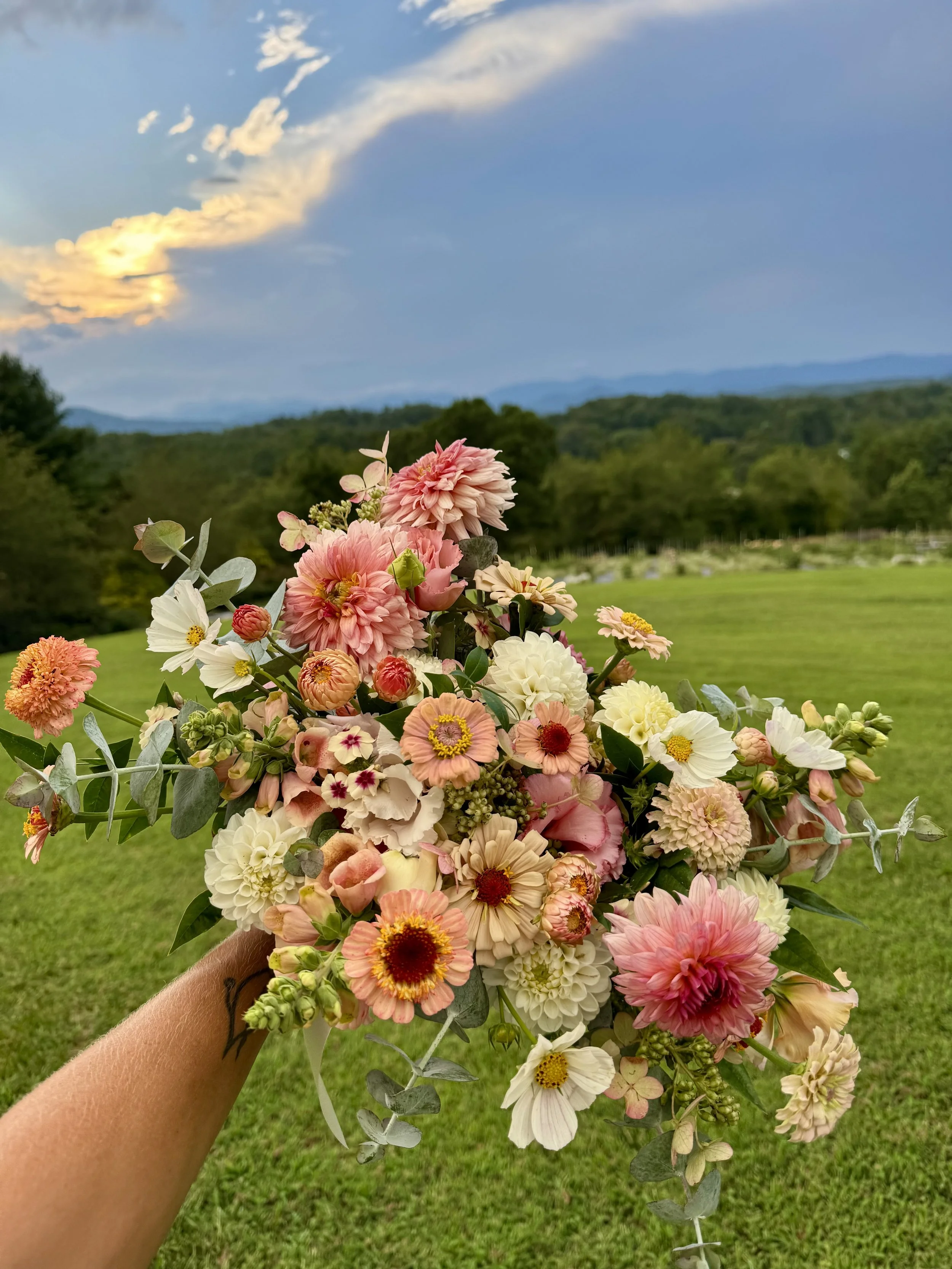
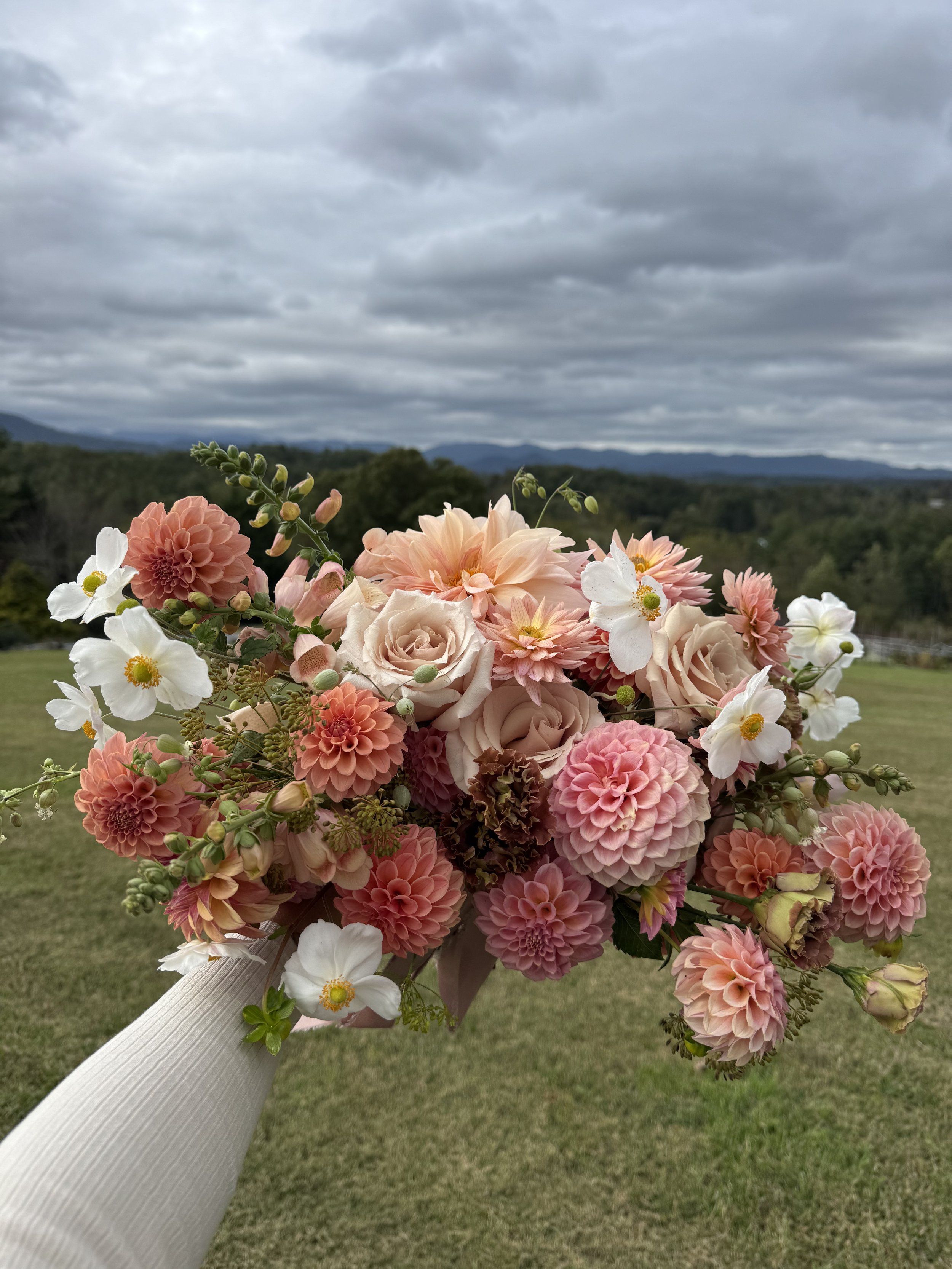
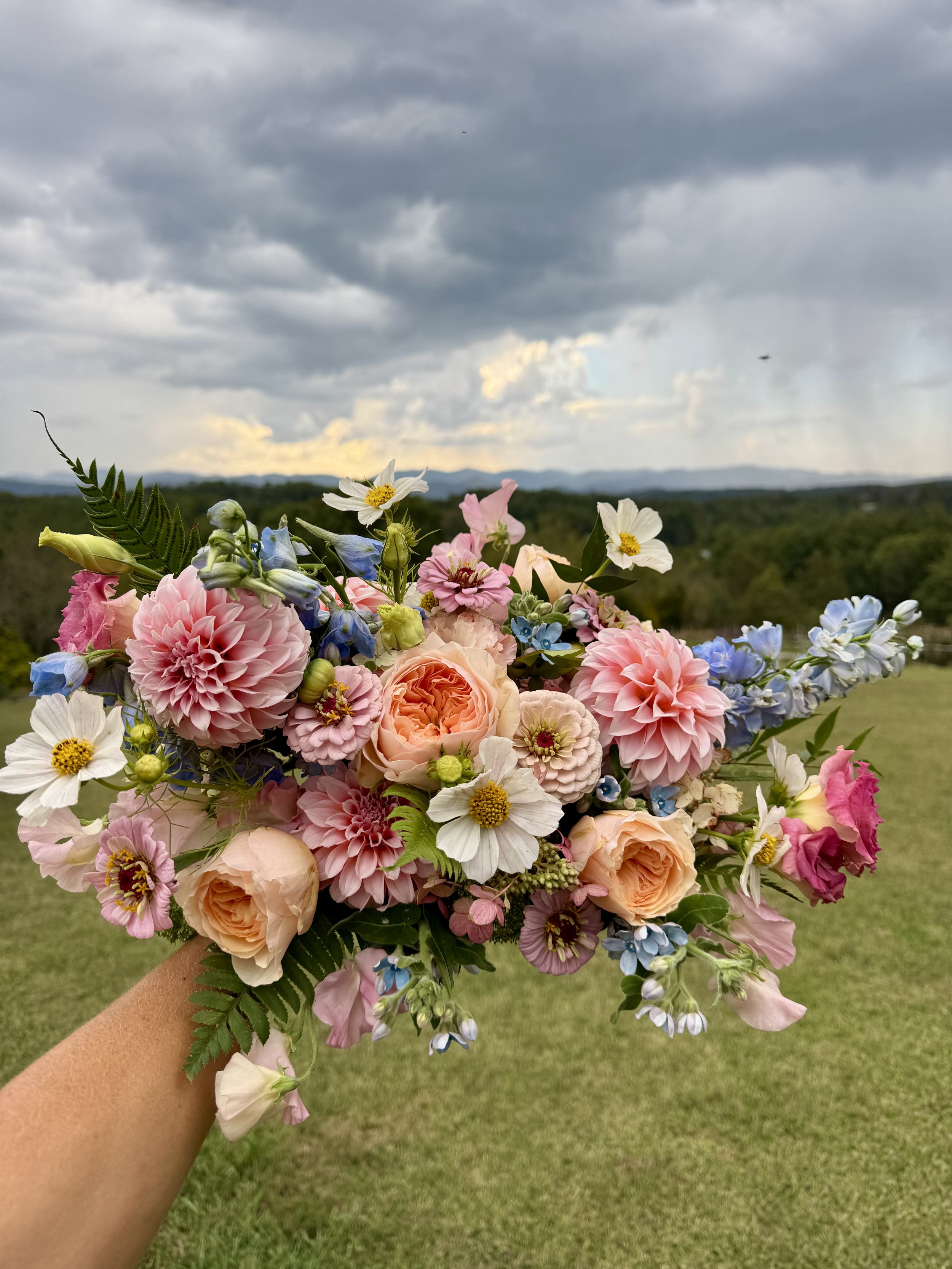
Here are some of our favorite dahlia varieties for cut flowers and floral design, from reliable workhorses to a few harder-to-find varieties that we think are worth seeking out.
Reliable Dahlia Varieties We Grow in large quantities
These are some of our favorite dahlia varieties because they're relatively easy to source from wholesalers and brokers in larger quantities.
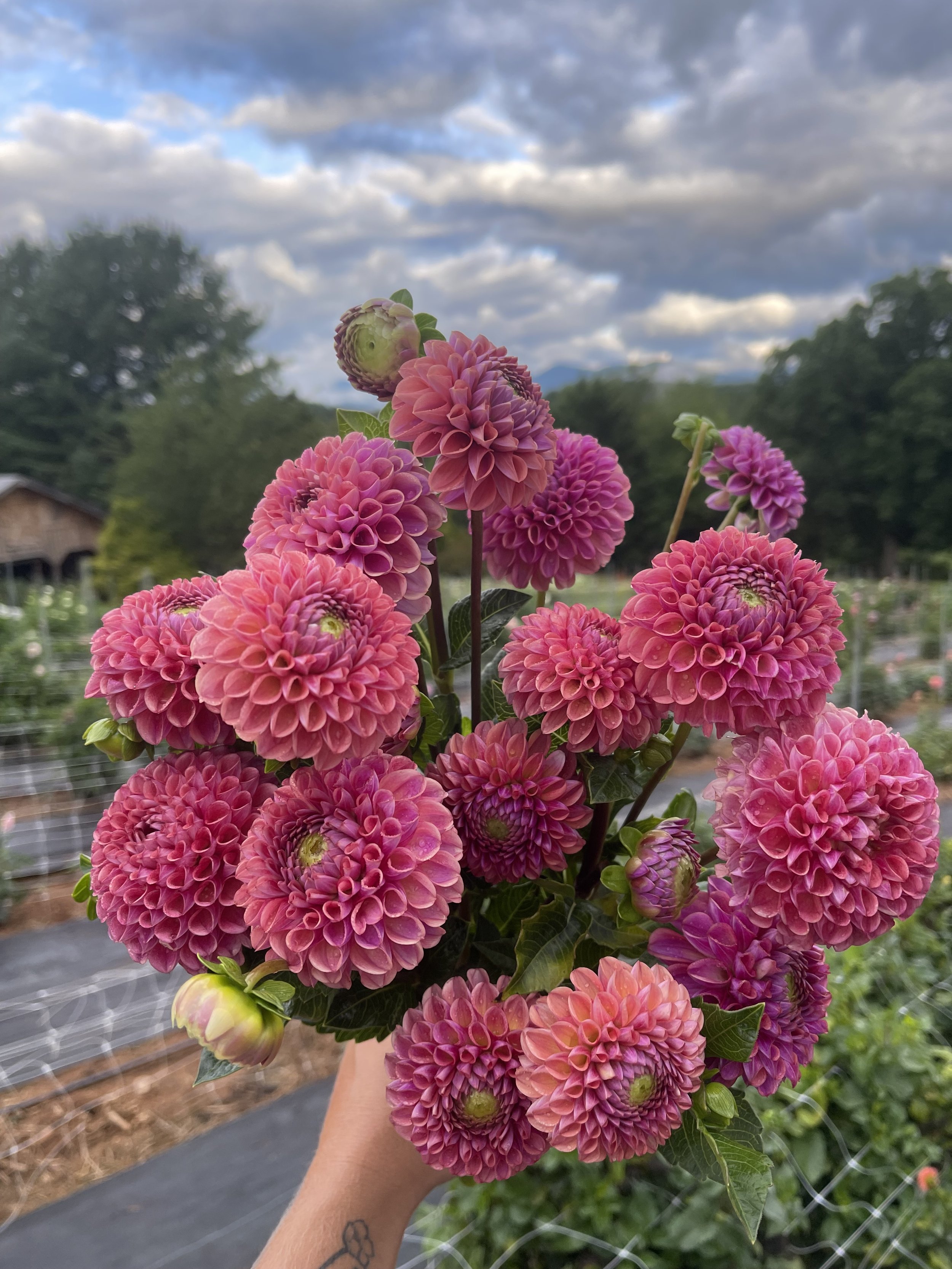
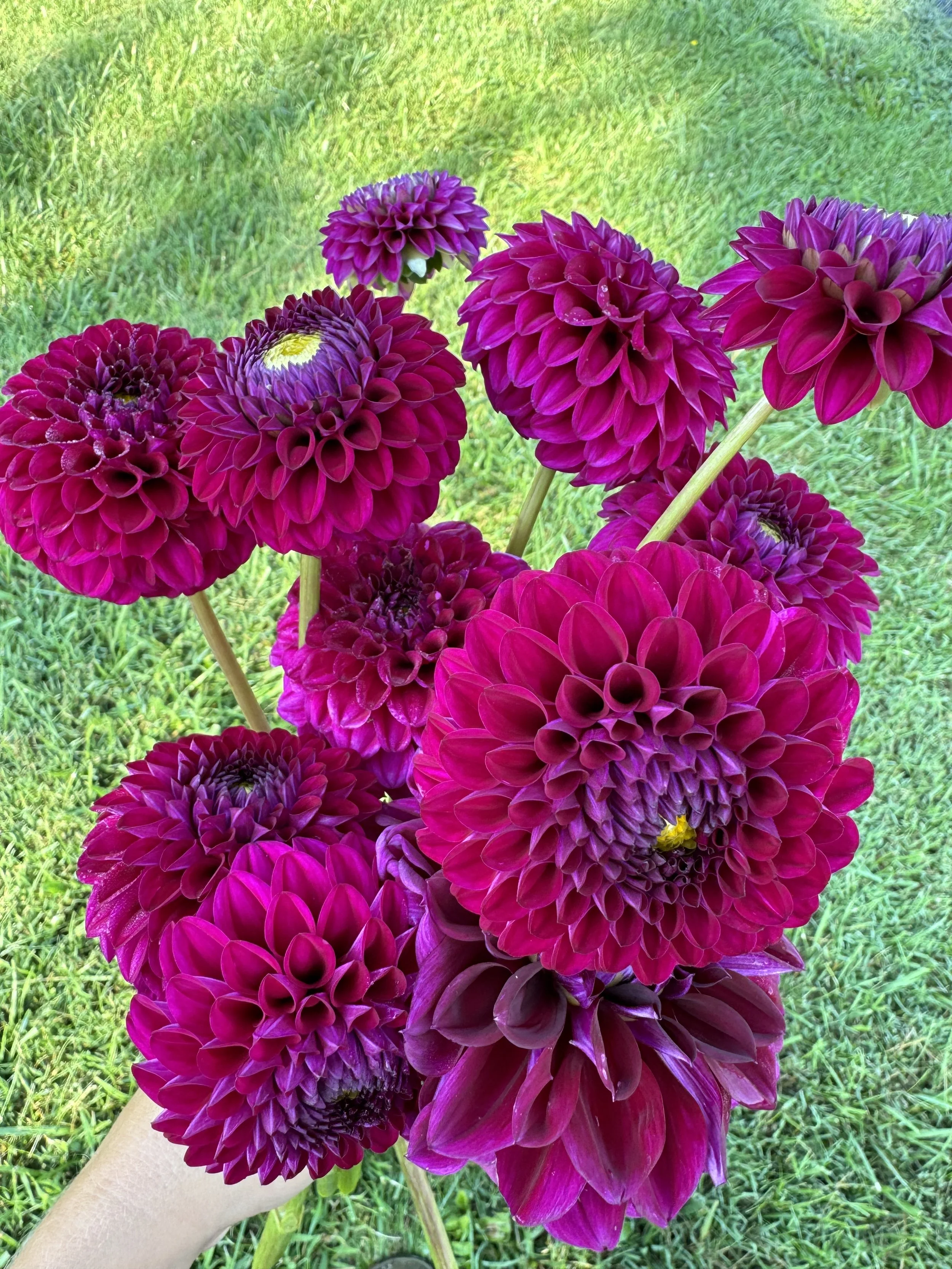
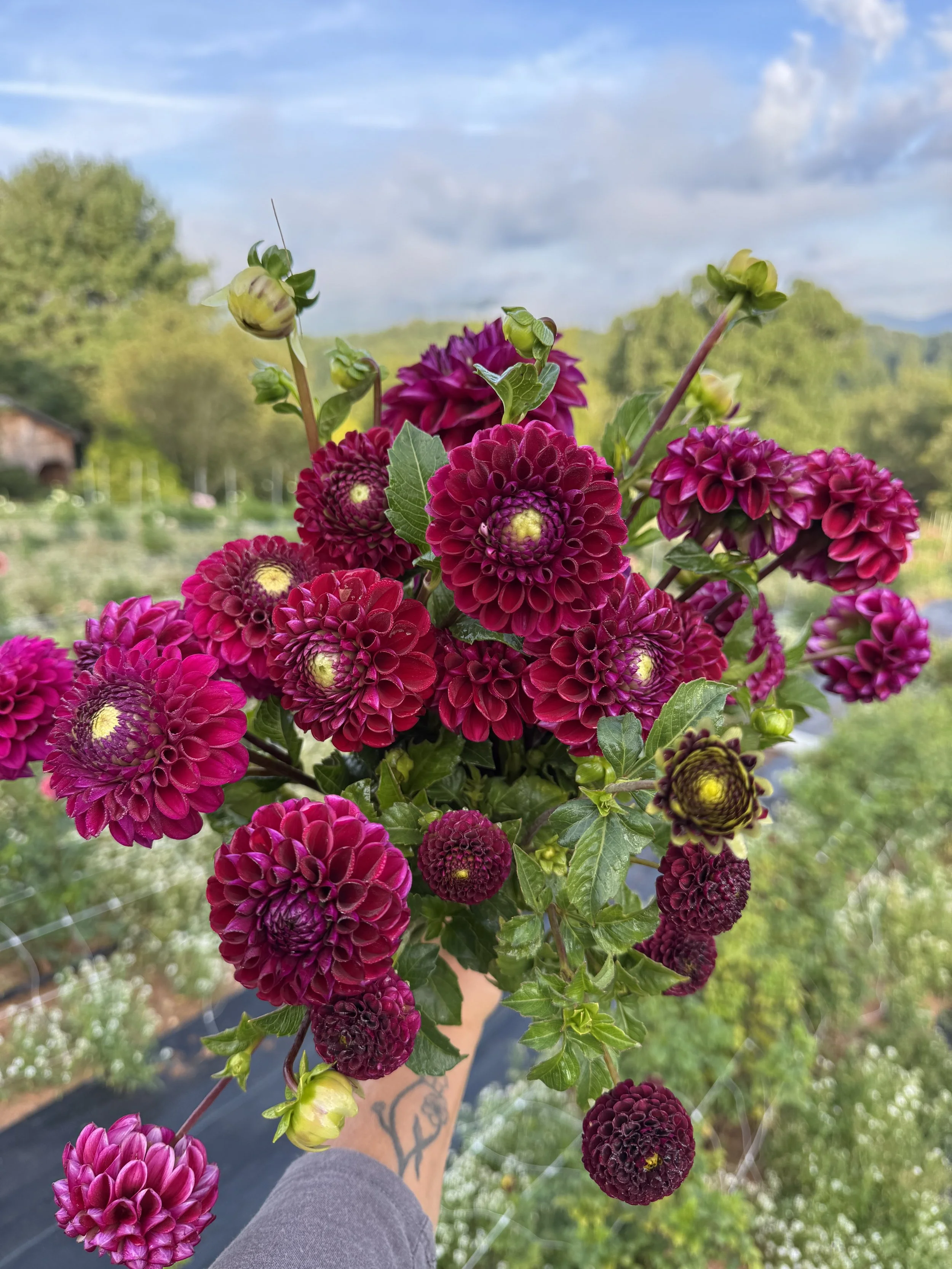
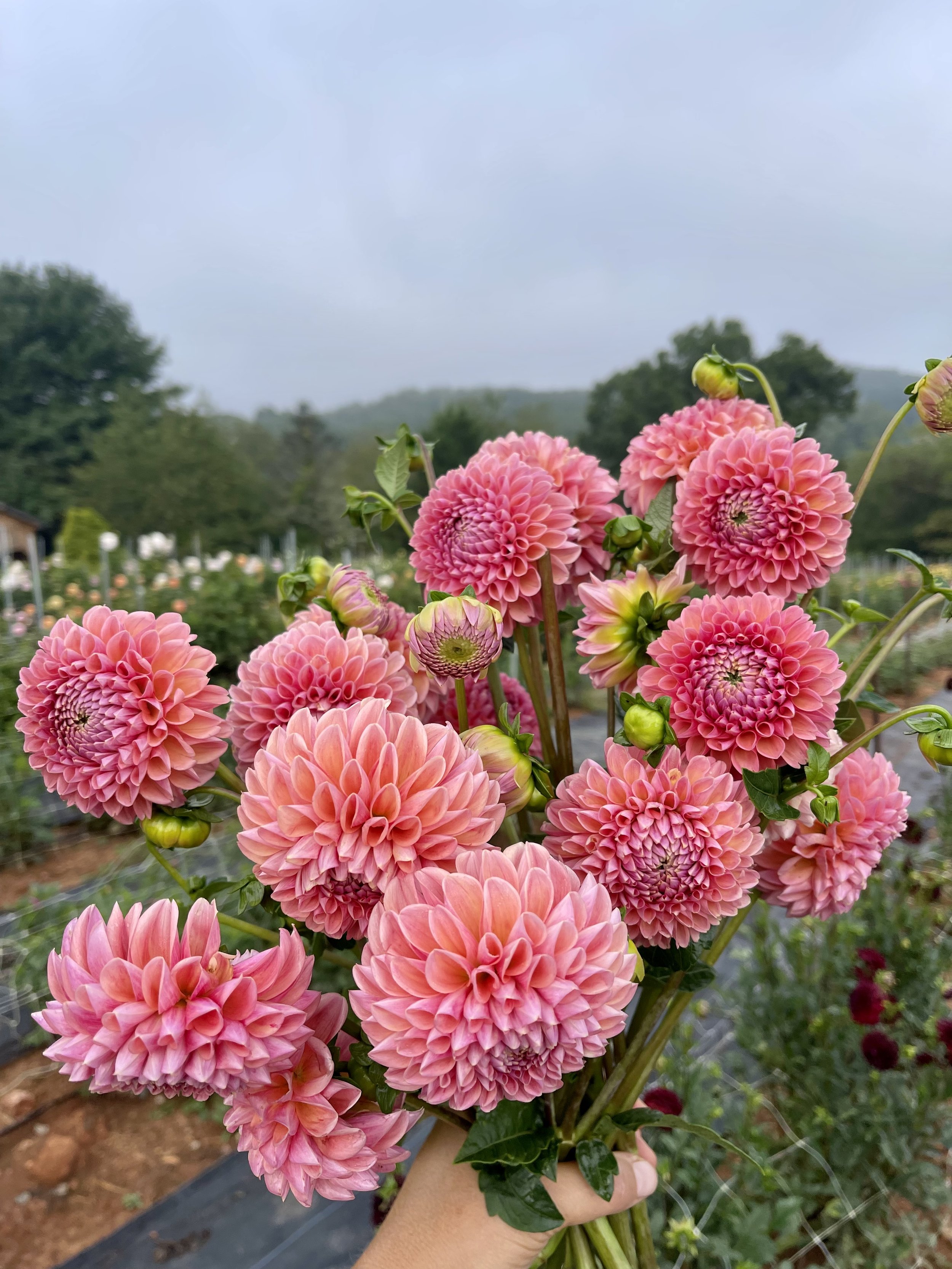
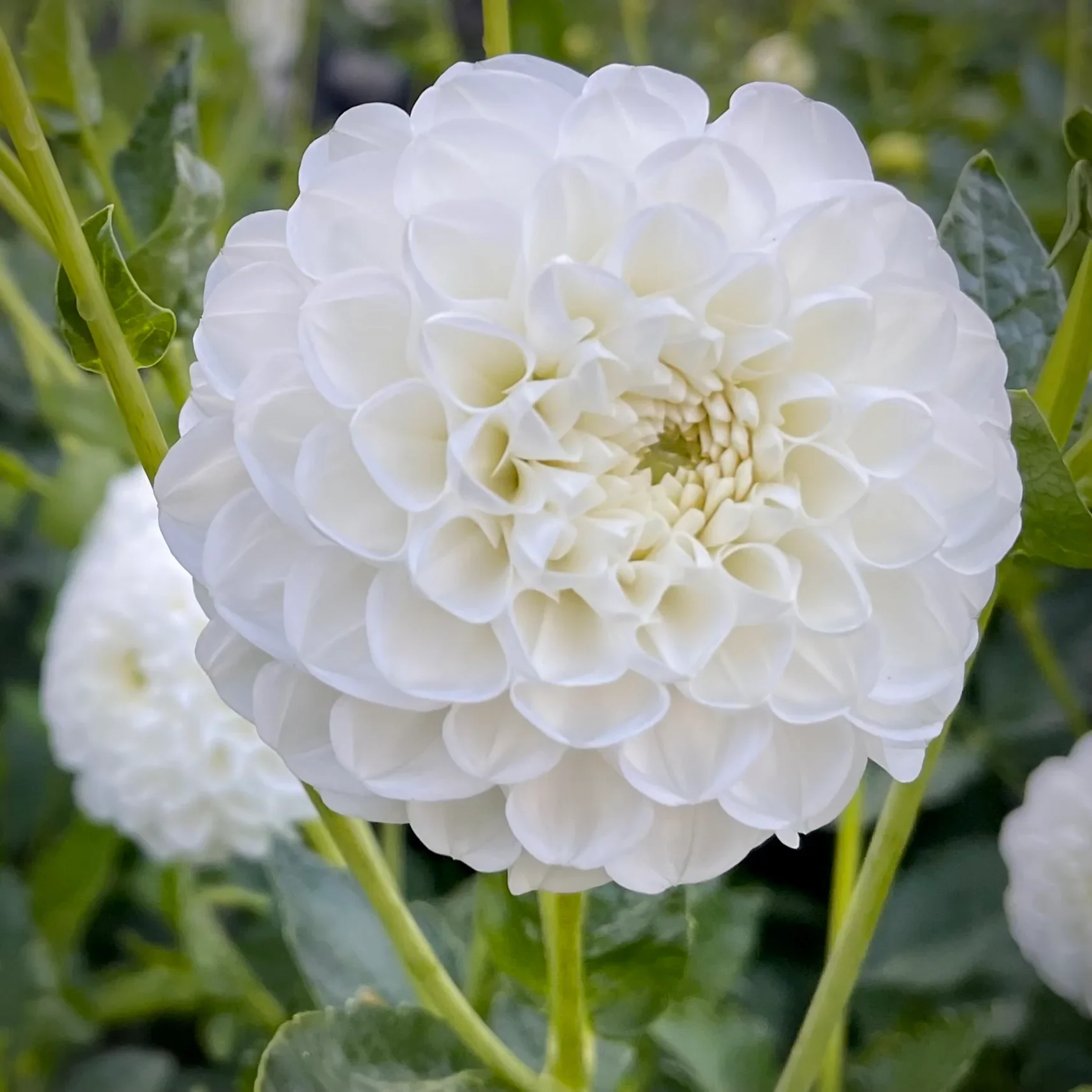
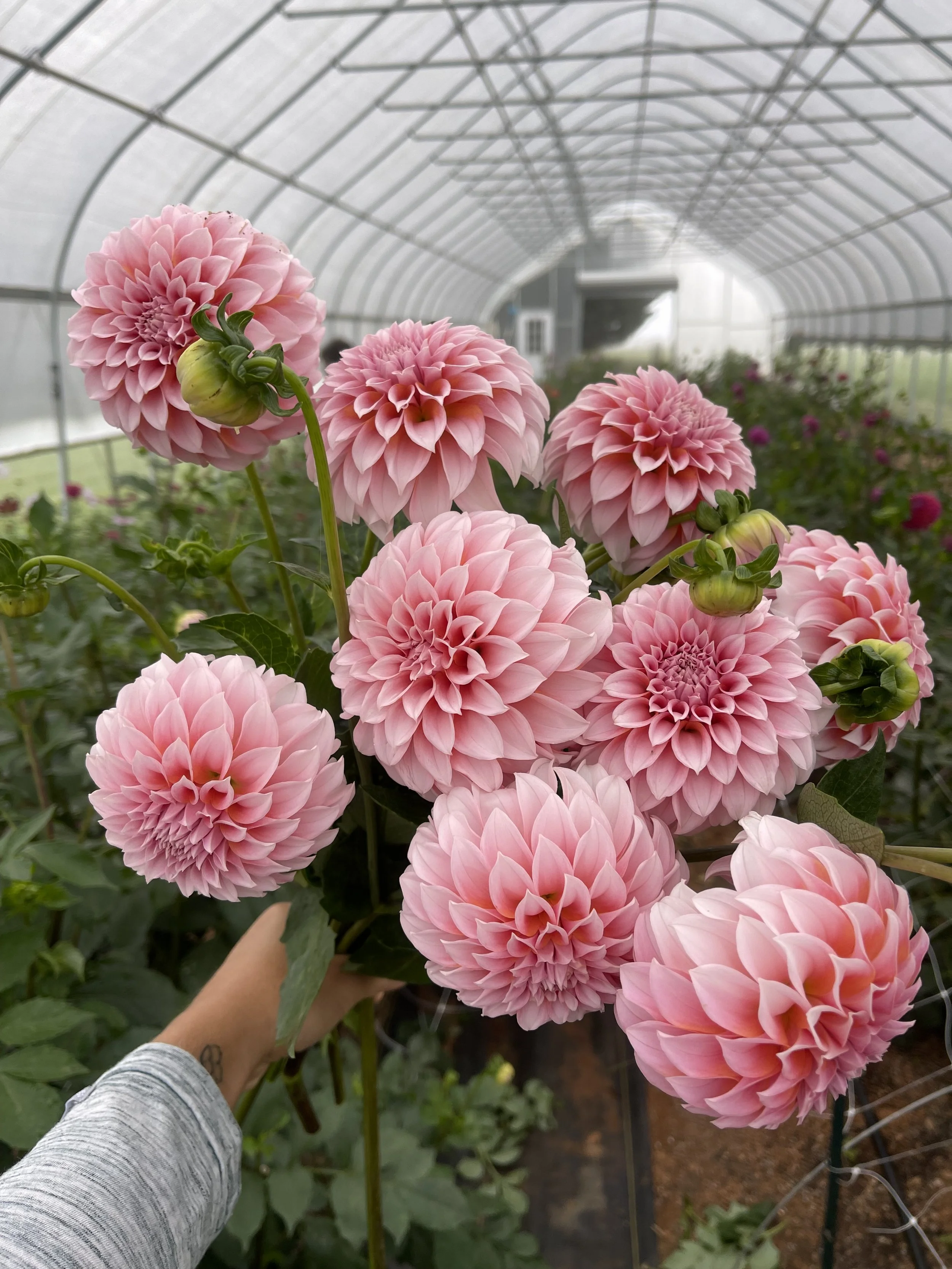
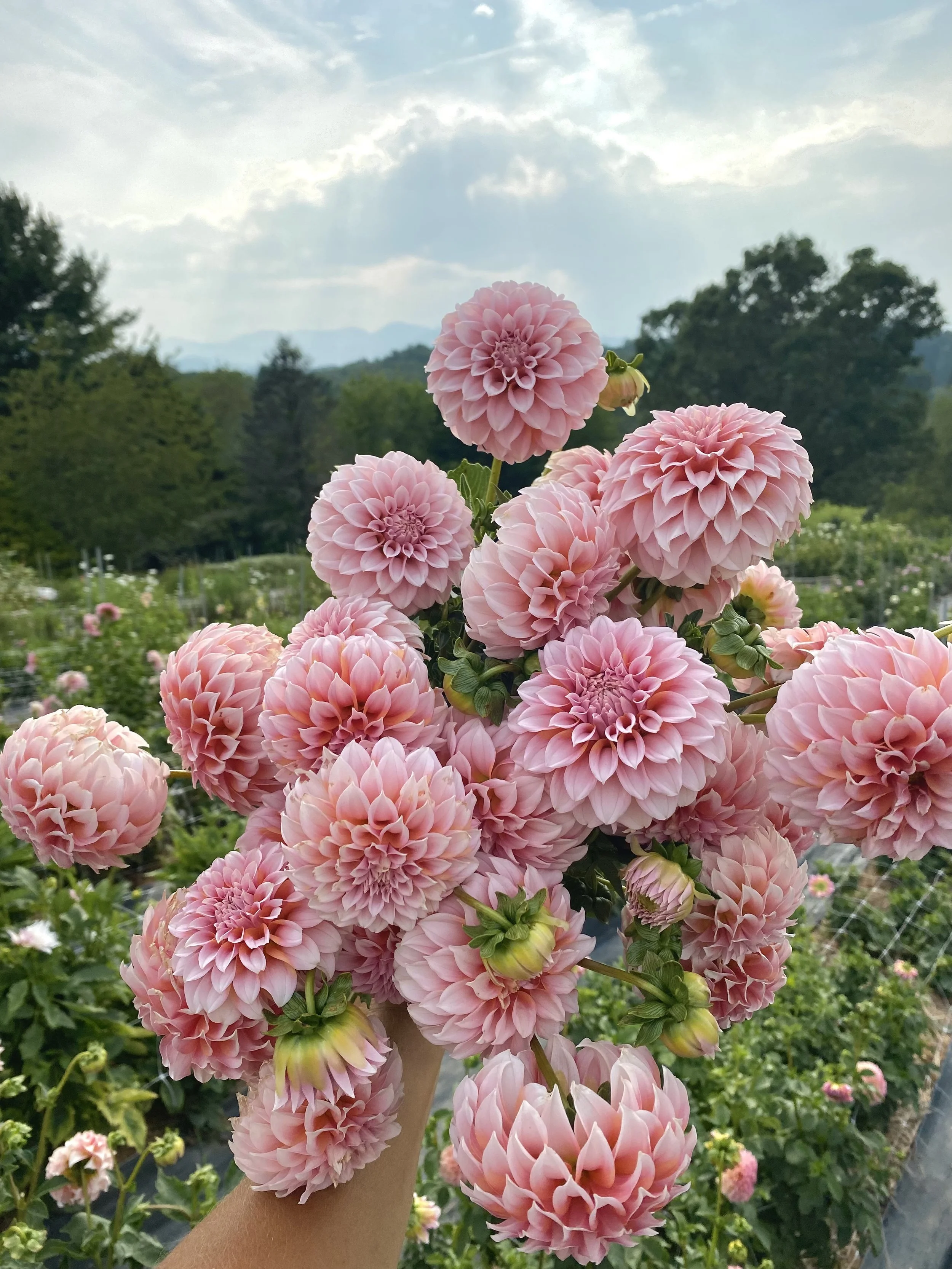
Caitlin’s Joy (ball type; rosy pink with hints of pink and purple)
Ivanetti (ball type; deep burgundy to plum)
Linda’s Baby (ball type; pinky peach)
Orsett Beauty (ball type; white)
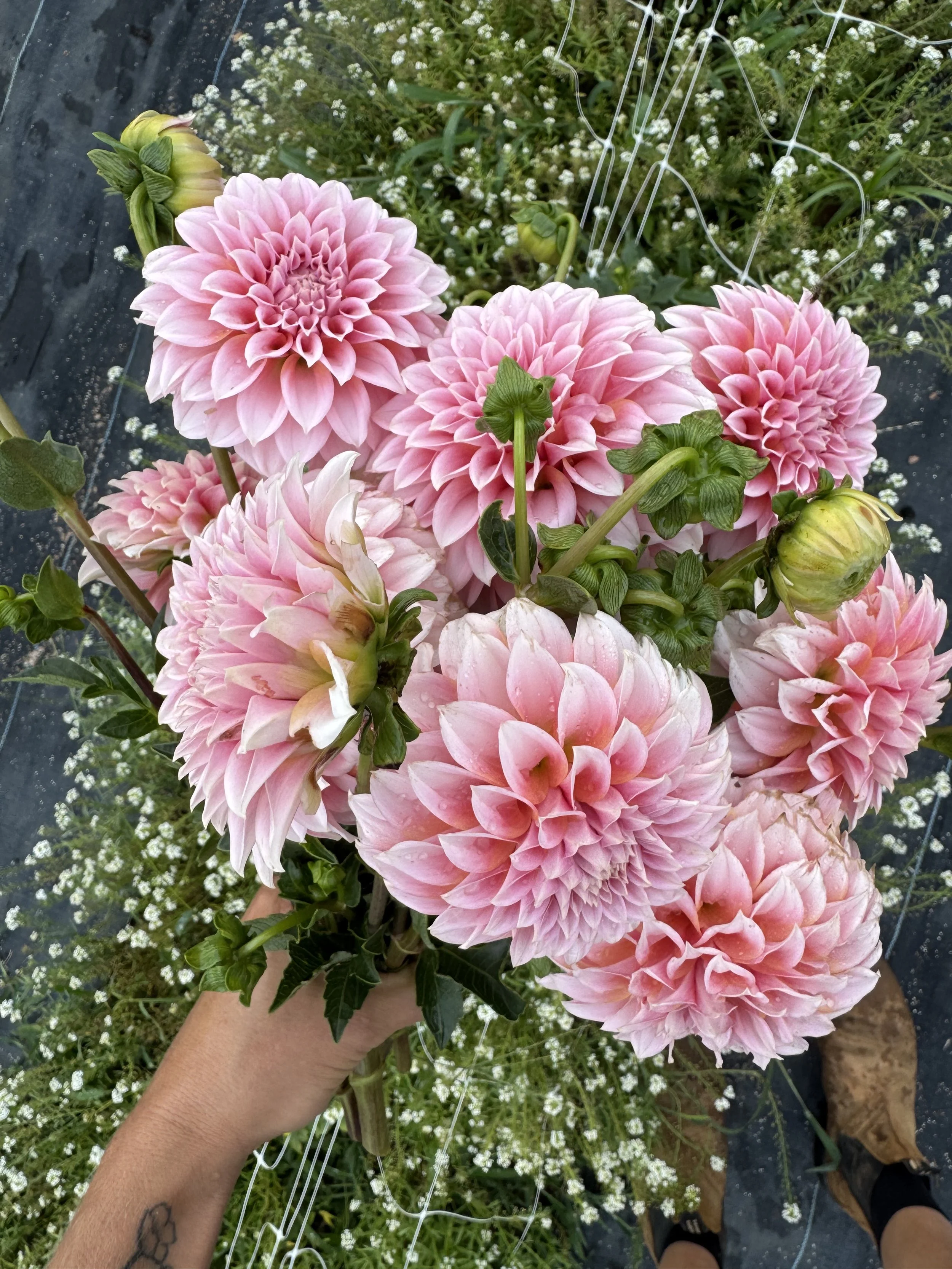
Peaches (decorative type; blush with accents of warm peach and coral)
These are the kinds of varieties that become the backbone of a dahlia field. They give us dependable colors and useful flower forms while allowing us to grow enough stems for larger-scale floral design.
Harder-to-Find Dahlias That Are Worth Growing
We aren’t usually interested in a dahlia simply because it’s rare. But occasionally, a harder-to-find variety offers a color that is difficult to replicate with more readily available dahlias.
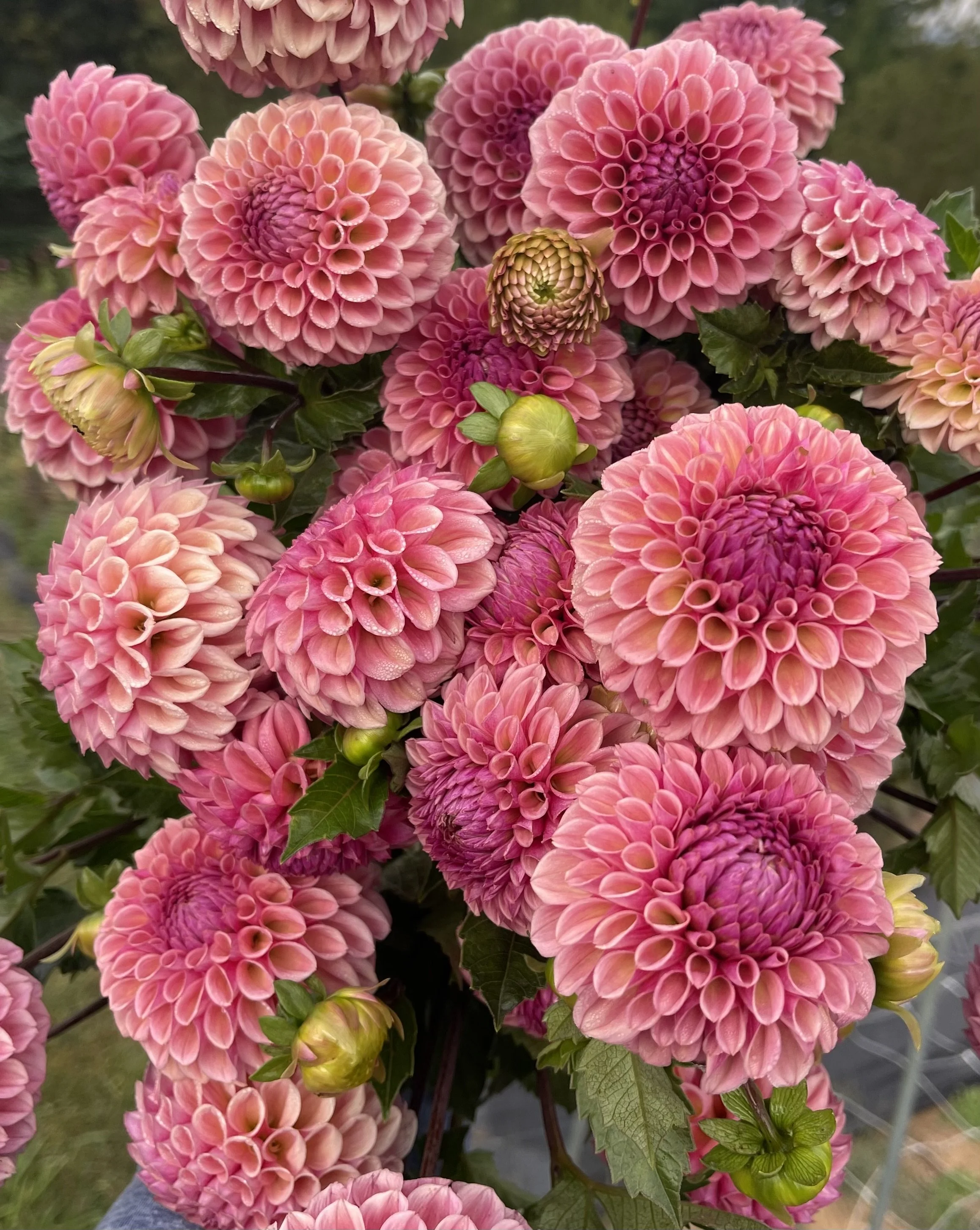
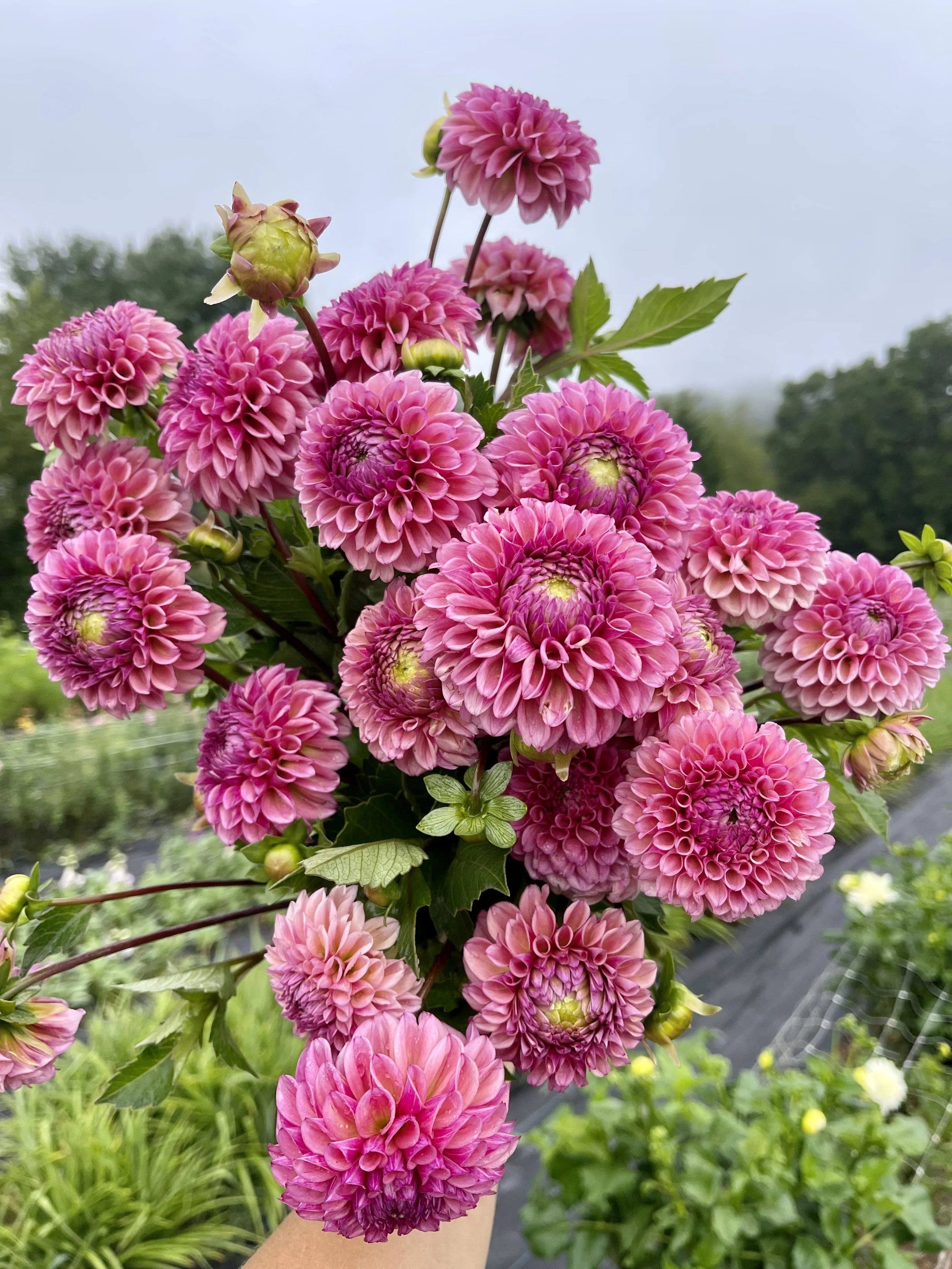
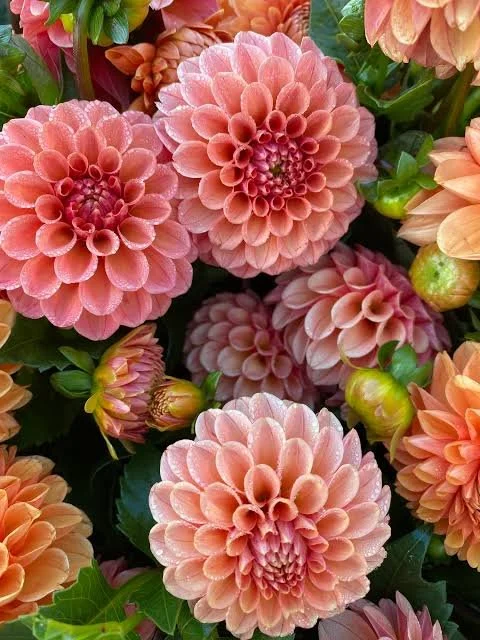
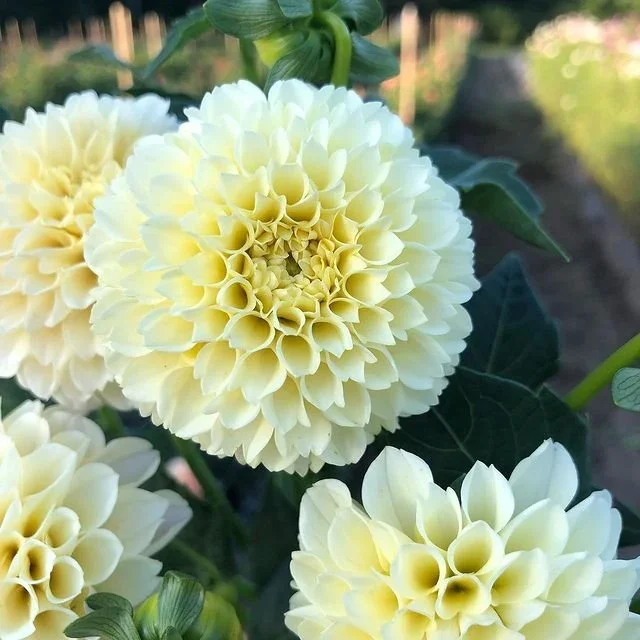
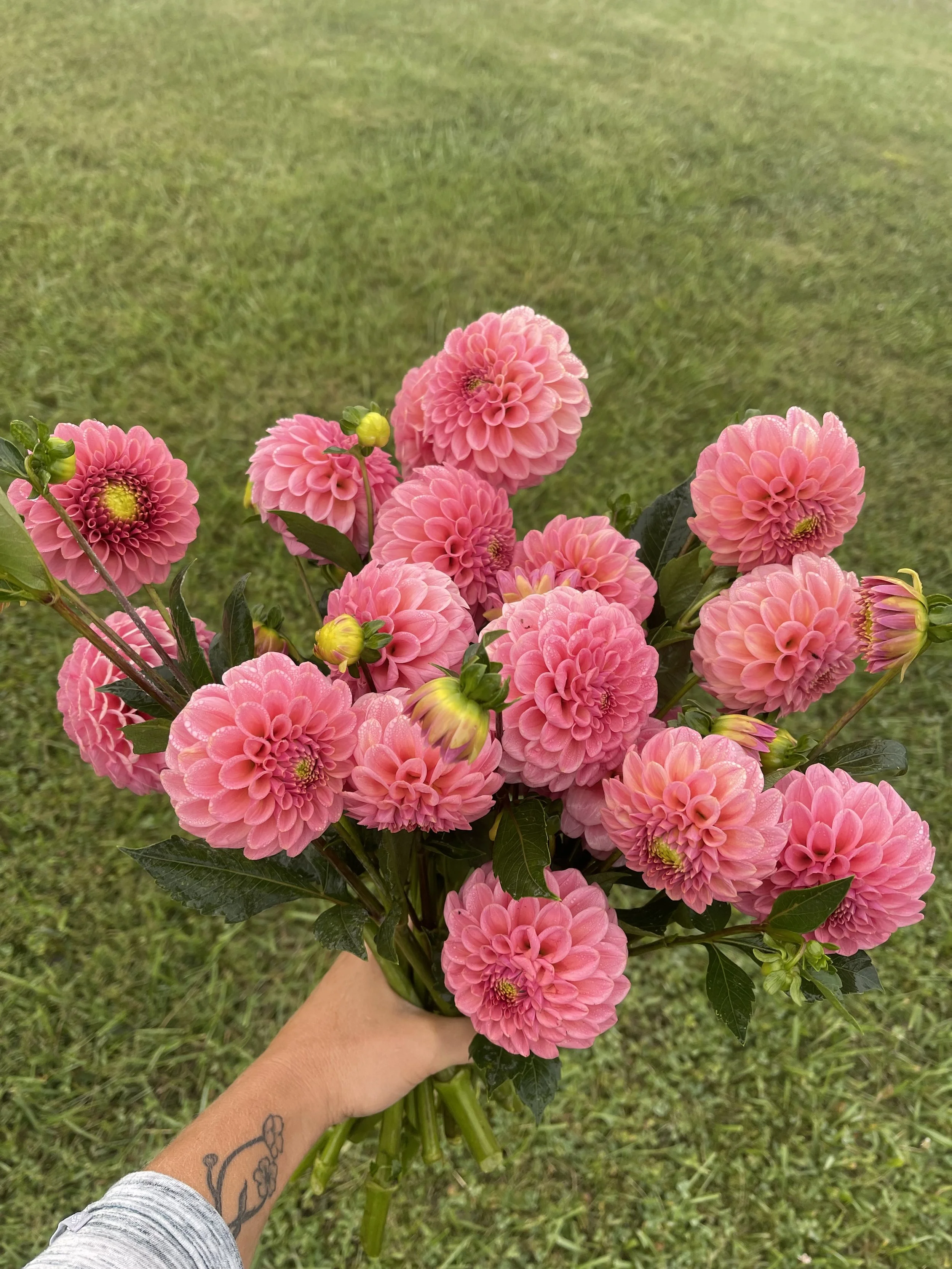
Some of our favorites include:
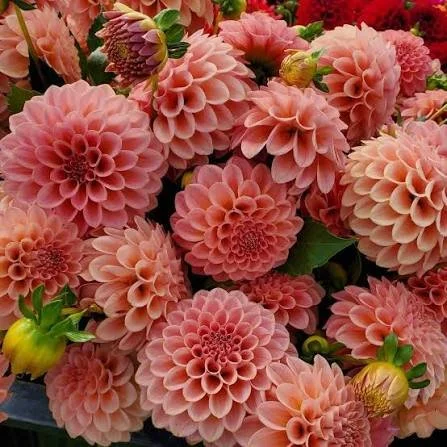
Bracken Rose (decorative type; dusty rose)
Rose Toscano (decorative type; peach and apricot)
Creamy (miniature ball type; soft cream to butter yellow)
Rock Run Ashley (decorative type; soft peach and muted coral)
These nuanced colors are especially useful for wedding floral design. A dusty rose or warm cream dahlia can bridge several colors in an arrangement and make the entire palette feel more cohesive.
We may spend a little more on these tubers, but they offer something distinctive enough to earn their place in the field.
Dinnerplate and Other Dahlia Forms Worth Growing
Ball dahlias may be our workhorses, but that doesn’t mean they're the only dahlias we grow.
Larger dinnerplate dahlias and more unique forms can create beautiful focal moments in bridal bouquets, centerpieces, and large-scale arrangements. We’re simply more selective about which ones we dedicate field space to.
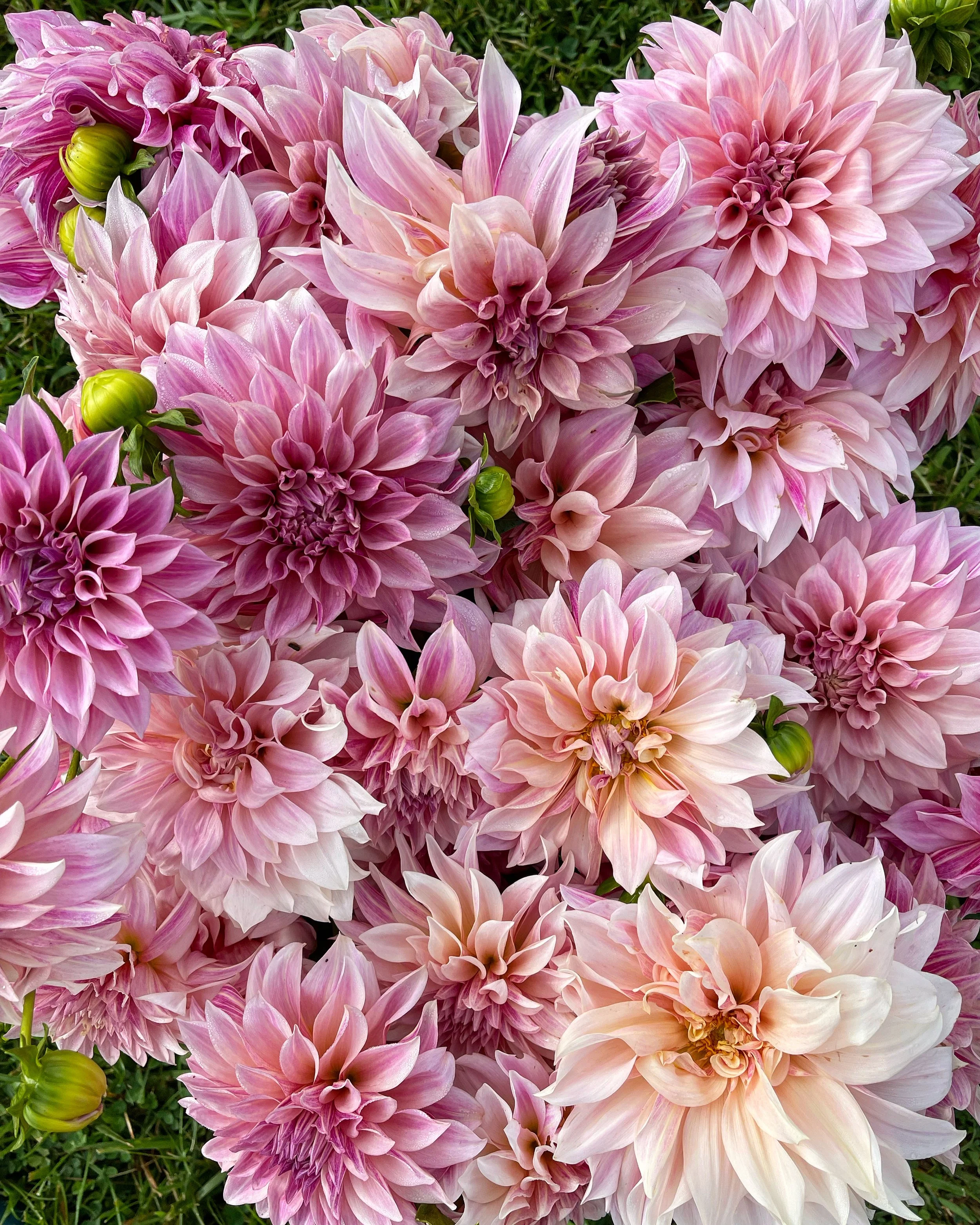
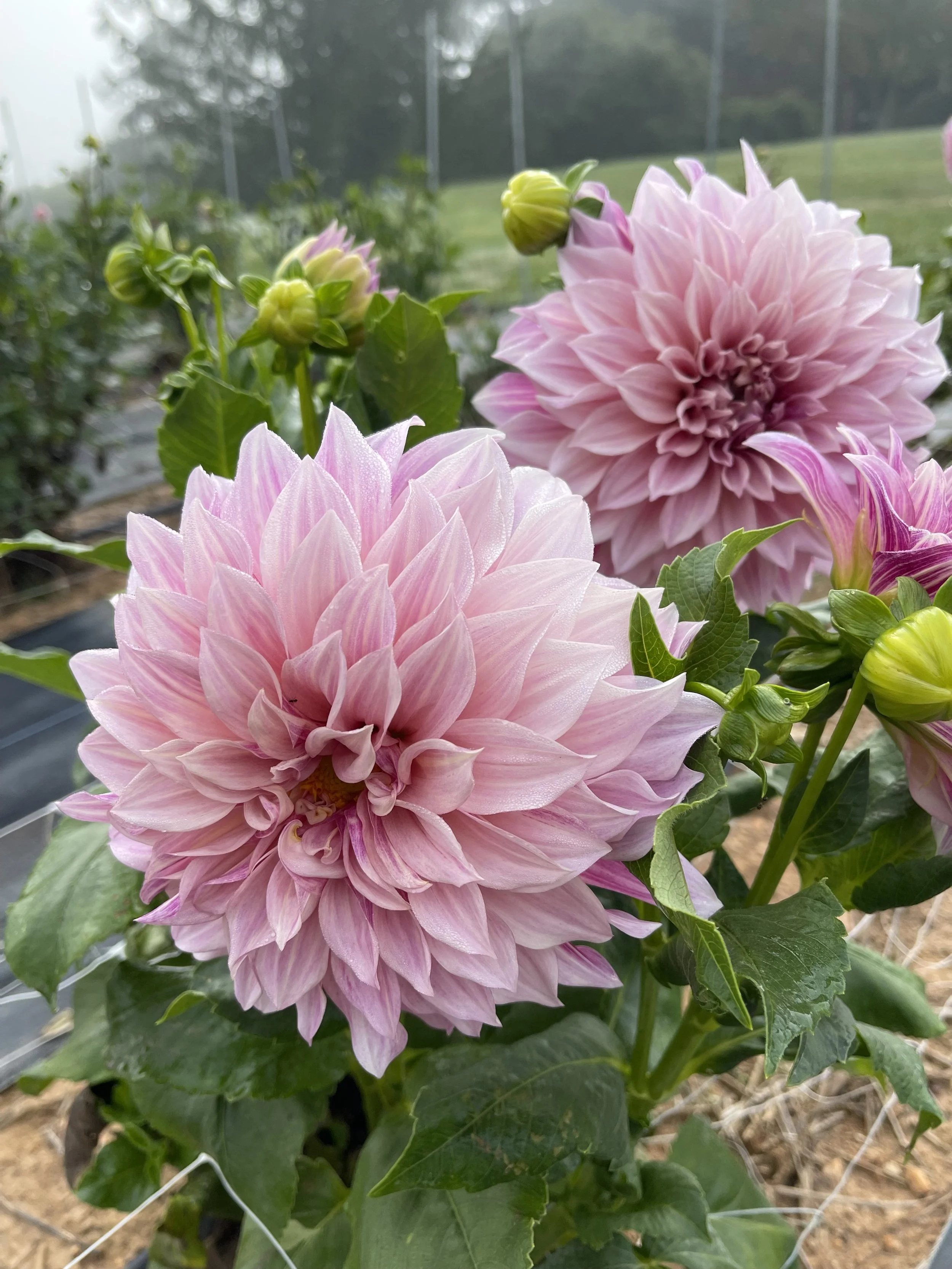
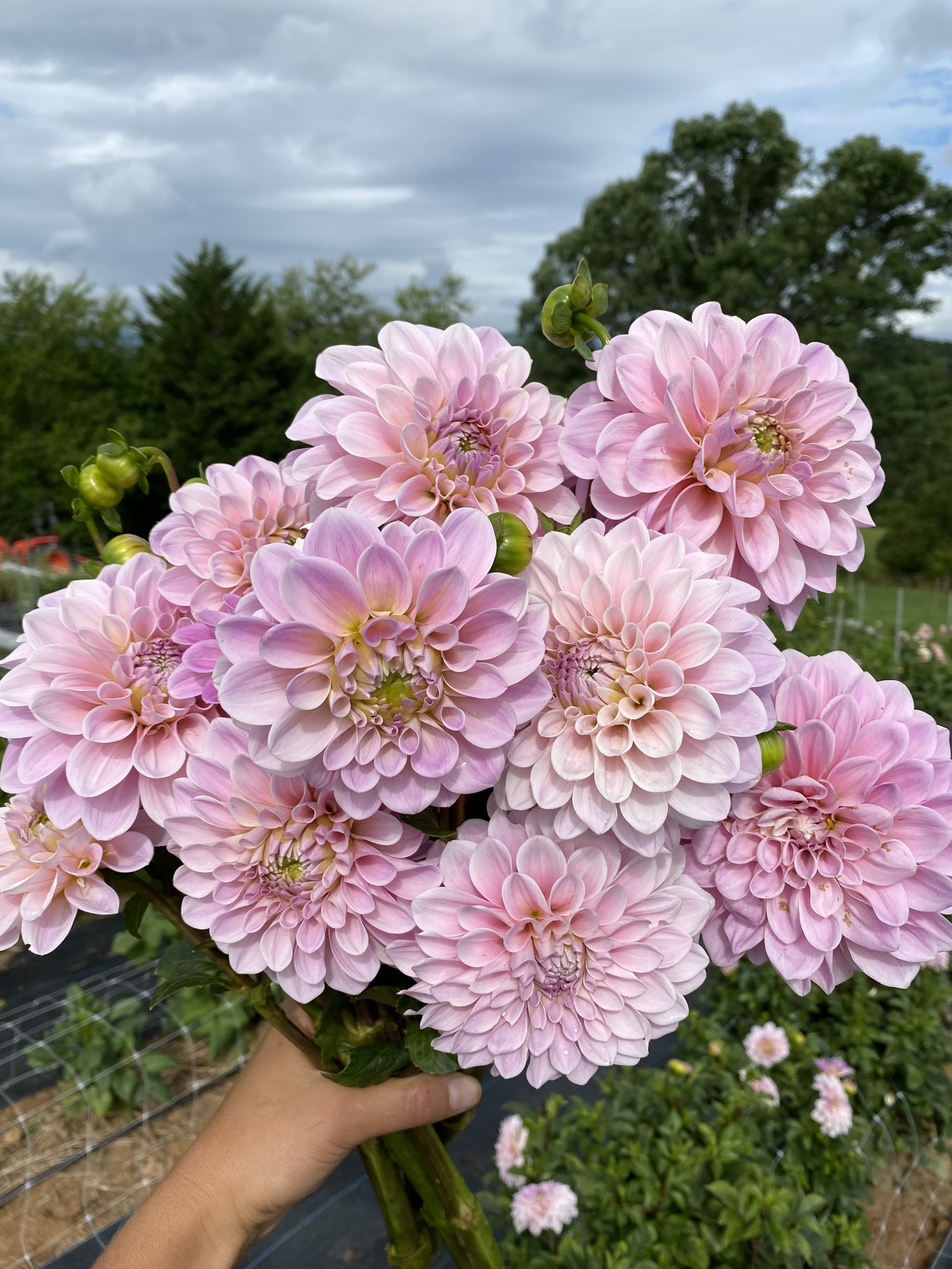
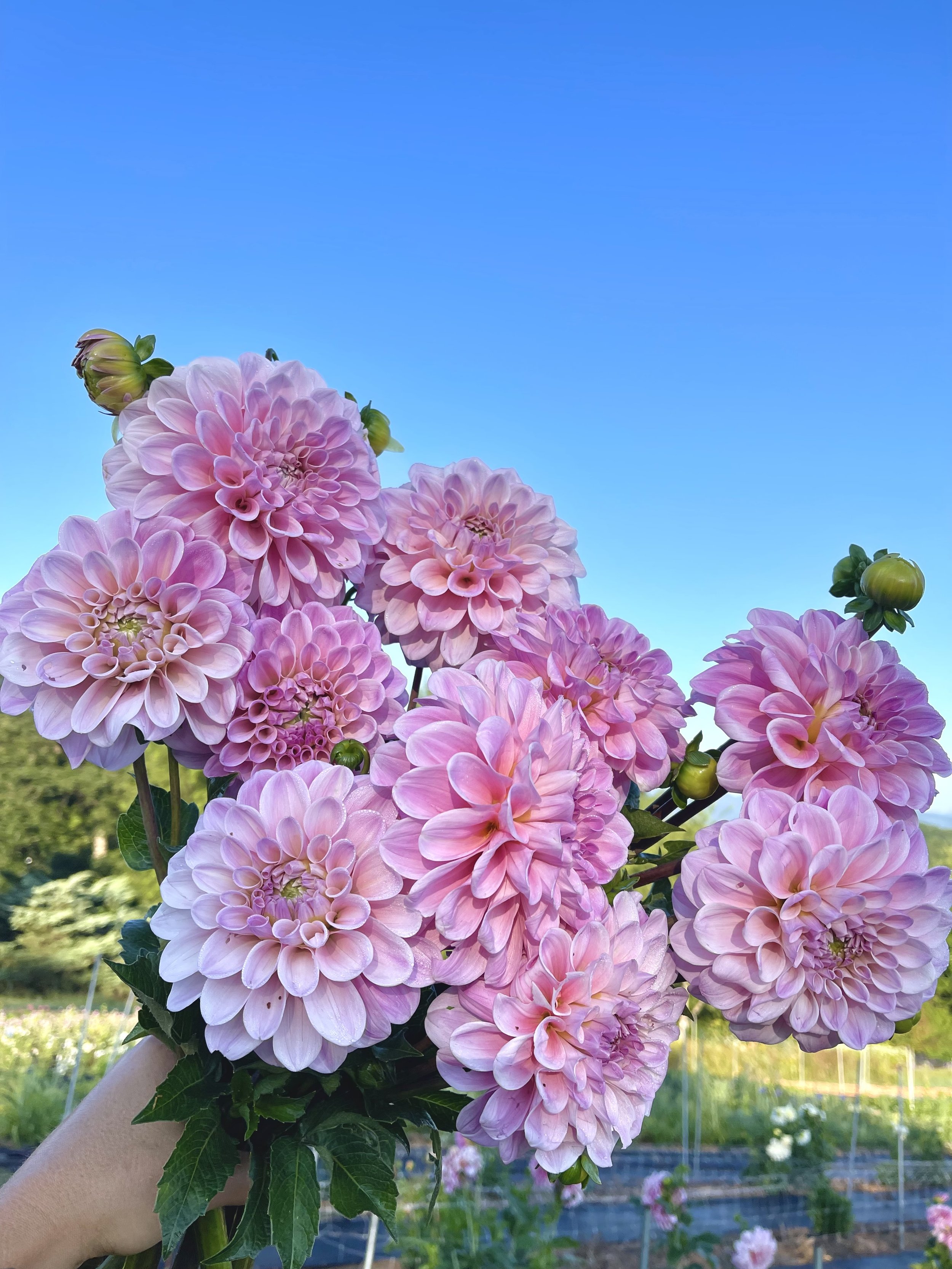
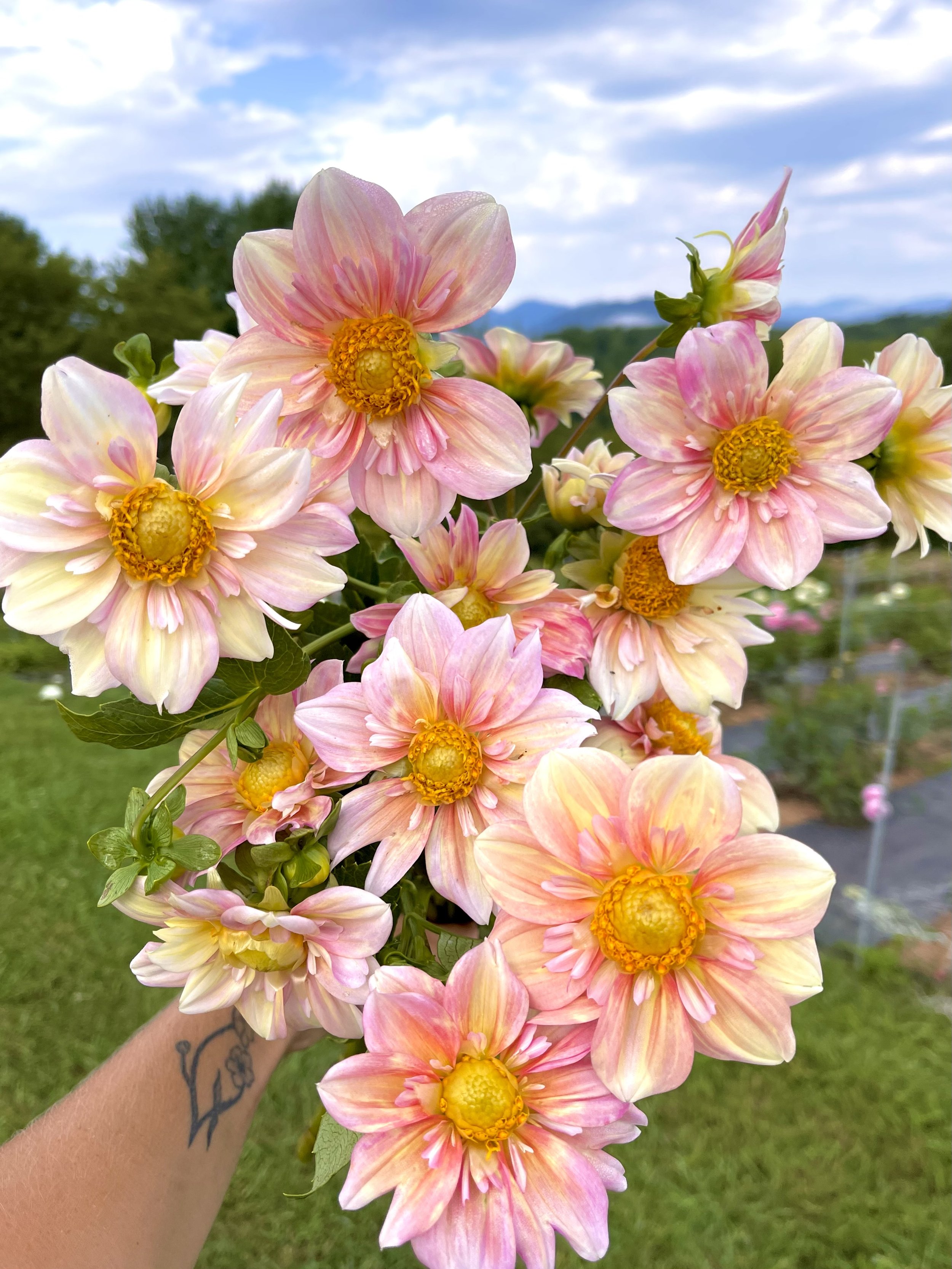
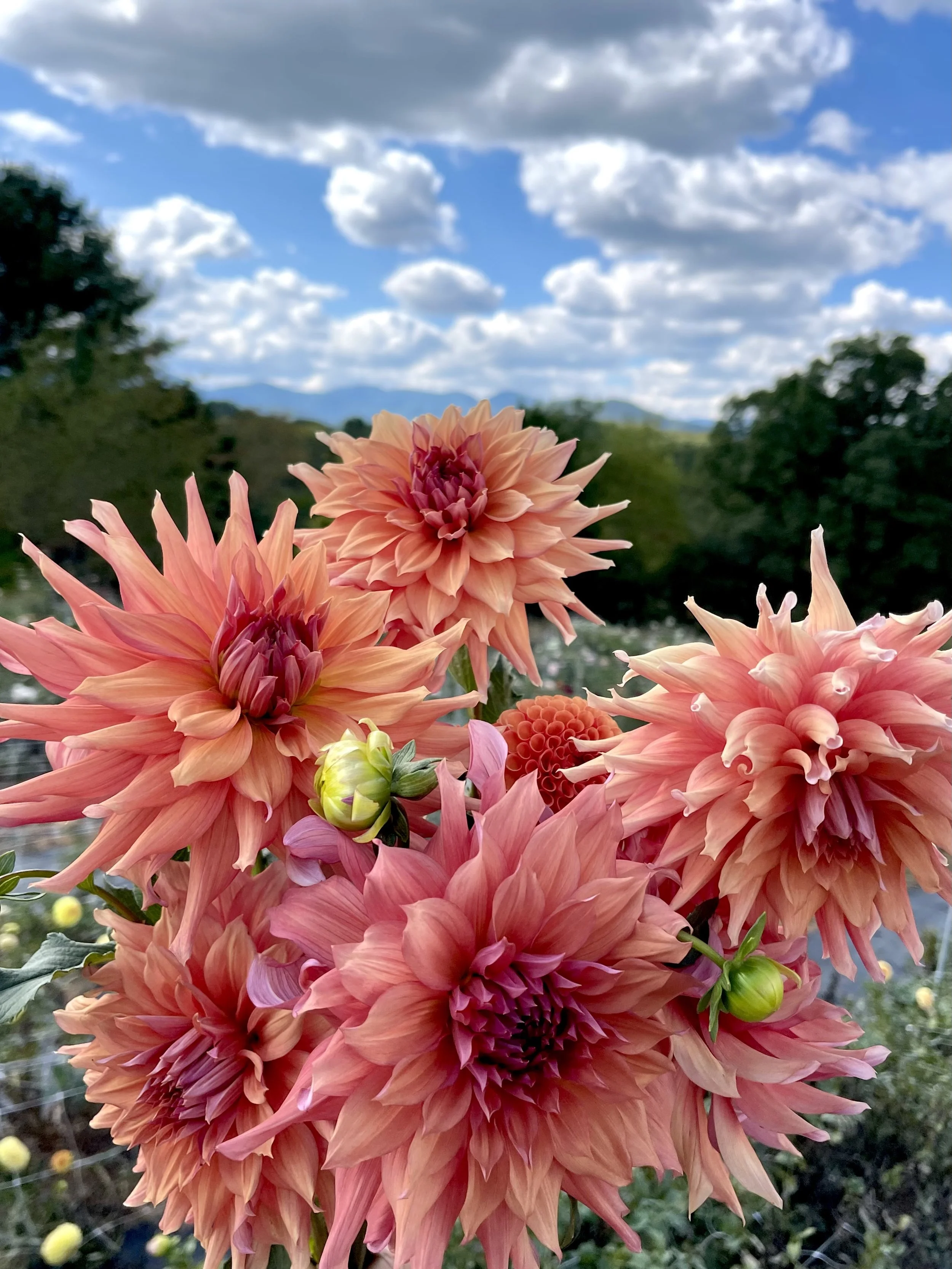
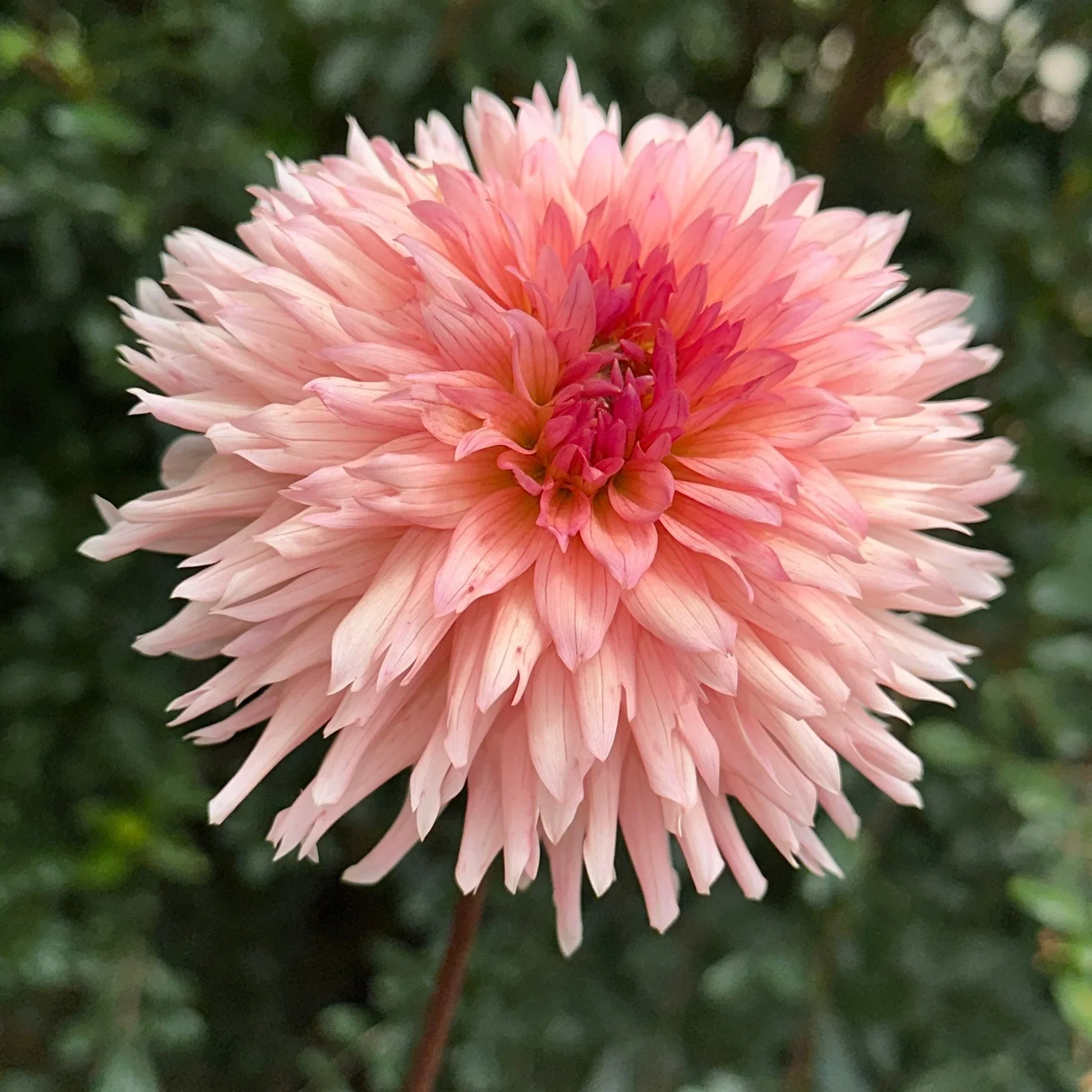
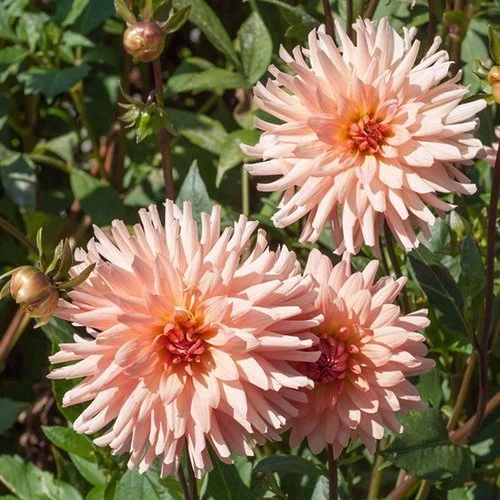
For us, these varieties are worth growing because their colors and forms fill a specific role in our floral palette:
Café au Lait (dinnerplate; creamy blush, beige, and soft pink)
Sweet Nathalie (decorative type; soft blush pink)
Apple Blossom (collarette type; buttercream and blush pink)
Belle of Barmera (dinnerplate; coral, peach, and raspberry)
Preference (semi-cactus type; blush pink, warm peach, and coral)
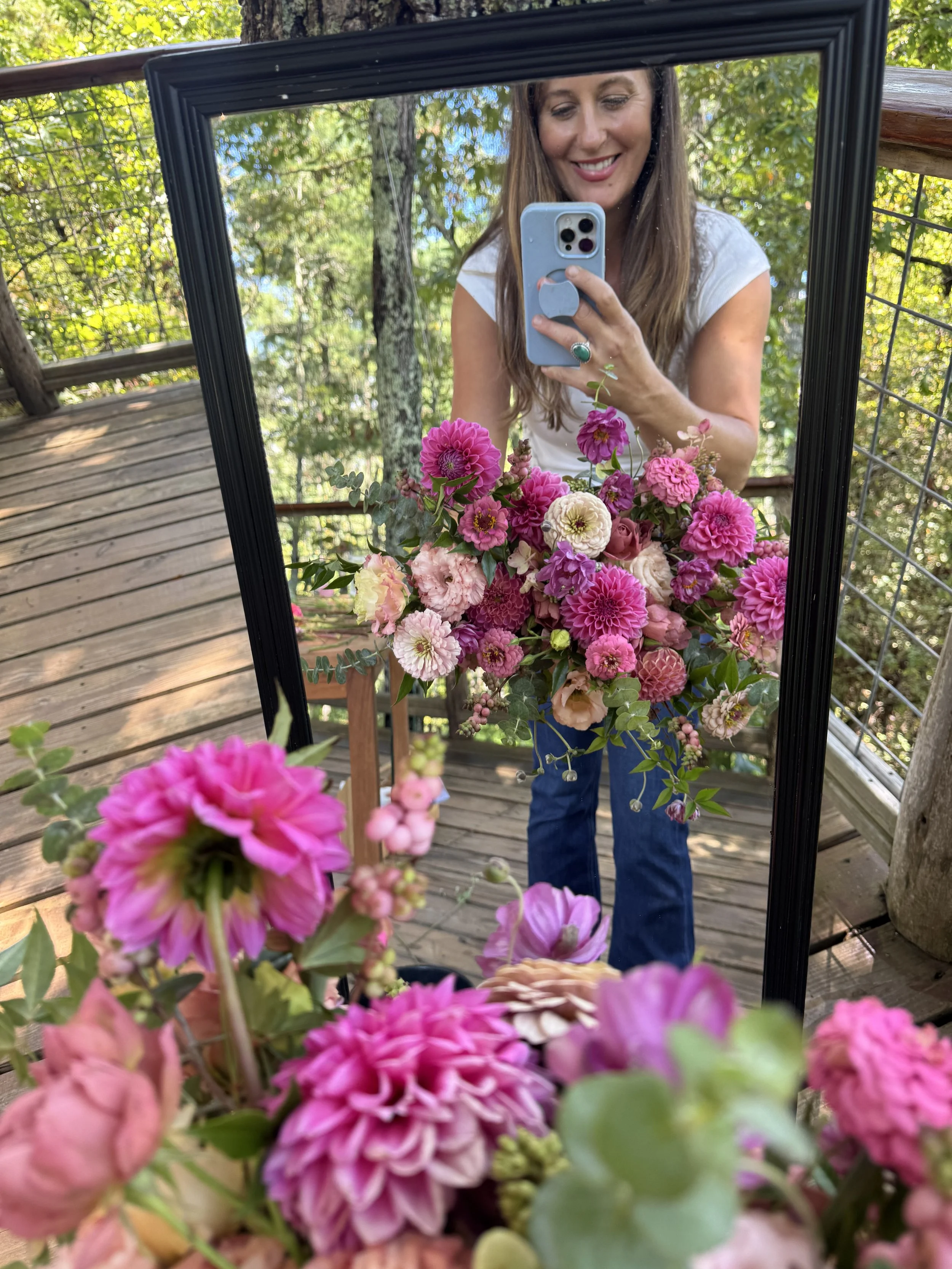
These dahlias bring a different scale and shape to our designs. Mixed with ball dahlias, airy filler flowers, foliage, and other seasonal ingredients, they help create the lush, garden-inspired floral designs we love.
Choosing the Best Dahlias for Your Flower Farm
It’s very easy to get caught up in the dahlia craze. There will always be a new variety everyone is searching for, a beautiful photo circulating online, or an expensive tuber that suddenly feels like something you absolutely need. But if you’re growing dahlias commercially, we encourage you to look at your field through the lens of your actual floral work.
What colors do your customers request?
Which colors appear most often in your weddings and events?
What flower forms do you enjoy designing with?
Which varieties have good vase life?
And perhaps most importantly, which ones produce reliably in your growing conditions?
Our dahlia field reflects the work we do at Flourish. There will always be another beautiful dahlia to add to the wish list. But after years of growing them, we’ve learned that choosing the best dahlias for cut flowers isn't about growing the most varieties. It's about finding the ones that work for you, your farm, and the flowers you want to create.
